
 |
Vision | Projects | Blog | Articles | Awards | Order | Reviews | |












































|
Week 52, 2014: Christmas time meant less game design time but I still accomplished a lot. In my Christmas Give-Away, Nova Suecia became the second game to be given away to Karl Olausson. I also updated the rules to Explorers & Exploiters and Politburo following last week's test and started a new test of Mare Balticum. The latter resulted in a face-lift as the 54 cards were reduced to only 18 and the flimsy shards replaced by wooden tokens, resulting not only in a more streamlined gameplay but also in a price reduction with $5!.
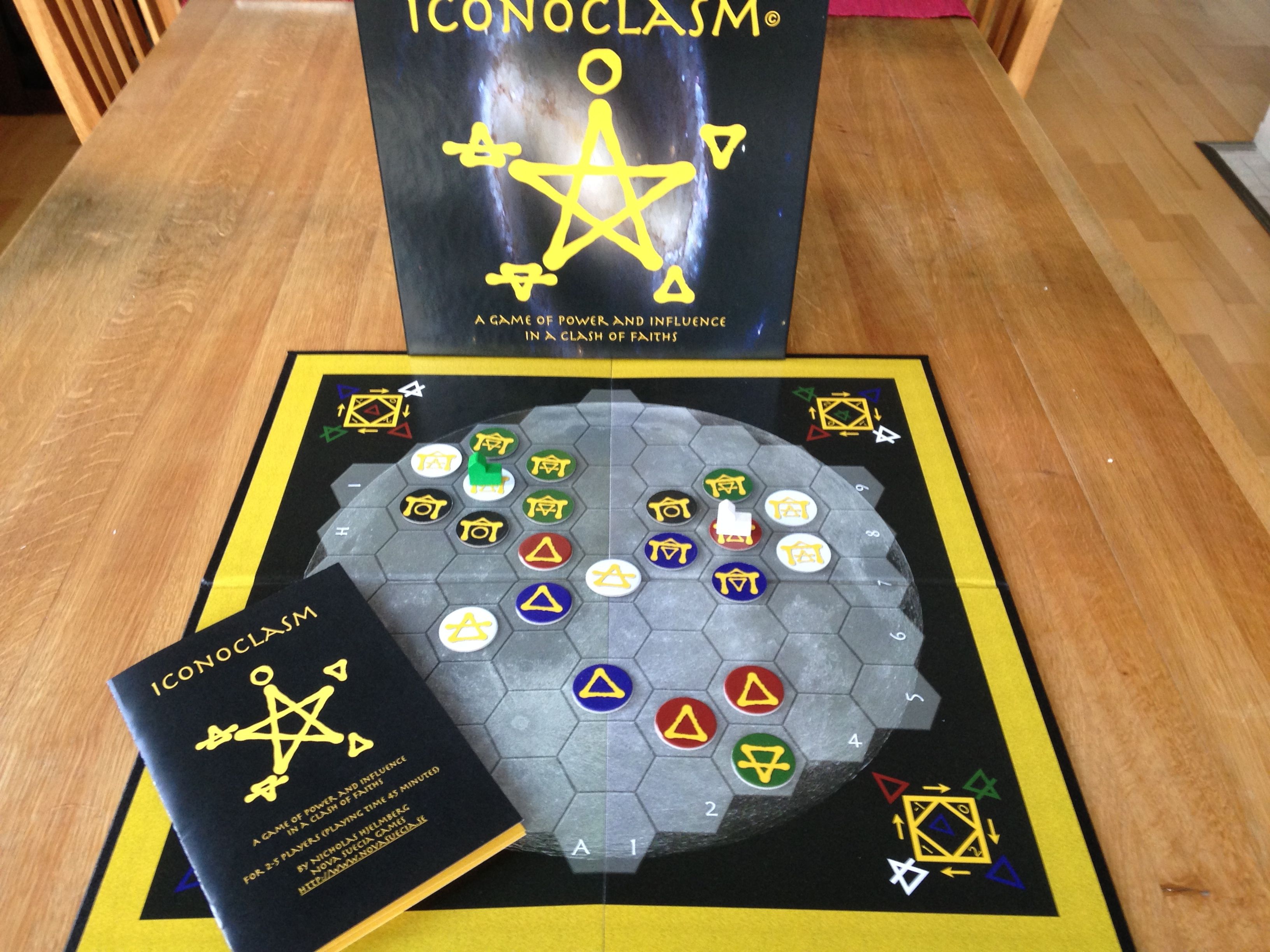
Finally I took some time to support another game designer with testing of his game Enigma, an Avalon-style deduction game spiced with stats and individual battles. It feels good to give back to the community and it's also inspiring to learn from other designers. In this game, the players attack each other and I will suggest a variant where the attackers are unknown (and if rejected, I may look into the idea myself...). After this and many other weeks of hard game design work, I relaxed by actually playing some games with colleagues and friends, among them Forbidden Desert, Blokus, Robo Rally, Avalon, Kill Doctor Lucky, Tsuro at the Sea and Puerto Rico. I even won a couple of them - a perfect end of the week! Week 51, 2014: This week, I launched a new initiative: the Christmas Give-Away, where I give away games for free. I have more games than I have time to test myself so why not give away them to players who really want to play them? The response was over-whelming and four of my games found interested players in no time. If they still like them after having played them is another question but in any case I will have learnt a lot! First game to be given away was Iconoclasm to Samuel Lapointe in Canada. Another test took place at work, where my colleagues once again enjoyed a game of Find the Bug!. For the first time, I actually won in one of my own games! 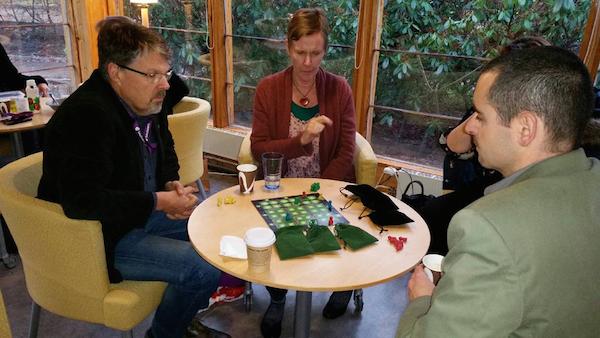
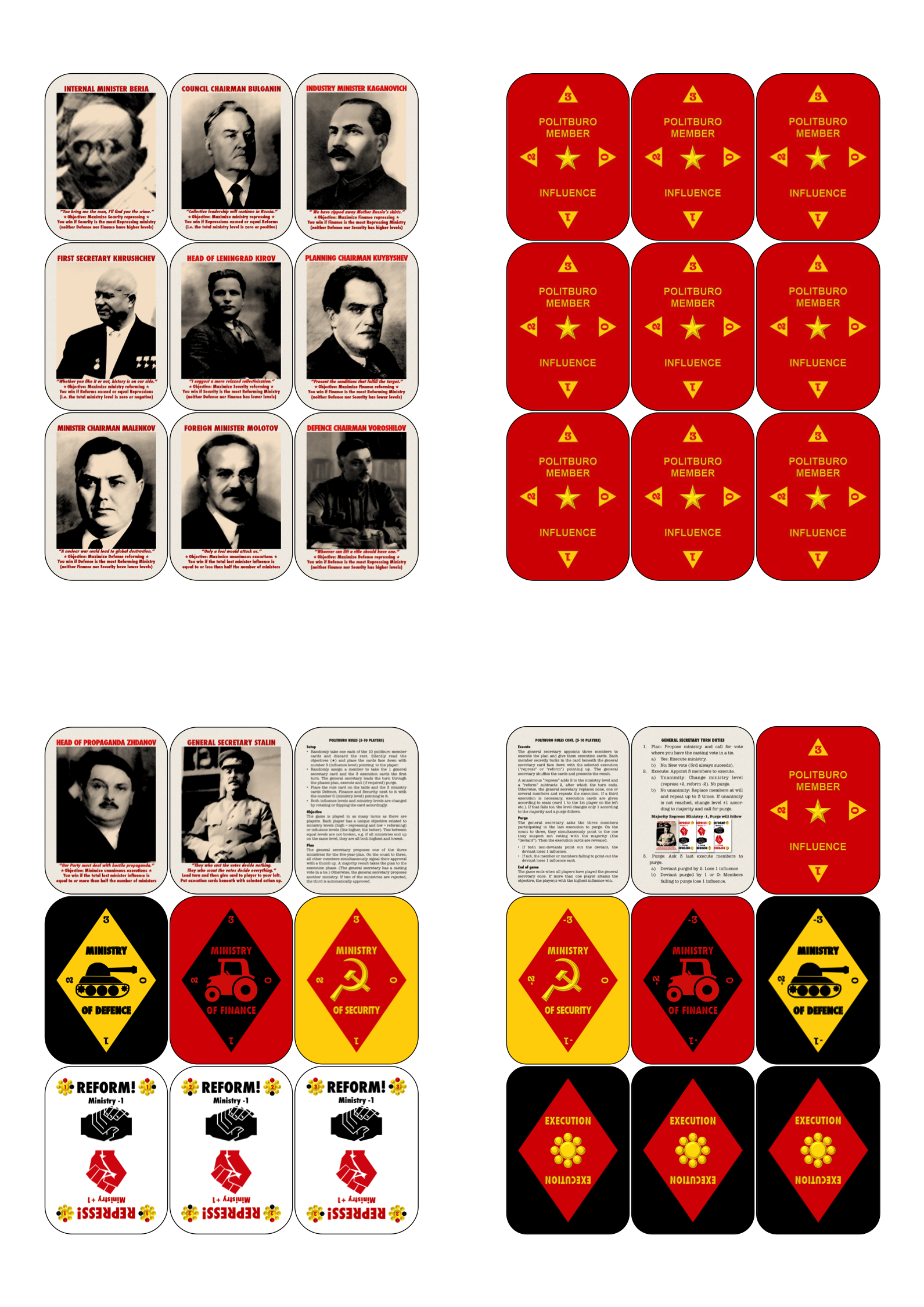
Concerning my games-to-be, both Explorers & Exploiters and Politburo completed tests successfully, although more testing is still required. Last but certainly least, The Game Crafter quickly responded to my complaint and new cards are already on their way. That is customer service! I'm also glad that The Game Crafter now offers sturdy circle chits. Those are much better than the flimsy shards and although more expensive, I chose to upgrade the components in Nova Suecia to make the many coins easier to handle. Thanks again, The Game Crafter! Week 50, 2014: Last week's idea of a project game evolved into the third game in my Soviet-inspired microgame series: Politburo.. Politburo combines the classical elements of deduction and voting. You need to agree on a plan but all players have their own objectives that may coincide or collide and you must carefully seek your allies. But there is a third element as well: the purge, which allows you not only to thwart other players' objectives but also to blame someone else.
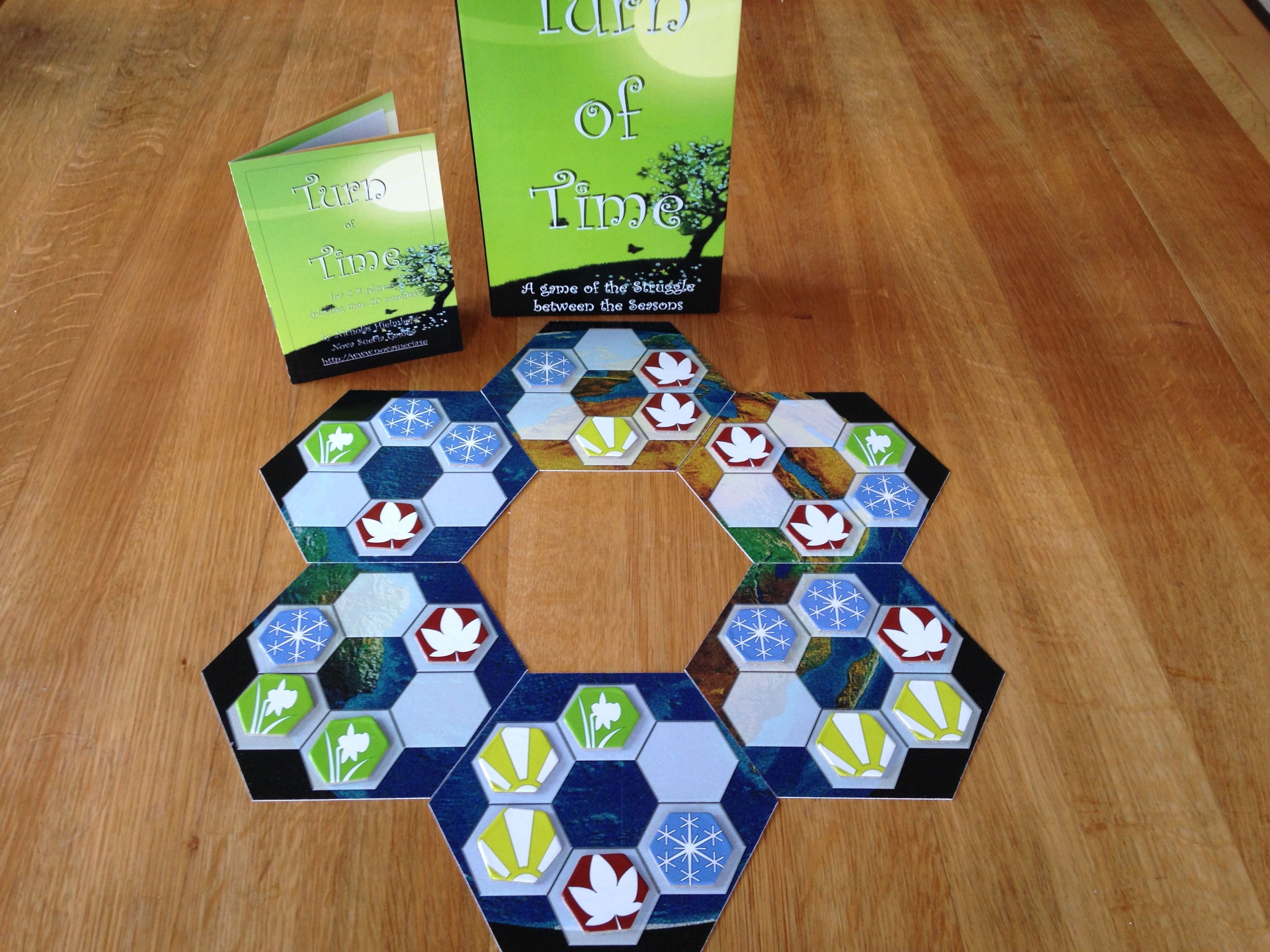
My other game in development, Explorers & Exploiters progressed a bit slower, partly due my focusing on Politburo and partly because I had to refine the battle rules. Previously, the barbarians were so strong that nothing could prevent them from scoring, making the endgame rather forced. With the new rules, explorers and settlers may join against them (to benefit themselves of course, not for any other reason). Last but certainly not least, my delivery from The Game Crafter finally arrived. Iconoclasm and Turn of Time both looked fine and are now ready for publishing. The latter didn't reach the finals of Time Challenge but was considered as a solid game and has nothing to be ashamed of.
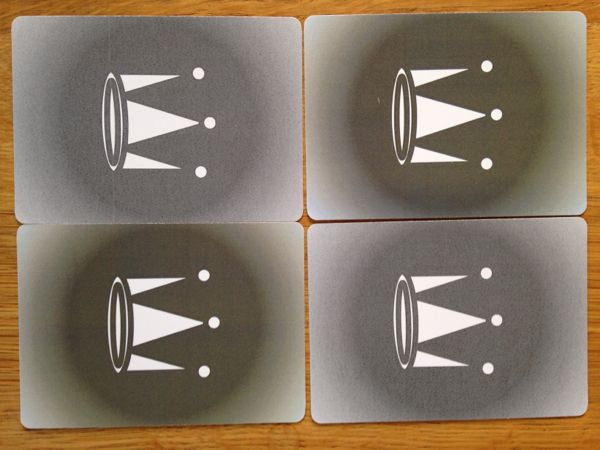
Unfortunately, some of the new cards ordered for Christina Regina had different shades of gray. I'll have to file my first complaint to find out what went wrong.
Week 49, 2014: This week was devoted to Explorers & Exploiters. The draft rules were completed, the tiles designed with good help from Openclipart and a shop page set up at the Game Crafter. A test game was also started and before Christmas I will hopefully have the game ready. 




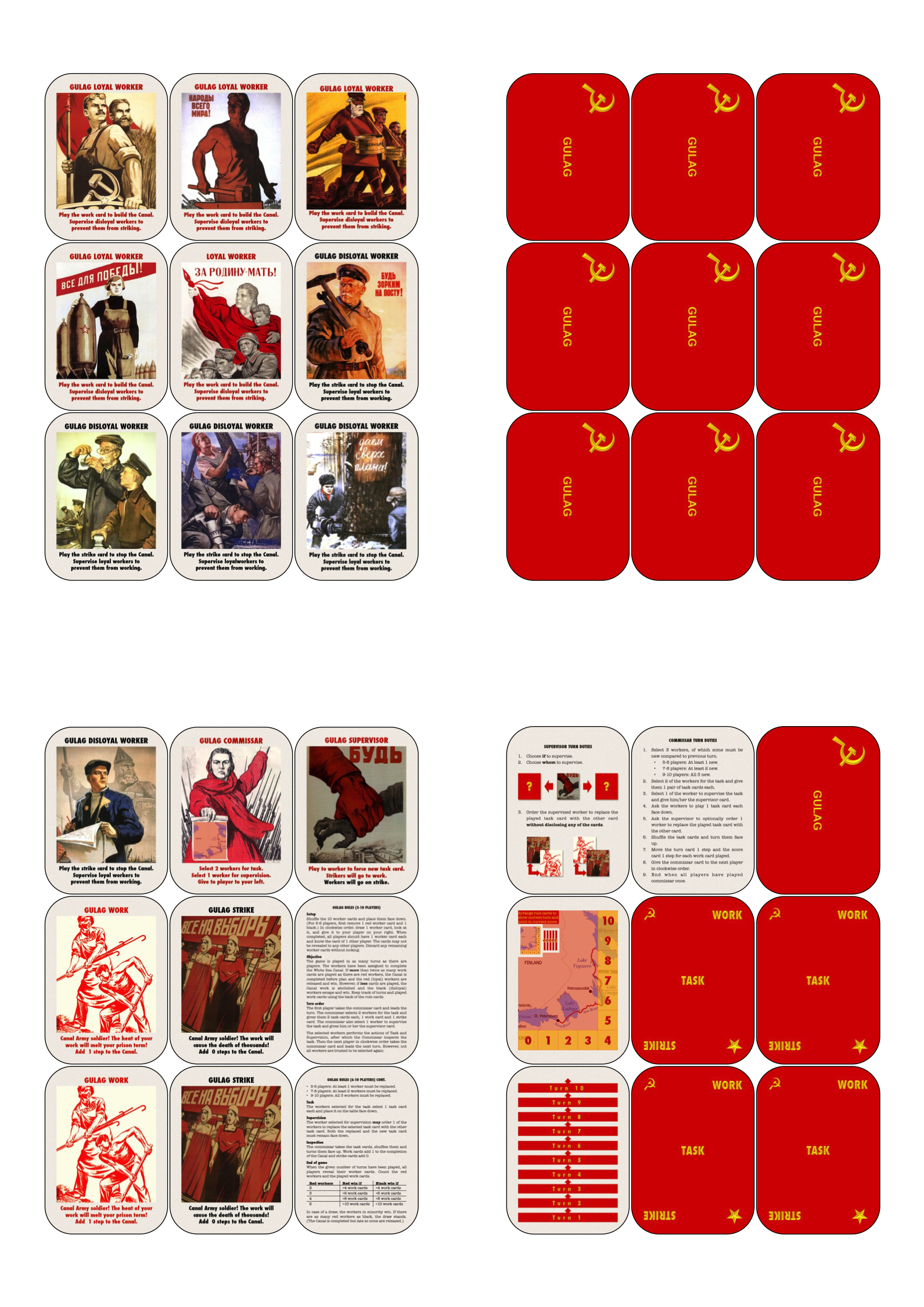
Will this be the last game of the year then? Perhaps not, after a successful session of my test game Find the Bug! with my colleagues, I got the idea of making a project game as well. This would be a more humorous game where the cooperative effort to succeed with the project is challenged by the players' own agendas, leading to intrigues and blame games. A simple card game may very well be enough for such a game so I'll give it some thinking and see where it leads. I also reviewed three more games for the 18 card Microgame Contest. The voting is now open and I hope for the best for my submissions: Week 48, 2014: My next delivery from The Game Crafter was delayed in the customs but I had a busy week anyway. Unfortunately, my submissions to the Hippodice Game Designer Competition did not reach the finals but Turn of Time did reach the semifinals in the Time Challenge. In another contest, 18 card Microgame Contest, I came up with a sibling to my previous submission Comrade, namely Gulag. Like Comrade, it's a deduction game but with another unique twist: semi-hidden information with one player knowing one player and being known by another. This gives each player unique information and creates an interesting paranoid gameplay.
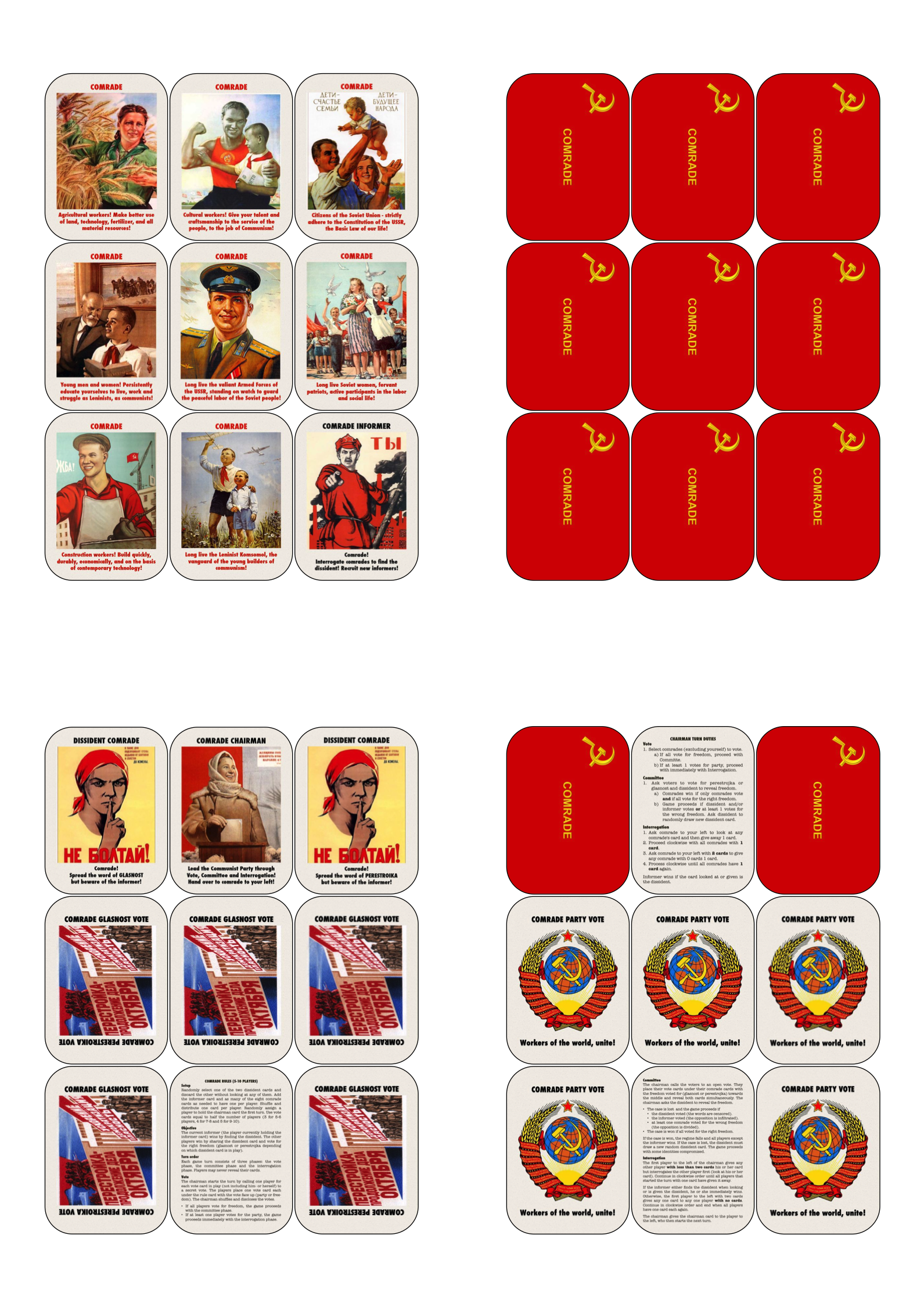
But the contest are not over yet. The Game Crafter was quick to come up with a new contest, this time Sprue Challenge for games using newly introduced miniature components. My submission this time will be Explorers & Exploiters. Perhaps it was just as well that I didn't get that delivery... Week 47, 2014: My next delivery from The Game Crafter has been shipped and I look forward to receiving Iconoclasm and Turn of Time as well as the updates to Knights & Damosels and Christina Regina. I also closed the annotated game of Nova Suecia with satisfactory results, not least for governors Ridder and Printz who shared the victory. My first "ugly duckling" has turned into a swan! But the big news of the week is my new game, the fifteenth in order (!). I'm not quite sure how the idea started on Tuesday but three days later I had a complete game with rules, components, tests and homepage. The game is Comrade, a deduction game with the classic concept of hidden identities. Add to this the double objectives of an informer trying to find a dissident while the dissident tries to influence as many others as possible. Complete with shifting identities so that the players can never be sure who is currently the informer and who is currently the dissident. All this for 5-10 players but only 18 cards!
The purpose of the game is to submit it to the 18 card Microgame Contest together with the card version of Vasa Regalis. This also means that I have to review six instead of three other contestants but so far I like the ones I've reviewed and it has been interesting to see what other designers have come up with using only 18 cards. Week 46, 2014: After last week's hard work with both new and old games, I took a small break with only minor tasks. One was to complete the print & play version of Bake the Cake!, another to start an annotated game of Nova Suecia. The latter proves that the game itself is solid, although I still think that the rules may seem too complex in the first game and obscure the depth. Perhaps I should consider alternative mechanisms to keep track of food and economy levels? I also made a small but important adjustment to Find the Bug!. Previously, the early testers in an area would have the same chance to find a bug as a later, giving no incentive to test untested areas. By allowing players to take a second tile from a bag if the first turns out not to be a bug, another layer was added. Not only must the players reassess the probabilities each turn but they must also decide which of the two bags that it's best to pick a second tile from. It may still be a game best suited for "test nerds" but it's much deeper now! Week 45, 2014: With all my new games completed, I returned to my old ones to complete the print & play versions of them. Nova Suecia, Bellum se ipsum alet, Christina Regina, Vasa Regalis, Tre Kronor Infernum and Mare Balticum are now all available in a free format. Only my children's game Bake the Cake! and Find the Treasure! remains. (Find the Bug! is already available free, although in Excel format.) In addition, I completed the game presentations for all my games. Having revisited all my games, I finally submitted a new order to The Game Crafter, including both my new games Turn the Time and Iconoclasm as well as new components to my old games, such as new cards for Knights & Damosels and Christina Regina, new coins for Nova Suecia and additional pawns to Find the Bug! With all this completed, where do I go next? I would like to complete annotated games for all my games before submitting them to contests or publishers. Or perhaps I should try to design the "epic" story-telling game with role-playing elements of Le Morte d'Arthur that I've considered for a while? Or should I dare take the step to invest in art and marketing and launch a Kickstart campaign for Iconoclasm? Ideas and suggestions are as always welcome to nicholas.hjelmberg@gmail.com. Week 44, 2014: This week's focus was finalizing my submissions to Hippodice Game Designer Competition. Iconoclasm was my main submission but following successful tests of Knights & Damosels, I decided to submit a card game as well. After having read that games published at The Game Crafter do not count as published if the sale is limited, I also submitted the well tested Christina Regina.
I guess I've learnt something about game design because when I return to my old games and look upon them with new eyes, I also get new ideas. One such idea is a longer variant for Christina Regina, where not the first influence tile counts in the scoring but simply the last (or, rather, latest if the game ends with the Queen being unable to move any further). This adds an interesting dimension to the game as some players may try to remove uninteresting tiles while others are happy with the current tiles and try to end the game earlier. Least but not last, I finally closed the test of Turn of Time as the 3 player test also turned out positive. The game would have benefitted by some kind of physical mechanism to rotate the areas (a bit like Tzolk'in's) but the game may be too simple for that. The result in the Time Challenge competition will have to tell. Week 43, 2014:
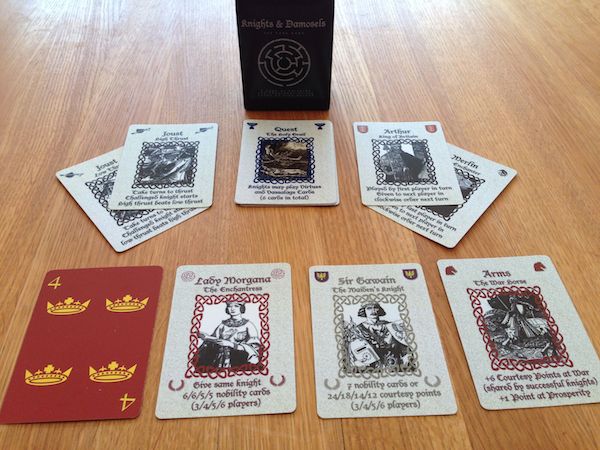
Following last week's visit to Spiel 2014 in Essen, I published an invitation at the Swedish forum Brädspel to see if there is an interest in starting a local group of SAZ (Game Designers' Association) in Sweden. Finally I've noticed an interest in my very first game: Nova Suecia. It's been added to one GeekList about Sweden and one about The Game Crafter, requested by a user ("Eranthis", I'd be happy to offer you a complimentary copy if you're interested) and sold to another user in Bristol, United Kingdom. The take-that mechanism introduced with version 1.1 did raise the game to another level and I hope others will think the same. Thank you for your interest! Week 42, 2014: Following last week's test, I focused on upgrading Knights & Damosels. Some testers found it difficult to see how events and nobilities (or chivalries as I renamed them to) related to each other and how to incorporate this in their gameplay. They also found it challenging to follow the number of cards per knight and damosel. The solution was two-fold: artwork and mechanisms. For the artwork, I made more use of symbols instead of text where possible with the objective to illustrate a rule on all cards affected by the rule. One example is to include the worship scored per chivalry and event on both the chivalry cards and the event cards. For the mechanisms I applied the principle of working with the "natural gameplay" rather than against it. The knights' cards became hidden and the damosels' cards became open. This simple but elegant solution removed the need of looking across the table to see which knight cards can be played in an event or keep track of with which knight the damosel cards really ended up. It also added more tension as knights that get many cards from the same damosel will know it and be more nervous about which cards to take next. Hopefully I will be able to publish the upgraded version next week together with the final versions of Iconoclasm (test successfully completed and documented in an annotated game.
I also learnt more about game organizations like ESG (European Game Collectors Guild) and SAZ (Game Designers' Association. They show how far ahead Germany is in terms of boardgames but I was welcomed by their members and encouraged to help spreading the network to Sweden. I have the interest but do I have the time? 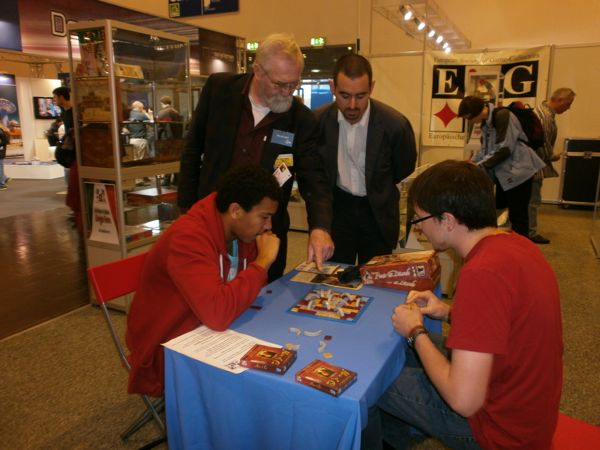
Week 41, 2014: Another good test session held in the weekend! Korean food, Christina Regina and Knights & Damosels was on the menu and all got good feedback.
Knights & Damosels was a bit challenging in the beginning before the players learnt to handle the many different cards. Clearer fonts and symbols may help. After that, the game flowed quite well but early disasters struck hard as some players' loss of cards prevented them from earning points and joust for cards. The lessons learnt were (in order of my own preference):
Point 1 and 2 were changed immediately. Point 3-5 I will wait with until I've seen more testing. Point 6-7 I'm less fond of. Point 6 removes the tactics of provoking jousts to earn worship points while point 7 makes it even more difficult to catch up with a leader. But again, more testing may convince me. More good progress can be reported for my new games Turn of Time and Iconoclasm, which both reached rule version 1.0. The annotated games for different number of players are still in progress and will hopefully be completed next week. I also started a new series of articles where I discuss what makes a game fun. Five parts have been published this week and another ten parts will be published the next two weeks. Last but certainly not least, I had the pleasure to sell another game. This time, it was Bellum se ipsum alet that found a buyer in Portland, USA. Next week's great event will be Spiel 2014 in Essen where I will mainly participate as a gamer but also bring some flyers for own games in case I get a chance to present them. If you would like me to bring a prototype, it's still not to late to send a mail to info@novasuecia.com. Week 40, 2014: I have learnt several good test lessons with Iconoclasm:
Those lessons were particularly important with a low complexity/high depth like Iconoclasm, where the tactics must not be over-shadowed by the rules. The game was solid already at version 0.6 but testing revealed that some parts worked against interesting tactical opportunities (such as opposition rather than secondary support to break ties, making several latent clashes in a cult impossible) or even against the game idea (such as imbalance tiles' ability to destroy in one turn positions that have been carefully built up in several turns). Iconoclasm was further iterated (to version 0.9) and tested before I was satisfied. The 2/3/5 player tests of Iconoclasm and the other new game, Turn of Time, were postponed but have at least started. Another postponed plan was the Kickstarter project for Iconoclasm but the reason is that I found an interesting contest for the game. Hippodice Spieleclub holds a game design competition open for many different kind of entries. Such a competition can be expected to be very tough but all games will be reviewed by a jury and feedback given. Next weekend, another test evening is planned with plenty of food and games as always. We will probably focus on retesting old classics, such as Christina Regina and Mare Balticum but I will present the Iconoclasm to get feedback on the concept and then order a prototype for next test evening. Old blog posts may be found here:
|
Please leave a comment on the games or contact me directly at nicholas.hjelmberg@gmail.com. |
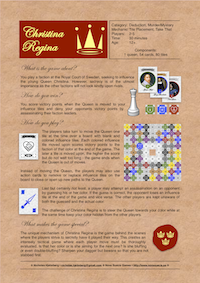
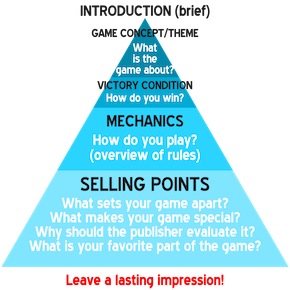 As part of my submissions, I prepared game presentations not only for the submitted games but also
for the six classic Nova Suecia Games. They are outlined along the recommended
As part of my submissions, I prepared game presentations not only for the submitted games but also
for the six classic Nova Suecia Games. They are outlined along the recommended
 But the most memorable event this week was of course my first visit to the
game fair Spiel 2014 in Essen. To see all those games, new and old, was a
truly great experience. What I missed was the opportunity to get in touch with
publishers and present game ideas but I did get to network with other
designers and learn about their work. One such game was
But the most memorable event this week was of course my first visit to the
game fair Spiel 2014 in Essen. To see all those games, new and old, was a
truly great experience. What I missed was the opportunity to get in touch with
publishers and present game ideas but I did get to network with other
designers and learn about their work. One such game was
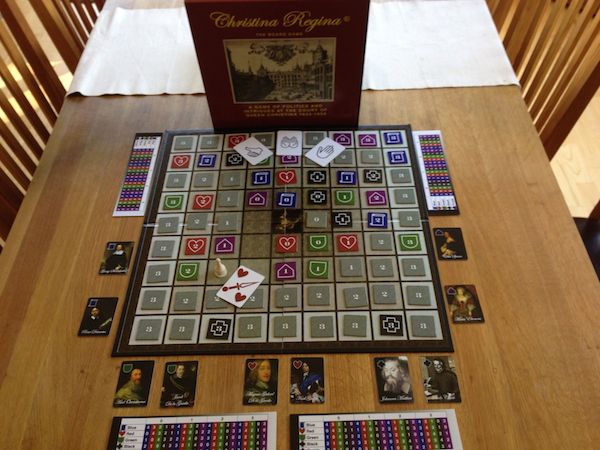 Christina Regina feels very mature and the main concern left is how to ensure that the random
board gets a good spread between colored and blank tiles. I may also consider giving all tiles a
back similar to that of the blank tiles, to reflect that the colored tiles turn into blank once the first
colored tile is picked.
Christina Regina feels very mature and the main concern left is how to ensure that the random
board gets a good spread between colored and blank tiles. I may also consider giving all tiles a
back similar to that of the blank tiles, to reflect that the colored tiles turn into blank once the first
colored tile is picked.