
 |
Vision | Projects | Blog | Articles | Awards | Order | Reviews | |








































|
December, 2019 As expected, December was almost entirely devoted to the testing of Fria Ligan's new game. After five sessions with different testers, the general agreement was that the had a strong theme but that the mechanics were a bit fiddly and disconnected from the theme. The recommendations included tracks to monitor the changes in skill levels, "crossroad cards" to give the player decisions instead of just skill tests, 4X elements to convey a sense of progress within sessions, and legacy elements to convey a sense of progress between sessions. 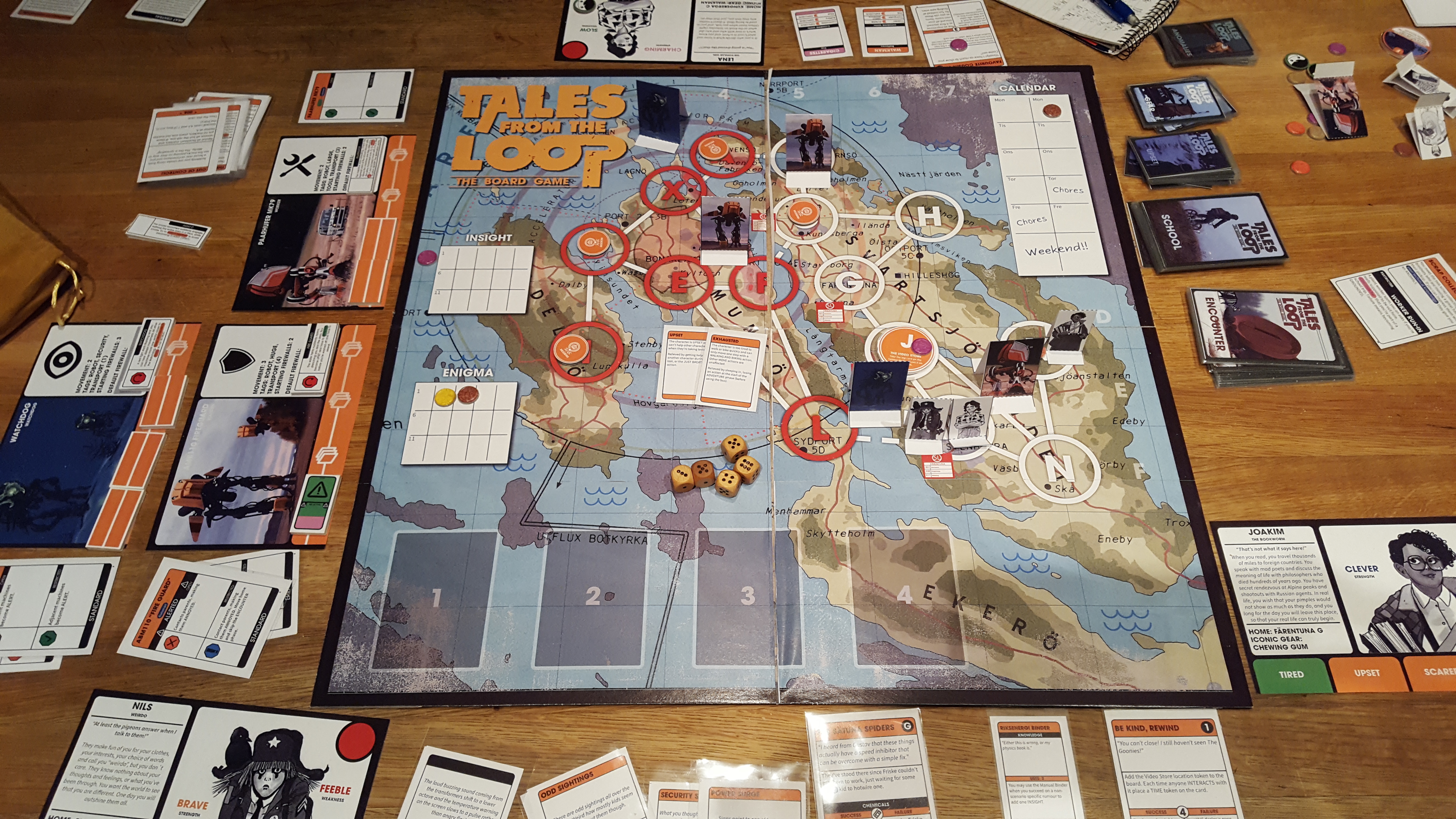
Fortunately I also find some time to proceed with the testing of a game of my own: Nova Suecia. The result was the third edition of the game where the one turn-one action mechanic was accompanied by a more tense race objective of claiming districts instead of the old objective of earning the most money. It also saw a return of the all players lose scenario from the first edition if the players fail to defend the colony against the Dutch with the change that only the last player loses to prevent him or her from tanking the game. Perhaps I could have accomplished even more during the Christmas vacation but I chose to fill it with a lot of game plays instead. After all, games want to be played and gamers want to play! November, 2019 Another month where my game design faced competition from other activities, in this case a well needed vacation. Nevertheless, I did find the time to complete the rules and the print & play files for Peoples - Civilizations (although I did discover that some of the planned components are not available in orange at The Game Crafter so I may have to do some adjustments). I also posted yet another chapter in my never ending blog The Quest for the Holy (Civilization) Grail and was encouraged by an immediate response from an eagerly waiting fan. Hopefully I'll find time to test the game at Christmas. Two other games in the test pipeline are Nova Suecia and Suecia following an invitation to submit games to the 2nd World Original Design Contest of Board Game. Given last year's success with the resource conversion game Dyce, I hope that those two games also will appeal to the jury. Speaking of tests, I also completed the test of an updated version of Chicago Mobsters (where many of my comments seemed to have been considered, giving at least myself a better game experience) only to get another test request from Fria Ligan. December will be busy... A game that definitely will have to wait is the recent addition to my collection: Bus but I do look forward to study the route building mechanics of this classic Splotter game. October, 2019 The work with the new version of Peoples - Civilizations progressed slowly through the "rulebook phase", where the articulation of each rule helped me decide how best to unify the rules and minimize exceptions. With the rules for building abilities solved last month, I went on to solve the rules for the building interactions, e.g. what happens when Military might meets Economic power? Peter Frankopan's book The Silk Roads provided more inspiration and it turned out that phenomena like Gunboat diplomacy, where the army paves the way for the merchants, can be manifested in the game. Hopefully both rules and print and play files will be ready next month so that the Peoples - Civilizations can be put to another test. Another game put to test was the very first one - Nova Suecia. Inspired by an 8/10 rating at Nova Suecia, I resumed an old test and modified some of the market prices slightly (lower for tobacco, higher for timber), tested and rejected income for assembling colonists, and added an optional rule whereby players may pay to put extra resources in the ship bag. The purpose was to keep the economy tight and much of the inspiration came from the arrival of Key Market with its similarly elegant market mechanics. Another acquired game this month with tight economy and spatial considerations was Maharaja. 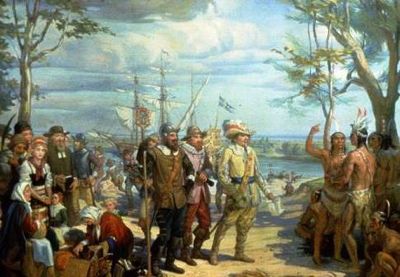
If the test is successful, Nova Suecia may be a candidate for the next WODC, which was announced this month and where Dyce (Hangzhou) made a success last year. Speaking of contests and Dyce, this game made it to the Hippodice Competition Final, something that only Explorers & Exploiters has accomplished. Whether it's good enough to go further remains to see but Dyce is definitely a game worth pursuing to publishers in the future. 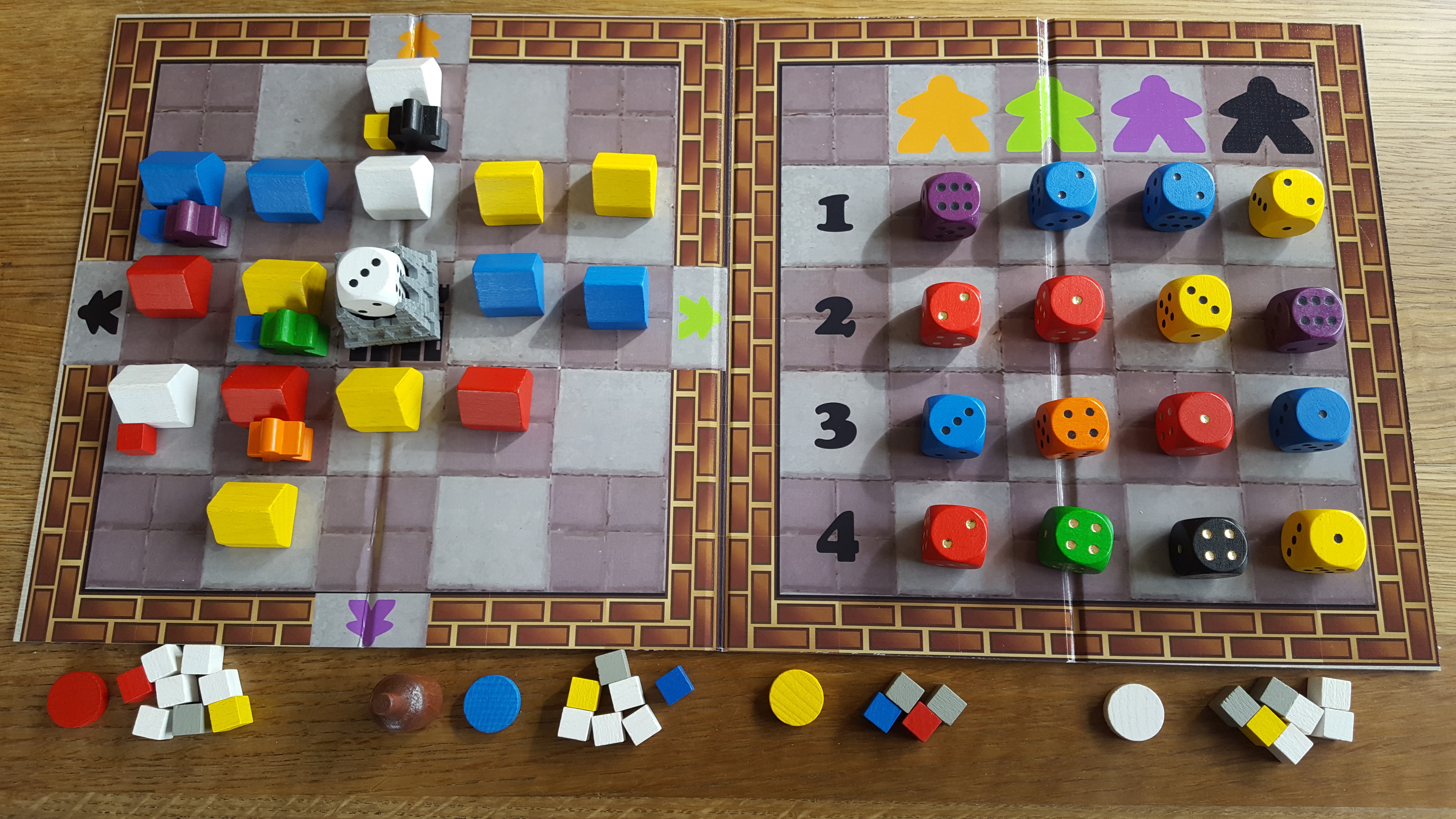 Unfortunately I didn't have time to complete a review this month, although I did study
Alchemists in
detail in preparation for one. This included the
"Unofficial Handbook"
with hints on how to work with deduction. The review will explore whether this makes the game better
or turns it too much towards hard work and will hopefully be ready by next month.
Unfortunately I didn't have time to complete a review this month, although I did study
Alchemists in
detail in preparation for one. This included the
"Unofficial Handbook"
with hints on how to work with deduction. The review will explore whether this makes the game better
or turns it too much towards hard work and will hopefully be ready by next month.
September, 2019 September saw a break from my own games as I focused on intense testing of two new games. Besides more testing of Chicago Mobsters, I also returned the duel version of Britannia to the table. Britannia turned out to be more balanced in its latest version while Chicago Mobsters got an interesting verdict from both my and some fellow designers: good but perhaps too much distraction from the elegant core through the many new cards and other abilities. On the other hand, I should probably not be afraid to add such things to my games and let testing decide which to stay and which to go. 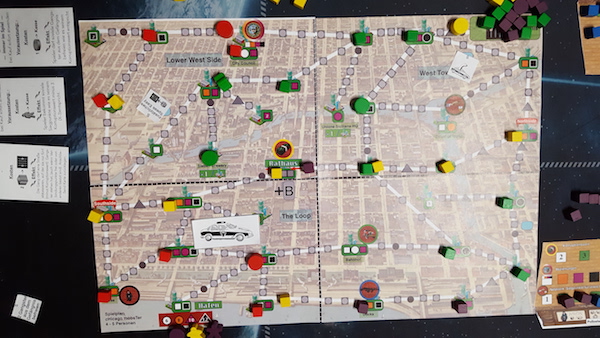
The lessons of the game testing were brought back to my current development work on Peoples - Civilizations. Its latest version has indeed removed many cards and abilities and kept only the core but I couldn't help wondering whether too much was removed. One of the reasons Chicago Mobsters/Hansa Teutonica can do this is the management of resources and abilities on the player board, where the players have to get cubes (merchants) to the game board and choose between unlocking abilities like using more cubes or retrieving more cubes. Endeavor has a similar approach, where discs (influence) on the game board unlocks abilities on the player board. Both games inspired the "build and unlock abilities idea" of Peoples - Civiliations but the abilities are less innovative in comparison. To align with the civilization theme, they are more about spreading your civilization (science, military), producing many resources quickly (civics, economy) and influencing other peoples (culture, religion). Perhaps a player board with different tracks and buildings would be too limited in this sense? Perhaps it was a mistake to abandon to replace the advances "currency" and the development cards? On the other hand, many civilization games that rely on many different cards to shape a unique civilization, such as Nations and Tapestry, risk turning into a simple optimization game. After a lot of agony, I decided to continue developing the elegant time wheel/player board solution and let testing decide whether to pursue this version or the older advances/developments solution. Another example of a "civilizationish games" is Myrmes, where your civilization is represented by a developing an ant colony and the world by a garden, from which resources are collected in competition with other ant colonies. I like the game and dedicated this month's review to it but decided not to use the idea in my civiliation game. Besides, Antiquity has already done this. An idea in a completely different direction came from the latest acquisition of Barrage. It caught my interest because of the production wheel (similar to my time wheel) and the manipulation of water flows through power stations (similar to an old but never pursued idea of irrigations in the Fertile Crescent). But instead of giving more inspiration to those ideas, I started to think about heavy economy games, a theme I like as a player but haven't entered as a designer. Ideas from an old game from my childhood, Kartell (Cartel) popped up. In this game, the players jointly invested in companies buying and selling from each other. Perhaps the game could combine investments and actions for a smooth and stream lined gameplay so that players would get options like increasing the value of their investments or using one company's action to promote another? The idea is intriguing and may be something to look closer into, once Peoples - Civilizations and Suecia have been completed... August, 2019 An old classic returned to the table: Explorers & Exploiters! I attended a one-day designer meetup and decided to revisit the old Hippodice finalist. It was well received and I returned with ideas for making the exploring phase more interesting by allowing mapmaking (to reduce the memory element) and adding shrines (to add another exploiting option, earning you wildcard victory points the more shrines you connect). I also took the opportunity to upgrade the base color from heaven blue to parchment brown. After all, it is a map game. 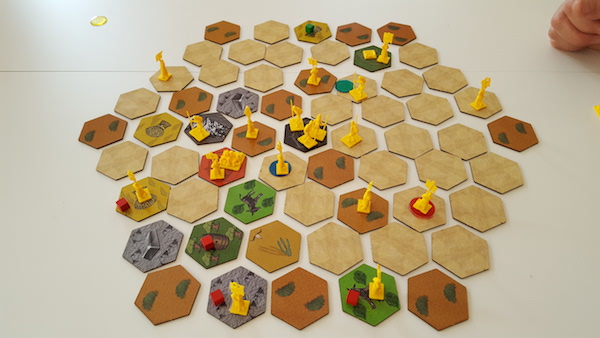
For the newer Dyce, I published a strategy article as well as designer notes. In addition, my goal to create animated videos for all my games was finally achieved when Bake the Cake! got its video. August also saw some other games than my own. I volunteered to playtest Chicago Mobster, a retheme of a favorite game of mine, Hansa Teutonica. For my monthly review, I visited the Paradise Island of Vanuatu. 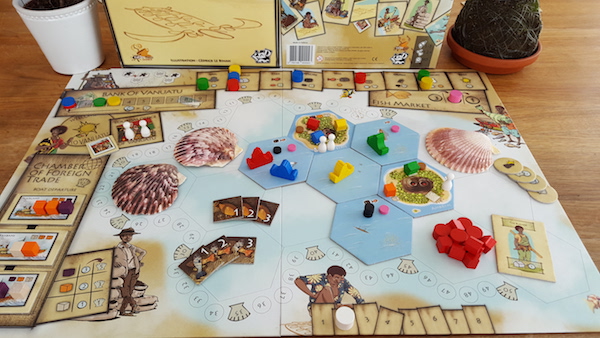
Besides all those small projects, I devoted most of my time to the development of Peoples - Civilizations. After the game testing before the summer, I had evaluated options for streamlining the game, particularly when it came to the rather drawn-out production. A break-through came when I, inspired by the economic wheel of many economic games, realized that I already had the solution on the box: a time wheel! 
By linking production and revolutions to a time wheel, where each people's position depends on its size, I could comprise all bookkeeping actions into one phase while letting the more interesting civilizations take place in all phases. In addition, I also decided to replace all the development cards with buildings, providing another balance challenge between quantity (more buildings = more actions) and quality (higher advance levels = better actions). Coming up with all those actions and balancing took much more time than coming up with the idea and the testing will take even more time but at least Peoples - Civilizations is progressing again! July, 2019 Last month's Boardgamegeek entries required some more work before I could return to my new game projects. Designer notes were published at Boardgamegeek, a strategy article was published for Warring States and the video for Dyce was updated with the new board. As if that wasn't enough, the Kickstarter for Britannia started earlier than expected so I hurried to complete and publish my review. This review turned out to be my 50th review published at Boardgamegeek and earned a Silver badge! 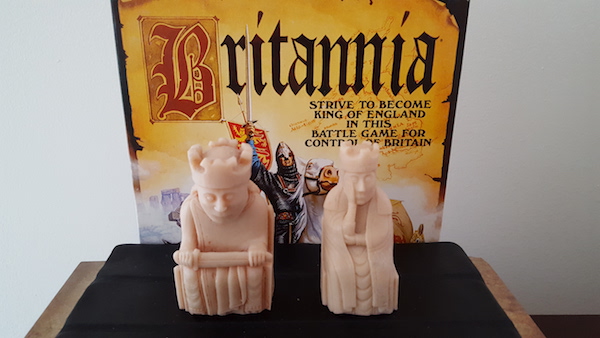
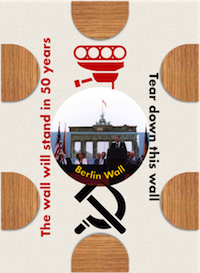
With all this done, I could finally focus on Glasnost. The rules were written, the components designed, the print & play files created, and the video animated. Last but certainly not least, a game test was annotated, resulting in a lot of tweaks and tunings of the Coup rules before I was satisfied enough to submit Glasnost to the Social Deduction Challenge. June, 2019 My latest game Find the Bug! - Project, Dyce, Warring States, and Suecia finally arrived!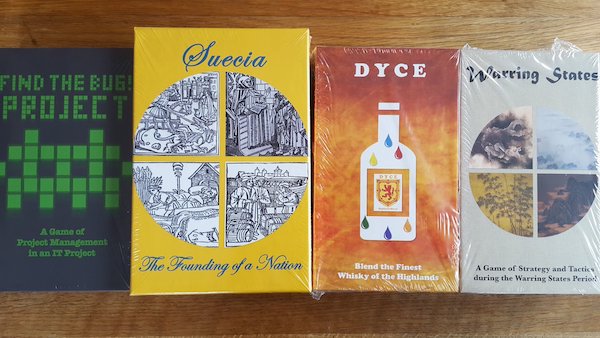
Since I also took the opportunity to order extra components, a lot of time was spent on sorting the components, after which I could prepare images, update boxes and create Boardgamegeek entries for them. In parallell, I worked hard not only to complete game tests of an expansion to Endeavor but also write a review about it. After that, I could finally start on an idea I got already previous month, inspired by the Social Deduction Challenge. The contender is Glasnost. The idea was to combine the ideas of the successful microgames Comrade, Gulag, and Politburo into one big game with the working name of Glasnost. Such a game would see the players working together (Gulag) but with both team and individual goals (Politburo) with the ultimate goal of identifying your team mates (Comrade) with the addition of a game board for a spatial dimension and a third traitor team. 

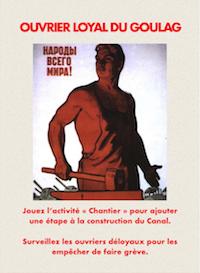
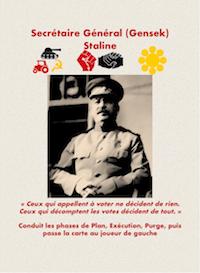
Among other things this month, I recorded a sale of a classic game (the second one from Nova Suecia Games): Bellum se ipsum alet and I also sold Biblios to give room for . May, 2019 The Comrade series have got French fans! Mr Ludovic Nieres was so intrigued by the games that he offered to translate them into French. It was more work for as well, as the French text required more space than the English one, but the resulting Print & Play files got great and can be downloaded from the game pages of both Nova Suecia Games and Boardgamegeek. 
After that I returned to the preparations for this month's game test. Unfortunately UPS failed to deliver my package from The Game Crafter in time so I had to do with handmade components. Nevertheless, I got very valuable feedback. Apokalypsis was very well received, Peoples - Civilizations proved to have enough game in it to pursue further (and I shared my lessons learned in my blog The Quest for the Holy (Civilization) Grail, and even my latest idea C64 Board got the thumb up. The latter was an idea inspired by the Simple Elegance Contest. The games uses simple programmable "joystick cards" and generic boards to recreate old C64 games. Among the games included are Tanks (move tanks and fire bouncing shots at opponents), Monsters (move hero and monster with the same action), Maze (find your way through a maze with movable walls) and Cars (use gears and turns to race your opponents, forcing them off the track if necessary). However, even a simple game like this required a lot of work to get all the rules, cards and video ready and took most of the time this month. I still had time to visit the Arctic Game Conference and although Apokalypsis failed to attract the interest of the judges (having a background in card games, they were more interested in card duels and card combos), it was interesting to meet fellow designers. I also had time to review a game that is more in line with the games I like to design and play, namely Leo Colovini's masterpiece Carolus Magnus. April, 2019 Finally I pulled the trigger and submitted an order to The Game Crafter for prototypes of Warring States, Find the Bug! - Project and Suecia, including some updated components for other games such as Apokalypsis. The main reason was that Apokalypsis reached the final in the designer contest of Arctic Game Conference (Nordsken). The competition will be tough as always but I also look forward to an opportunity to network and listen to interesting game speeches. 
This also meant that I had to finalize the testing of Find the Bug! - Project. One of the final adjustments was a retirement rule, forcing the players to plan ahead for changes in their project teams. The other two games, Warring States and Suecia, need more testing as well but with human players rather than simulations. Hopefully some of them will get to the table during a game test session scheduled in May. Another game that will need more testing is the long awaited update of Nova Suecia, where the turns are broken down into separate actions for a quicker and smoother gameplay. The basic economy from the "big turns" was solid enough to remain unchanged but I did add tax rules depending on the movement of the Swedish and Dutch ships to create a spatial challenge and a more scarce economy. Massive updates of the rules, the print and play files and the game video were required but fortunately, most of the components could be reused and didn't have to be included in the order to The Game Crafter. Another game test that continued was that of the duel version of Britannia. After some additional rule changes, the game appears more balanced, and it has been an interesting experience to follow Lewis Pulsipher's approach to game design. Finally I managed to complete yet another review, this time a light-hearted analysis of chess from a modern boardgaming perspective. March, 2019 It required more work than expected but after many design changes (I really need to get a program that automates card design) the shop page and the video for Find the Bug! Project was completed. It was particularly the scoring that was subject to changes as a result of the testing, partly simplified (simple arithmetics instead of range conditions) and partly enriched (quality awards and penalties, risk bonuses for difficult projects, program bonuses for being first at certain patterns). The testing also showed that the struggle for steering board seats was interesting so the budget margins for senior teams was lowered to prevent the game from being all about efficient teams. Almost as a sign of encouragement, the predecessors Find the Bug! and Find the Bug! Agile found a new buyer, as did a game I yet have to return to for a strategy article: Lucca. I had hoped to find time for the new version of Nova Suecia but a successful designer test meeting gave inspiration to changes in Apokalypsis. Some simpler changes were implemented immediately (no apocalypses the first round to prevent bad starts, 4 colors instead of 6 to ensure that a player color is always relevant to 2 players and 3 cards on the hand to mitigate the risk that a player gets 2 similar omens). This also increases the player control, something that some players perceived that they lacked. Other ideas included 2 apocalypses before a tile is flipped (though I fear this will only prolong the game ) and open omen cards (though I fear this will only remove tension). I may test more omen cards, though, to increase the time before late omen cards return to the top of the deck again.
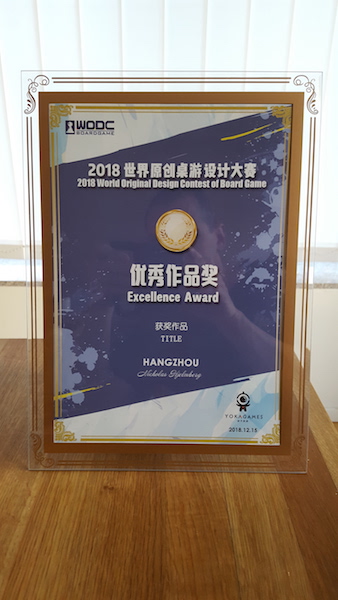
In spite of the workload I did find time to complete a review of an old favorite game of mine: Diplomacy. Although this shares the fate of many other good games of seldom hitting the table nowadays, I chose to extend my collection with other interesting titles: Inca Empire, Chicago Express, Iwari (Kickstarter), Age of Steam (Kickstarter), and Key Market (Kickstarter). The backing of Iwari, an extended variant of China, meant that I traded away this old favorite. More games are likely to be traded away as I refine my tastes. Last but certainly not least I received my Excellence Award from Yoka Games for Dyce (Hangzhou). I've not yet decided if and how to promote this rather unique but perhaps too abstract AI trading game but who knows what the future holds for it? February, 2019 With the new edition of Christina Regina completed, I put all my focus on Find the Bug! - Project. Thorough simulations of various strategies eventually led me to a balanced set of project members, an annotated game helped me balance project tasks and project reports for a good timing between completed projects and full steering groups, and the writing of the draft rules helped me streamline the gameplay. The actual files for the many different components took time, particularly to come up with a good iconography, but it also forced me to come up with book-keeping routines for project achievements and evaluations so simple that they could be expressed by icons. I was also happy to realize that the game will fit in a medium pro box, similar to Find the Bug! - Agile. 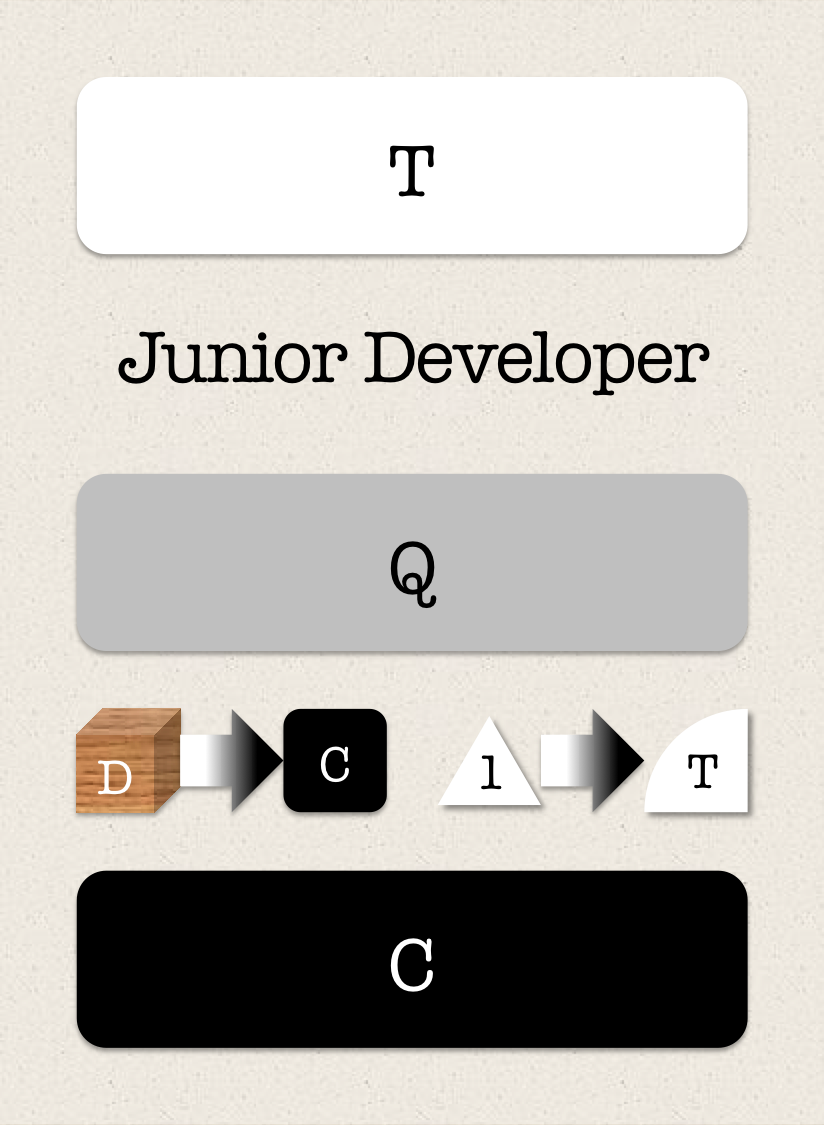
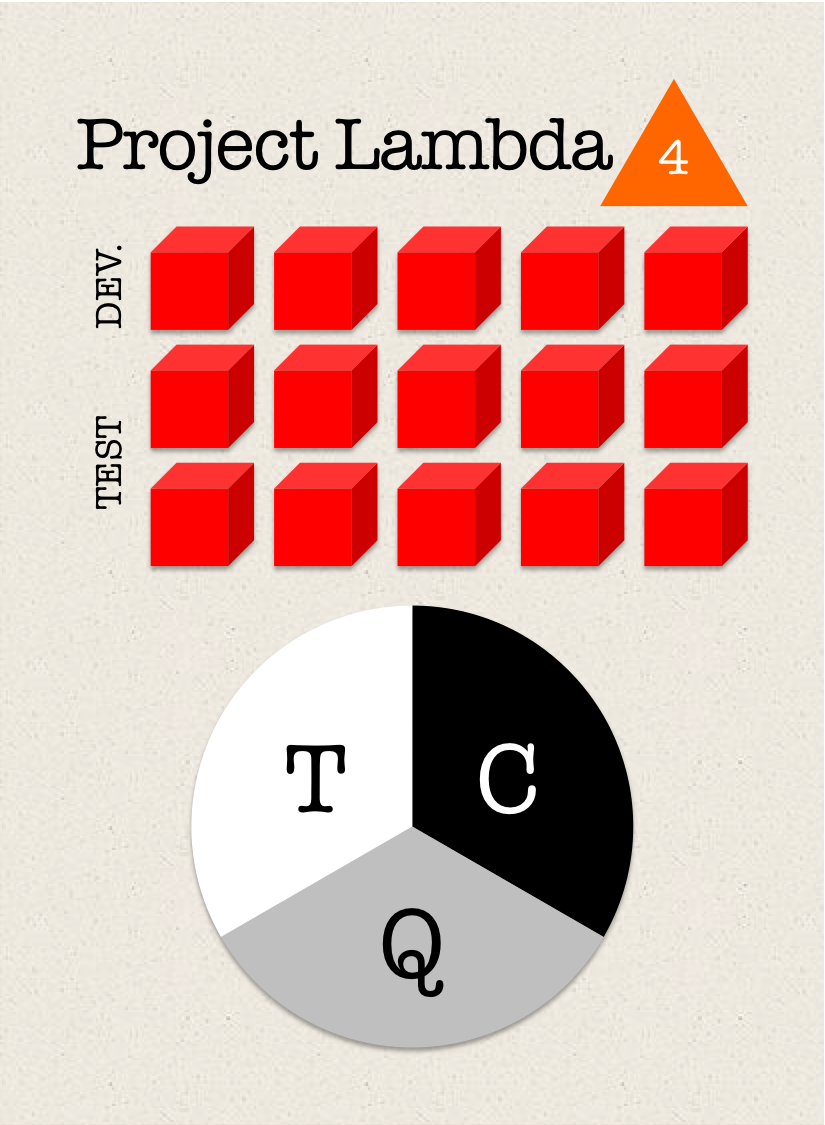
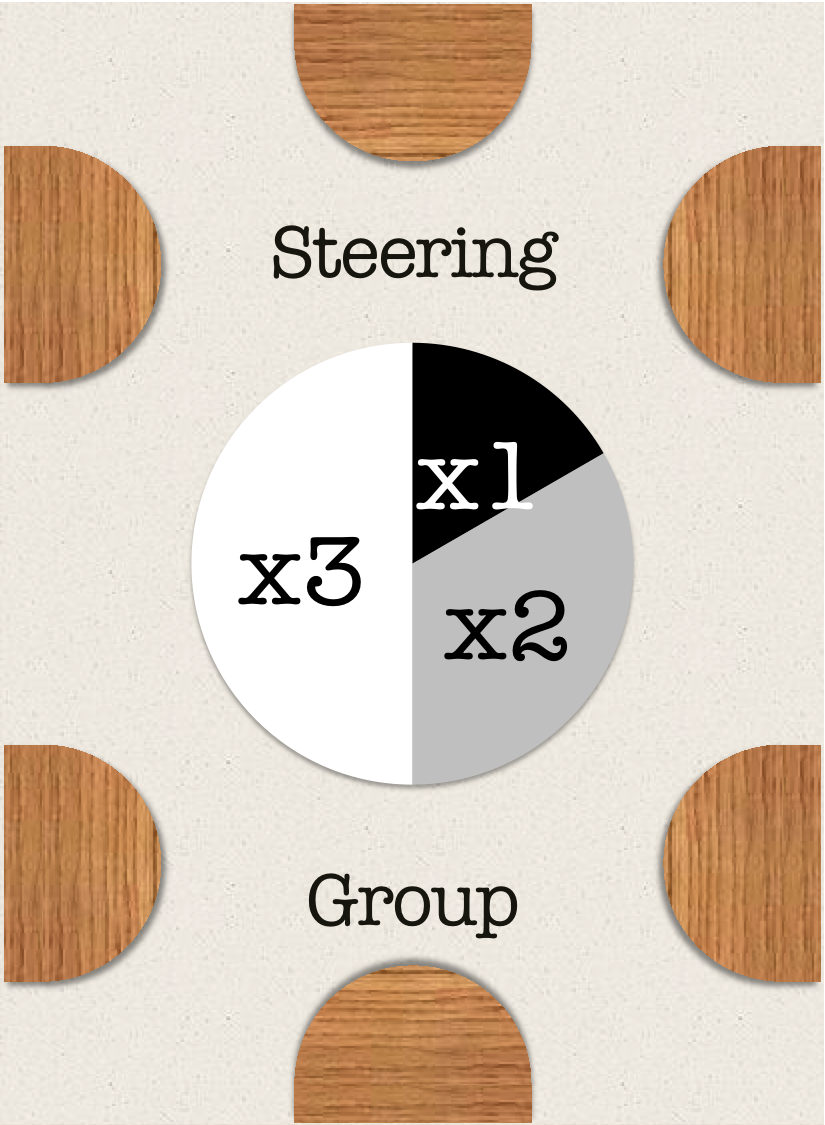
But in spite of the focus on this new game, I managed to allow time to an updated video for Peoples - Migrations. With that, only Bake the Cake is left waiting for an animated video. I also managed to complete yet another review, this time of Amun-Re. 
Another positive experience this month was the hosting of a designer meeting that lasted a full day. This allowed a much deeper testing of games and is the best option for testing games that I've tried out so far. Besides this, the major event of the month was the celebration of the fifth birthday of Nova Suecia Games. Perhaps it was this that finally gave me the inspiration to return to the game that started the journey, Nova Suecia and "fix" the last part: streamline the long turns to reduce downtime. After some iterations, I came up with an idea for separating buy actions, sell actions and reset actions without compromising with the interdependent economy that is the heart of the game. I will start this work next month and look very much forward to the result! January, 2019 The first month of the new year was devoted to an old favorite of mine: Christina Regina. In a too rash acceptance of a fellow designer proposal, I had simplified the game too much and removed the idea that every color score more or less to every other color. When a fan of the game pointed out that he saw both good and bad things with this, I divided the game into the new and simpler "silver" variant and the old and intriguing "gold" variant. I also returned the layered chambers (central, middle and peripher) instead of quadrant chambers to make it easier for the Queen to reach different chambers. Another rejected fellow designer proposal was the idea to use non-colored tiles as "currency" for action cards. The result was a cleaner game more true to its core. With the boardgame changes completed, I also took the opportunity to update the cardgame video with only one small simplification to the game: a player must move 1 card to the bottom in his or her turn instead of choosing 0-2 cards to move. A smaller but much welcome change was given to Iconoclasm. I had never found any elegant solution for which tile to replace when weakening a unit after a clash. The tile closest to the connection failed to single out a tile in every possible case, since there may be more connections. Yet, there was a solution that I had failed to see for so many years: the tile closest to the last placed tile! I also found an elegant solution for the earlier version of the game where players saved their own elements to last by simply letting the player choose from a common pool of elements instead of having own pools. The current version no longer uses pools but rather a mancala mechanic that tells both elements to play and supporting elements but the idea will be shelved in case of future updates. Another updated cardgame video was that of Vasa Regalis. Last but not least I completed the video for Suecia and I also started the game test, although the game still has a long way to go. My design focus didn't prevent me from enjoying other games. The King is Dead and Ra both got reviewed and two more games entered my collection: the negotiation game Genoa and the simple stock game Paris Connection. I also managed to squeeze in six test sessions of the duel variant of Britannia, although my results indicated an imbalance in favor of the Anglo-Saxon side. Speaking about tests, I also tried putting up Apokalypsis at Tabletopia, something that turned out to be pretty simple. Whether Tabletopia will be attractive enough for external testers remains to see but it's good to know the interface just in case. 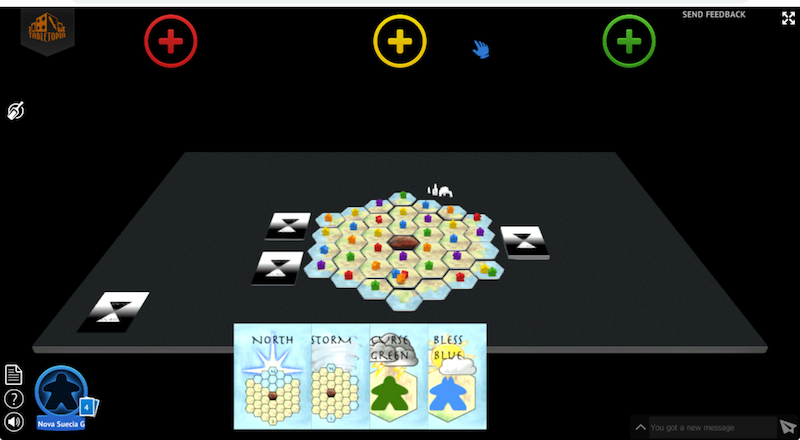
Old blog posts may be found here:
|
Please leave a comment on the games or contact me directly at nicholas.hjelmberg@gmail.com. |
 I also submitted Apokalypsis to