
 |
Vision | Projects | Blog | Articles | Awards | Order | Reviews | |


































|
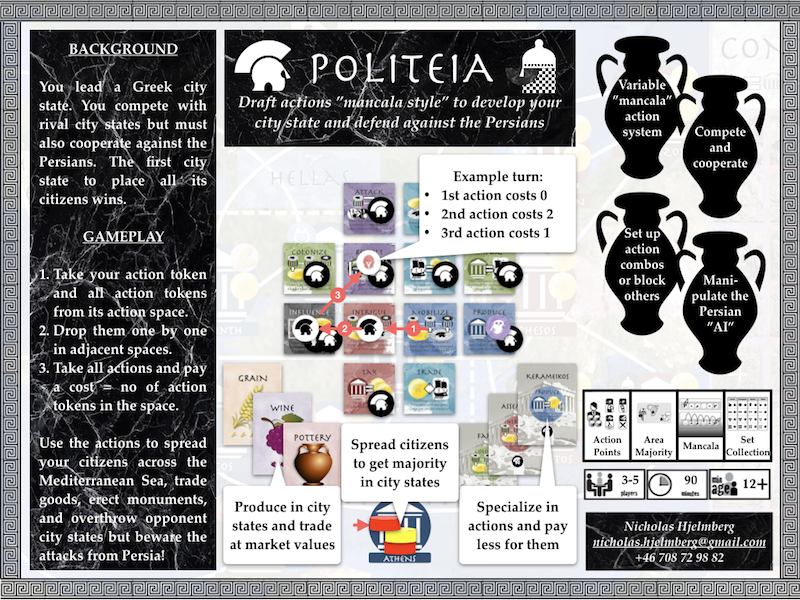
December, 2021 The hopefully last month with Politeia before submitting the game to Fastaval was all about final balancing. The Exile action was turned into an Intrigue action to have Persins replacing leaders. Not only did this nerf down the action but it also reduce the war rate, something that may be used as tactic. The "Trade" actions Build, Sacrifice, and Trade were improved (flip and exchange for buildings, VP for sacrifices, 4 talents - market in market for Trade) but also scaled so that additional actions cost more talents. The "Place" actions may now be paid with grain (why else choosing grain instead of talents?) but grain may only be used in occupied cities and talents only in adjacent cities. As a side effect, the players will be "forced" to spread into several areas rather than focusing on only one area. Another step in this direction was a limit of Battle, Intrigue, and Revolt to once per region. Another side effect was that Battle had to be changed since it's more difficult to get 2 citizens in the same city. Instead, 1 citizen is enough but they are placed in the bottom so 2 citizens are still required but may come from different cities. Finally, the game was slightly prolonged with an increase of the maximum action cost to 2 talents and an addition of 3 action discs irrespective of player count. Changes considered but finally rejected included the idea of having overlapping instead of similar regions for the Place and Receive actions. I was worried that the possibility of both placing in a region and then receiving from the very same region would favor short action routes and limited strategies. The idea was to for example place in different regions but then only receive from one region. However, testing showed that short action routes were seldom efficient due to the few actions you get very turn and it's still possible to place in one region and then use it as a bridgehead into another region. My only concession was the addition of a "wild" Recover action to allow a minimum income and a build in empty starting cities as catch-up mechanic. There was not much time left for other activities but I was happy to see Gulag becoming the first of my games to receive a 10-rating at BGG. 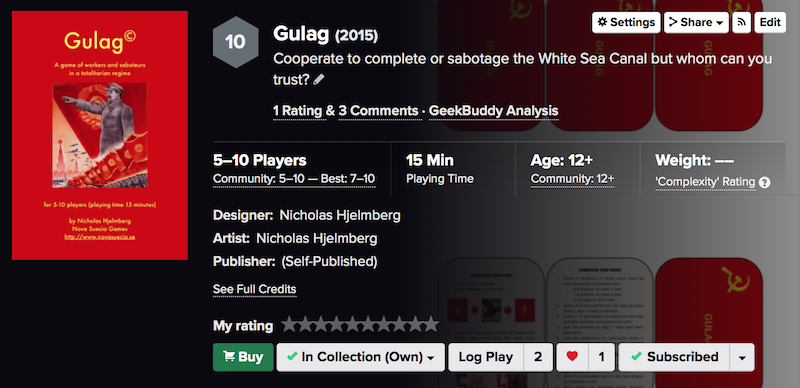
Finally I made an unusual addition to my game library by acquiring the classic Swedish game Ostindiska Kompaniet to my collection for a good price. It may not be a good game with today's standards but I've been curious about it and it's always interesting to see how game mechanics have evolved since my childhood. November, 2021 The work on Politeia continued with focus moving from rules to components. The final (?) rule change was the reintroduction of the Persians attacking along links instead of all cities (supported by arrows on some of the city links). Instead, the game saw changes like the removal of action text to player aides to give room for action spaces with action costs to place the action markers in and the removal of Hades and Elysion spaces from the map to tiles to make the map less busy. I'm still pending on the trigger of the Greco-Persian War. Internal tests indicate a slightly too high war rate while external tests hardly see any wars at all. Perhaps there is a good balance after all. I was also proud to demonstrate Cosmoclasm at the 10th Anniversary of Smashcon. One happy contest winner returned home with a copy and I even won a contest myself and could add Boardgames That Tell Stories by designer Ignacy Trzewiczek to my library. 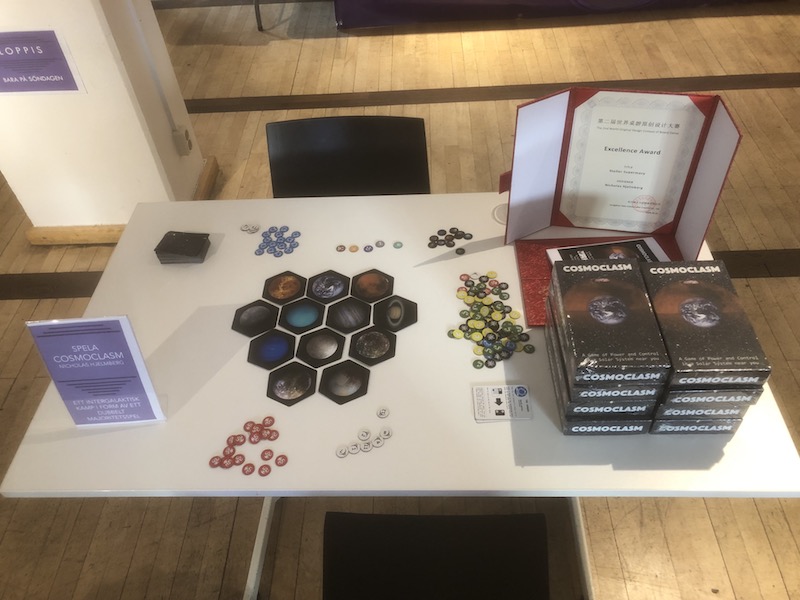
October, 2021 Politeia received all my attention this week. Several tests were completed to tweak and tune the mechanics and make the gameplay as smooth as possible. The removal of the influence tracks made the old Influence actions redundant so it was first replaced by a Vassal action, whereby players could add Persians to cities for more strength but less income. However, this was still too complicated and infrequently used so eventually it was replaced by an Ostracize action, whereby players may exile either own leaders (and earn talents) or opponent leaders (and pay talents). This provided an additional way of manipulating the city majorities and added another dimension to the area majority game. Another seldom used action was Trade, an action I've never really been happy with. It was now lumped together with the Export action (buy or sell resources) and gave room for an interesting Sacrifice action, whereby resources may be exchanged directly for VP instead of talents. This created a new strategic option for the trading game and balanced the resources relative to the talents. (Turning talents into citizens provided benefits immediately while turning resources into talents into citizens required one extra action in the old rules.) I also put the game on Tabletopia for further testing opportunities. How about the alliances and the vassals then? They survived as advanced rules, whereby players may either pay opponents to temporary use their strength in majority assessments or to invite the Persians to cities for immediate talents and strength but less future income (meaning that the Greco-Persian war threat decreases, since Persians enter the board). All in all, the changes make the game easier while providing many interesting opportunities to manipulate the itricate area majority game that is the goal of the innovative action selection game! 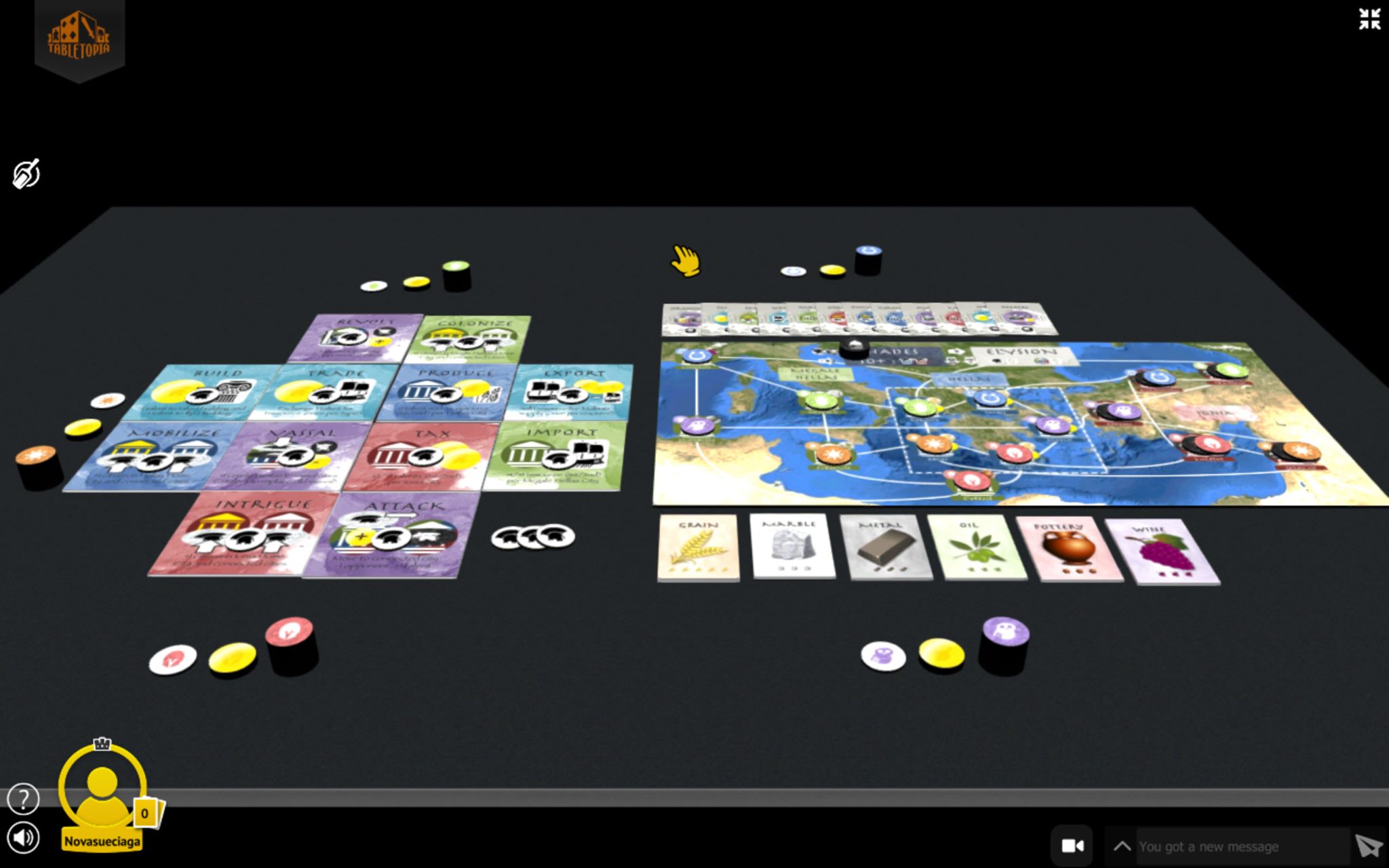
September, 2021 September offered several good news. Not only did both Christina Regina and Explorers & Exploiters reach the semifinals of this year's World Original Design Contest but Politeia was also accepted for this year's Fastaval. Fortunately the Stockholm Game Designer Meetups were restarted so I got to give Christina Regina a final test before ordering prototypes and start a new test round of Politeia. While Christina Regina was considered simple enough, I decided to further streamline Politeia by removing the alliance tracks and focus on the action selection and area majority mechanics. Hopefully the alliance mechanic will get a new chance in the crusader game I'd like to design as a successor of old Bellum se ipsum alet but until then I'll focus all my effort on Politeia and Fastaval next Spring. Nevertheless, I did manage to complete a review of Namibia (and regret that my own economic game Globalization will have to wait even further... Perhaps it's not strange that I sold Nova Luna without even playing it - I simply have more games in my collection than time to play them. 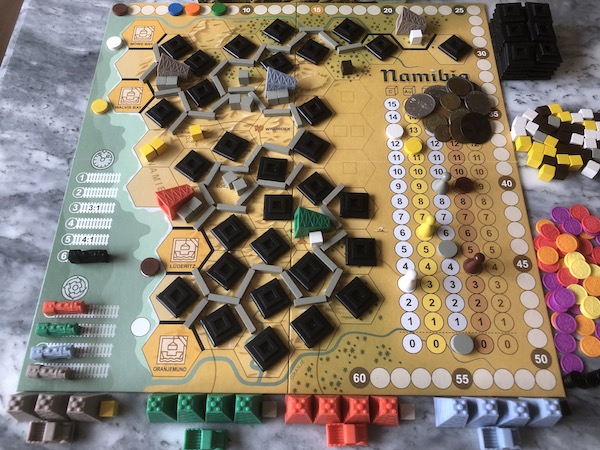
August, 2021 After some testing, On Shelf was trimmed and tuned to a balanced game. I also completed a video for On Shelf. On Shelf was also selected together with the newly redeveloped Politeia to be submitted to this year's Fastaval. 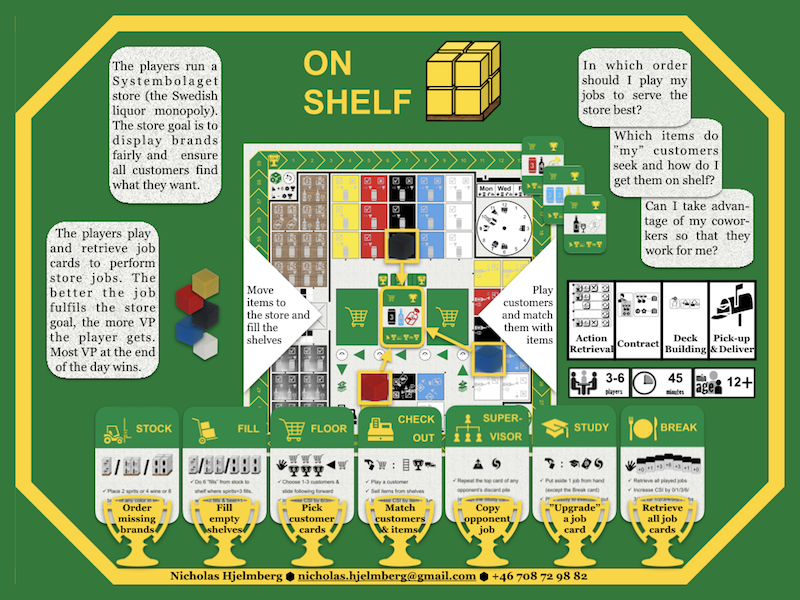
With this completed, I finally got time to return to Globalization and calculate new market values for the new three tier markets (produce-refine-manufacture). I also got the idea to link price increases for manufactured goods to salary payments instead of event cards (and possible remove the event cards altogether in the base version). With some testing, I should be ready to place an order for printed prototypes with The Game Crafter. I did order some custom prototypes from Spielmaterial already this month since their assortment and prices are better (including components to turn my previous acquisition Akrotiri into a four player game). I also took the opportunity to acquire a cheap copy of Namibia, an economic game with an interesting mix of pick-up and deliver and market manipulation. Perhaps it will provide some inspiration to Globalization. July, 2021 July and vacation meant some well needed time off to focus on of my many game projects. However, it turned out that a new project caught all my attention. Inspired by a practice wek at a store, I couldn't help wondering whether the logistical challenges of getting the right items to the right places at the right time could be turned into a game. The first idea was a spatial challenge to manipulate cubes in a way that forces other players to move "your" cubes while moving their own cubes so that they may be matched with your customer cards. Around this idea a system grew with actions covering all the parts of the logistical item flow in a store. Those actions were linked to cards played similar to Concordia and each action was rewarded with victory points based on how "useful" the action was for the store as a whole. This gave the game a semi-cooperative dimension where the challenge is to time your actions to the needs of the store in addition to fulfilling your customer cards. The result was On Shelf. 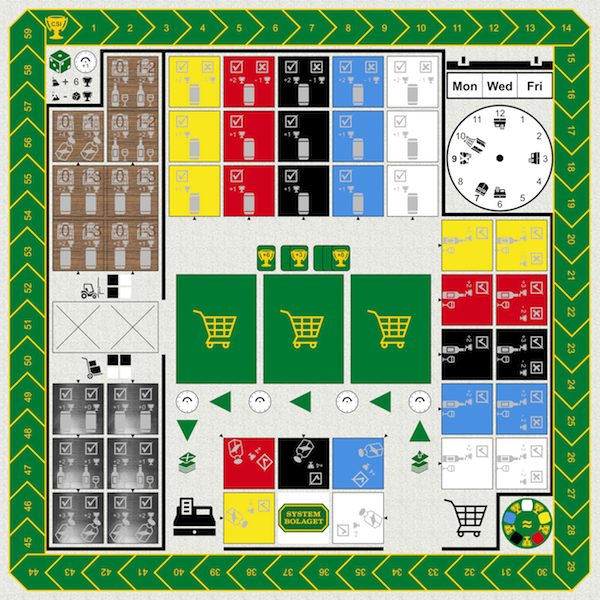
Hopefully the game can be completed by the end of the vacation, after which it's time to proceed with the old game projects. Two of them were finally selected for this year's World Original Design Contest, namely Christina Regina and Explorers & Exploiters. I was also sorry to bid farewell to the fine game Louis XIV as it seldom hit the table in the competition of the many games in my collection. June, 2021 Some years ago I was fascinated by the new and innovative mechanics featured in Bug and when it debuted at Boardgamearena I spent many hours discovering the depth of this masterpiece. The result was a review, including an interesting game study. It also inspired a possible improvement for Iconoclasm, whereby similar color combinations rather than shapes could be used for clashes. However, it's too early to tell whether this idea is something to pursue. A more promising idea got to me from a week's practice work at a store. The challenge to order, store and supply goods so that the shelves never get empty is a kind of game so why not make a game out of it? The actual game could be the challenge to organize the goods so that "your" goods (as matching your secret customer cards) are brought to the shelves by the other players, not unlike the challenge of Imhotep. The theme may not be that exciting but perhaps the game could be aimed towards colleagues, similar to Find the Bug!. But should I take on another game project while Globalization still waits to be finished? I did review a game with similar theme but simpler mechanics, Smartphone Inc. with the hope to find some inspiration but perhaps it's too streamlined to capture everything I want Globalization to be. However, before working on any of those ideas I have to identify candidates for this year's World Original Design Contest. I did present The Mara and Christina Regina at Pegasus Designer Days but I'm still not convinced about their general appeal. Besides that, my game collection got some new games as I got a good deal for Blue Lagoon, Nova Luna, Realm of Sand, and Railways of the World. Their staying power remains to see, though. May, 2021 May saw a revisit to several older games. Following last year's testing of Apokalypsis, I finally decided to let the classical closed variant be the main variant and the open variant be the advanced variant. After all, some players may feel that they have too little information but this is countered by those players who find the semi-informed decisions agonizing. The challenge of discarded cards returning to the game too quickly was solved by the old idea of adding more cards with smaller areas while new ideas like rescuing. I also turned the old idea of temple tiles into physical temples instead of mountains to fill the "holes" in the game board created by The Game Crafter's new limit of 32 tiles per slug. 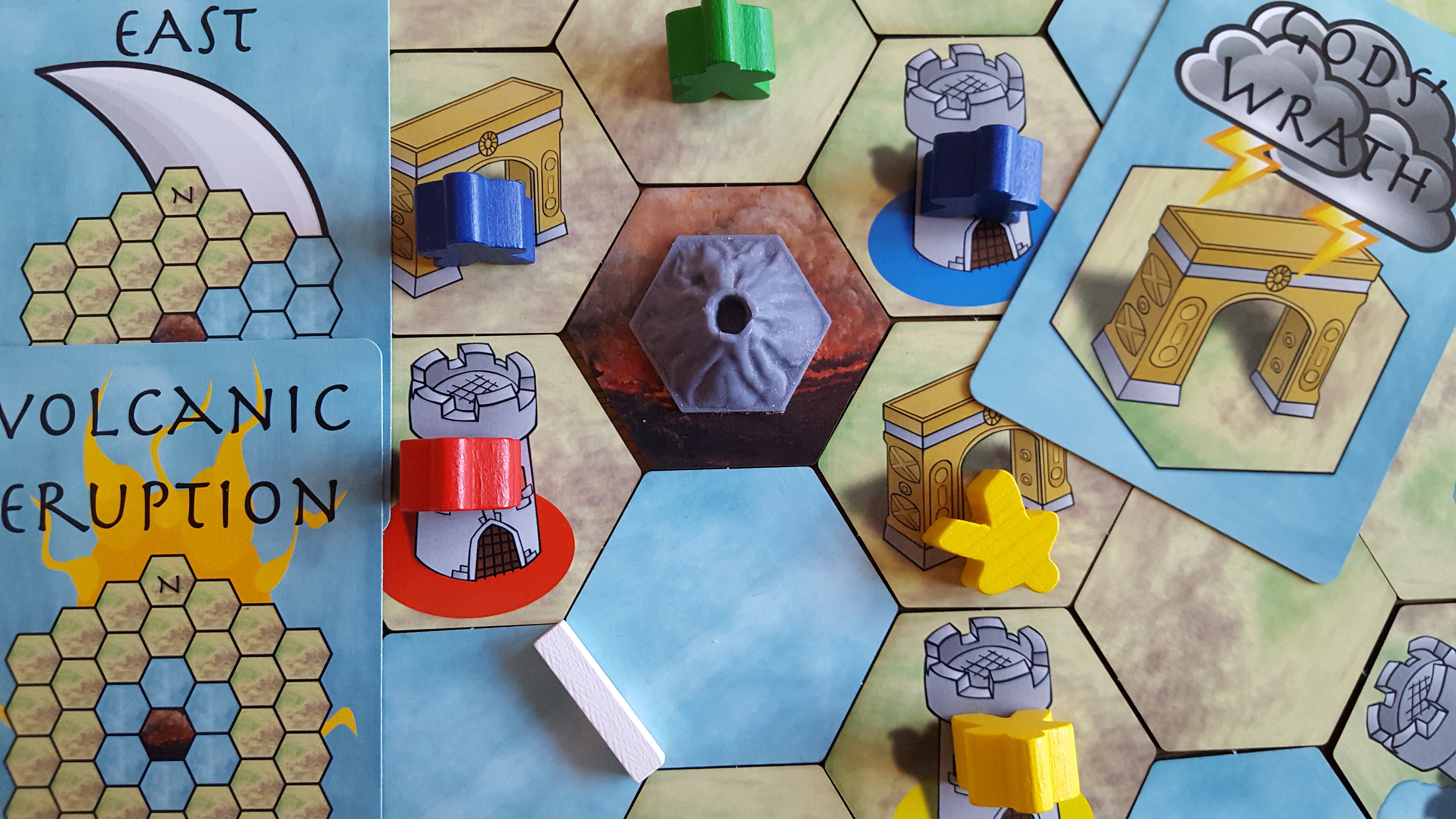
Peoples - Civilizations was also welcomed back to the design table and after a review of the "old" and "new" versions I finally (?) confirmed that the old version was the one to proceed with. The many cards may be less elegant than the few buildings but they do make the actions more varied and interesting. However, I did decide to keep the time wheel to allow actions with several meeples in a turn instead of the old one meeple-one action rule. I also simplified the region limit rule by simply letting one side be up to four tiles and the other up to two tiles per people instead of the previous formula. (Why didn't I think of that before?) The third revisited game was Bellum se ipsum alet, which caught the interest of Companion War Games. After a quick review of the old rules to add necessary clarifications, a prototype was ordered and quickly delivered by The Game Crafter. Hopefully the double supply system will be considered interesting enough to make something out of. 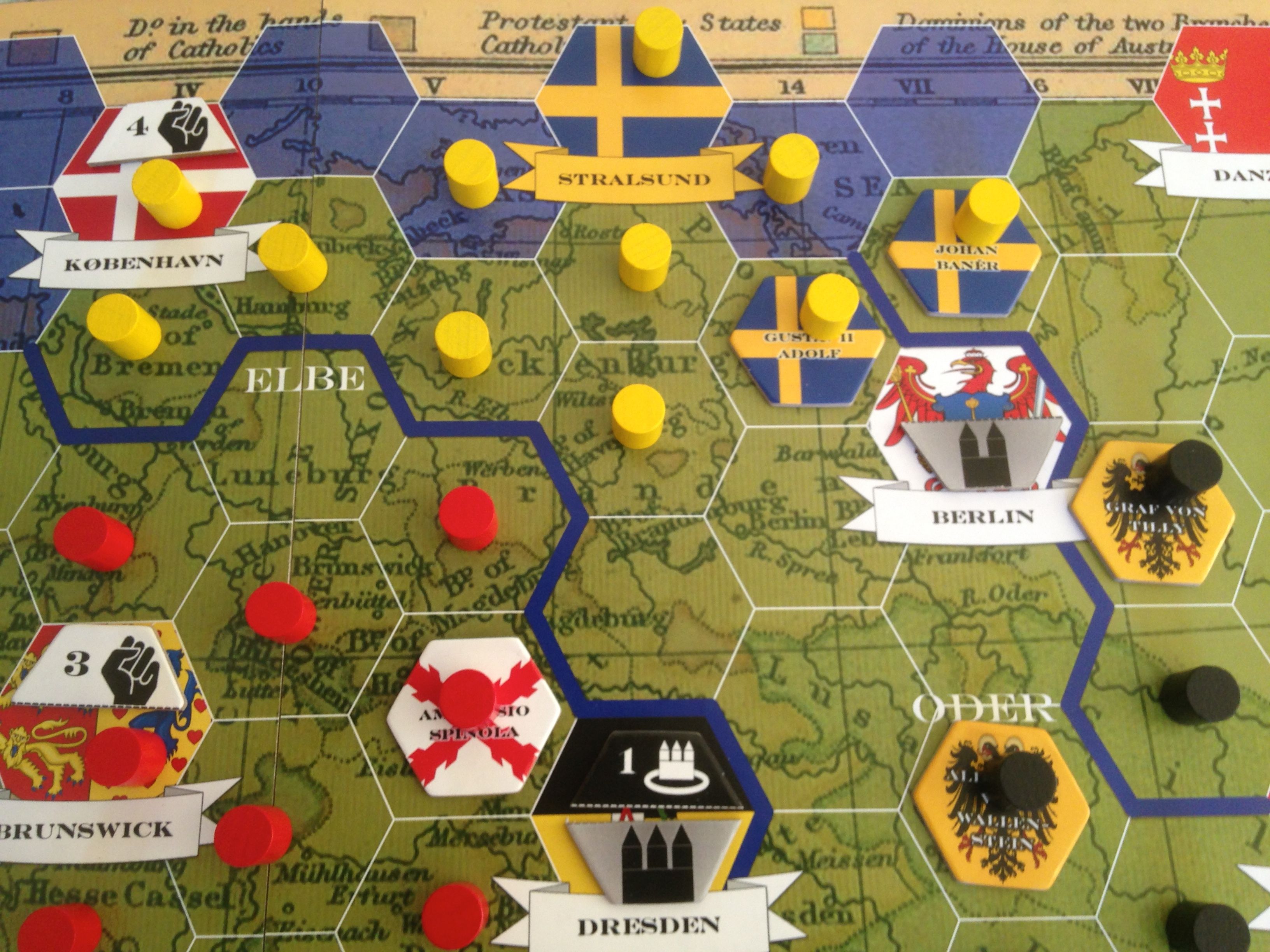
My third and final game acquired with my gift card became The Estates, a simple but clever auction game which I hope will offer many interesting (and mean) decisions. I also did some cleaning in my game collection, where unplayed games like Settlers, Candamir, Aztlan, Five Points, Oltre Mare and Sheepland were traded away for Imhotep, Castles of Burgundy, Keltis, Ivanhoe, Principato and Akrotiri. Perhaps none of those games will stay in my collection for very long but it's a great opportunity to explore design ideas. April, 2021 A busy work month left very little time for game design. I did manage to submit my pitch for The Mara to the AEG Pitch Project 2021. The reception of this will probably determine if it stands out enough to be submitted to this year's World Original Design Contest, the invitation to which I received this month. Another candidate for the WODC would be Find the Treasure - The Card Game, which found its first buyer since its upgrade to accommodate more players. 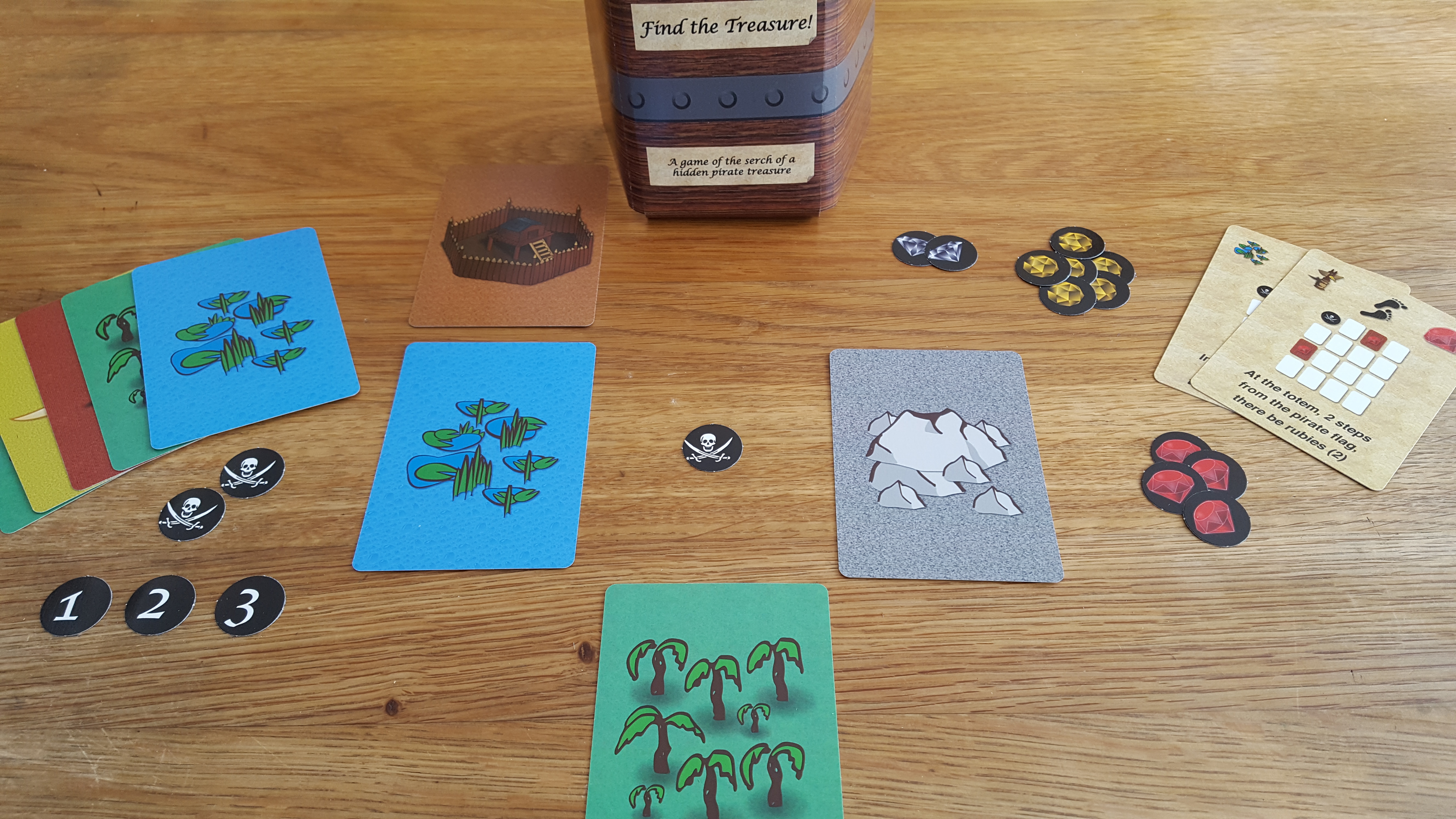
I also found time to play games and the second game acquired with my gift card became Smartphone Inc., a very lean design that manages to capture many different business decisions (prices, markets, R&D etc.) in a short and simple game. Hopefully it'll inspire to the next development step of Globalization. I've decided to return to the time wheels considered in the first ideas but combine them with the time track by letting the players choose whether to take actions while waiting for their items to arrive or simply skip them and move up the time track/spin the wheel to get them immediately. It may be too fiddly to let all resources go through the time wheels so I lean towards only letting the profit go there. After all, it's how long a company can afford to wait for its money that matters in the decision to outsource production. Hopefully next month will give me more time to tell. Finally I managed to complete the review of Mini Express.March, 2021 After having finished the test report of Fria Ligan's Crusader Kings, it was time to return to my own game. I managed to complete both the rules and a game video. The initial testing revealed the need of "fast driving" once you know some tiles but it was solved by simply separating the drive action and the peek action to let players prioritize one over another. The Mara now feels good enough to pitch to AEG Pitch Project 2021. 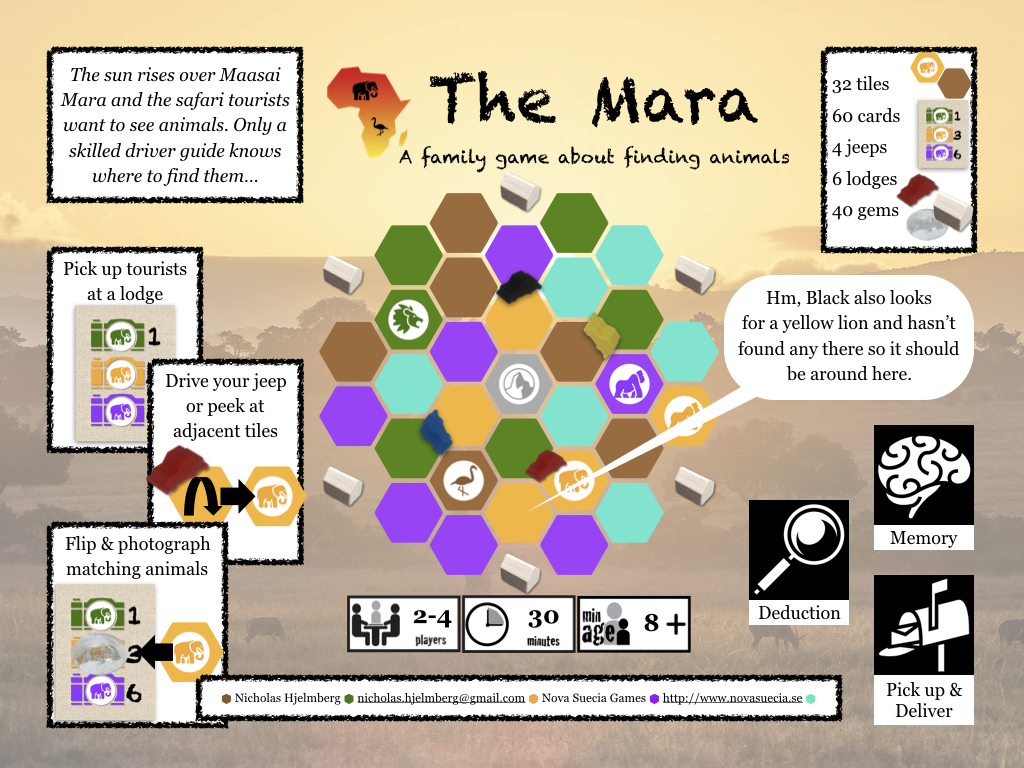
I was also favored with a gift card from a local game club in recognition of the many buns I've brought for game evenings. The first game I used it for was Dominant Species: Marine. In addition, I received the previously kick-started Mini Express and completed a review of its older sibling Mini Rails. Another big surprise was the sale of no less than eight(!) different card games, among them my popular Comrade games but also a my personal favorite Knights & Damosels. February, 2021 February saw an intense work with Fria Ligan's Crusader Kings. First I published all the components on Tabletopia and then I tested it rigorously. The first impression - the new edition is more streamlined than the rather clunky first edition and may very well appeal to fans of "dudes on a board" games. 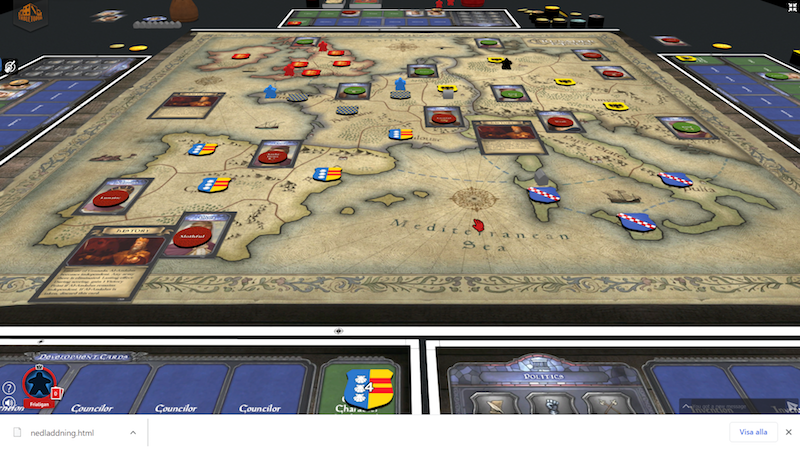
Perhaps it was this work that finally gave me energy (although not time) for my own games. Regarding Cartel, I once again took two steps forward and one step back as I finally (?) abandoned the transport companies in favor of the original middle tier companies, returning to the idea of the original game with three levels of resources. This means that I once more have to come up with new market levels and event cards but the foundations remain the same and hopefully I'll get a new test started soon. More importantly, I once more experienced that spark of inspiration that made me come up with a game idea in just a few days. As often before, the idea came from another game (a WIP with a safari theme by another indie designer), on which I applied my own game mechanics from other "tile-flipping" games like Apokalypsis and Explorers & Exploiters. I realized that my own safari memories from Maasai Mara would make an excellent games about guides driving tourists across the savannah in pursuit of animals for them to take photos of while also sharing information with other drivers. The mechanics may not be the most popular among hardcore gamers (memory, deduction, optimal routes etc.) but perhaps for families. Thus, this game may be more suitable for pitching to publishers than my gamers' games, particularly since it will contain a lot of animal images. 
With the rules for both those games more or less determined, I finally decided to add them to this homepage with the names The Mara and Globalization (instead of Cartel, which people may associate with drug cartels instead of cooperating companies). Speaking of resource conversion games, I was also happy to add a copy of the old classic Neuland to my collection. In addition, my long awaited copy of Mini Express finally arrived. Hopefully those two games will provide further inspiration to both Globalization and Suecia. Another old game that was brought to my attention was an old classic - Christina Regina recorded its second sale. This game occupies a special place in my heart as it was my first "original idea" after my two first games Nova Suecia and Bellum se ipsum alet, which both built on old childhood ideas. Last but certainly not least, I was happy to reach my all-time-high on the Triqqy.com toplist for absolute favorite game Tigris & Euphrates as I advanced to the second place. First place may be unattainable but who knows... 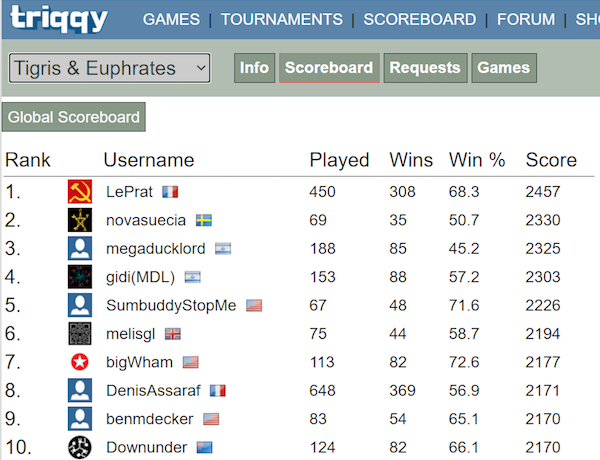
January, 2021 The year started with focus on other games than my own. I was happy to add Kanban EV and wrote an early review of this elegant and thematic design. I also acquired the older Knizia games Merchants of Amsterdam and the previously sold Tower of Babel in exchange for Res Publica as well as the first edition cards for Bios:Genesis for free. In addition to all those, I considered backing Carnegie because of its interesting action selection mechanic through workers in departments. Plenty of games to study that is. I also did some further testing of additional scenarios for and agreed to put out a new version of Crusader Kings on Tabletopia for online testing purposes. In spite of all this, or perhaps because of all this, my own games didn't progress very much since I hesitate between continuing to design them my way or making them more similar to games currently being favored by publishers. I did get some encouragement by a sales report of another two copies of Politburo, something that makes it my fourth most popular game. Party games about totalitarian states may be even more difficult to pitch to publishers but who knows... Old blog posts may be found here:
|
Please leave a comment on the games or contact me directly at nicholas.hjelmberg@gmail.com. |
 I also enjoyed my first game weekend at