
 |
Vision | Projects | Blog | Articles | Awards | Order | Reviews | |

































|
ArticlesWhat makes a game fun?As all game designers, I have a vision of creating fun games. But what makes a game fun and how do you know when a game is fun? I have discussed some aspects of the latter in my article on testing and will now elaborate on the fun factor. Let us start with the objective criteria listed by Wolfgang Kramer. OriginalityThere are many definitions of games but most of them revolve around the core characteristics of players, rules and goals. Given this definition, games can be looked upon as representations of life but in a structured and "safe" setting. Games may allow us to simply pass time, to engage in a social context or even to play roles and take on challenges that we would not normally do. Why then do we need so many different games? Wikipedia lists more than 40 different categories. Why not simply resort to classical games that most people know rather than learning new games? I think the answer is our curiousity. Just like we want to try out new and different things in life, we want our representatons of life to be different. Granted, very deep games like chess and go will provide enough originality for a lifetime, but there is something special about discovering a way to play that you've never played before and that allows you to try out completely differents means and ends. I'm a chess player since childhood myself but that doesn't prevent me from feeling as a little boy on Christmas every time I learn about a new and original game. The key message here is that originality is an important fun factor. But what if the opposite happens? What if you get a new game with old mechanics that you already know? You're likely to get disappointed, even if the new game by all measures is better than the old one. Why is it so? I think the explanation here is the simple rule of diminishing return. We've invested time to learn an old game and been rewarded with that game's unique playing experience. Even if the experience of a new but similar game would be slightly better, it would still not be worth learning. This is why we don't see any new chess variants with pieces moving slightly different. This is why Monopoly and RISK remain on the shelves although there are many better economic and strategical games out there. The key message here is that it's OK to get inspiration from existing games but your own game must be original, not a pale copy.
DiplomacyRISK without the random dice and the massive stacks. The simple but elegant battle system, where the actions are simultaneous and the outcome is determined by counting strength and support is a brilliant representation of Machiavelli's advice on diplomacy and Clausewitz' theories on concentrating forces. Settlers
Tigris & Euphrates
In my own games, I have strived to find new and inventive game mechanisms, such as the circular relation of Iconoclasm, where each players has a defined relation to each other player when determining strength and support in conflicts. Whether you like playing my games or not, I want you to feel that you play something original, and I encourage you to design your games with the same objective. You know you have succeeded if your test players can't think of any similar games. ReplayabilityMany conclusions from the discussion on originality above apply to replayability as well. Just like we want new games to be original, we want new sessions of old games to be original. Imagine a game where some or all parts of the game are similar in game after game after game... Such a game would not be played many times. Variation is thus the key to replayability but how do we add that to a game?
But it's not enough to have a mathematical variation in a game, it must also have a perceived variation. In chess, the different positions and stages of the game have different challenges and opportunities. It doesn't matter if a game has many unique positions if the players are still faced with similar options. Options are thus another key to replayability. There are basically two types of options that a player may face: tactical and strategical. In this context, tactical options are defined as the paths open to a player to play the game optimally while strategical options are defined as the paths open to a player to win the game. The more different tactical and/or strategical options a players has, the more likely it is that he or she will want to return to the game and explore new paths. It's not necessary to have both tactical and strategical options. A game like chess has only one victory condition (check mate) but several ways to reach it (positional play where you go for positional advantage, combinational play where you go for material advantage etc.). In a game like poker on the other hand, there are several different card combinations that can give you the victory. When designing a game, you should put yourself in the position of the player and imagine the different tactical and strategical options you have. Which are they? Are they equally good? Do they offer different play? This will help you assess your game's replayability. But it doesn't stop at the tactical and strategical options. You should also remove or reduce all repetitive parts of a game, since they decrease a game's perceived variation. Are there opening moves that are legally forced? Remove them by adding setup steps or starting from fixed positions. Are there starting moves that are optimally forced? This is actually worse than the preceeding example, since this gives experienced players an unfair advantage, and they should also be removed. Is the end game forced? Let it end earlier. The opening moves of backgammon would not be very interesting if the game would start with an empty board while the introduction of the ingenious doubling cube among many other great things helps ending game where the outcome is obvious.
In my own games, I have experimented with different ways to achieve variation. Nova Suecia has several production and tax options that are related to each other in an intricate web of dependencies as each produced good will have to be traded with other players and each paid tax will have positive and negative effect on other areas. Knights & Damosels uses asymmetric and ambiguous scoring, where knights and damosels have opposite objectives and one player's attempt for one victory condition may help another player to reach another victory condition, to create varied sessions. When testing your games, document how they progress and assess what is varied and what is repetitive. You know you have succeeded if your test players try different options. SurpriseWhether you explore new games (as in Originality) or new paths in old games (as in Replayability), would you want to know exactly what will happen? Would you enjoy a game where you know exactly which actions you need to take to win? Probably not. Instead, you want to be uncertain, you want to be surprised. The game designer Greg Costikyan argues in his book Uncertainty in Games that uncertainty is necessary for a game to be fun. Costikyan identifies eleven forms of uncertainty:
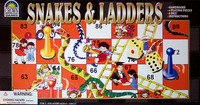
RandomnessRandomness is a simple source of uncertainty. Throw in a couple of dice and your players will never be sure what will happen. Some games, like Snakes and Ladders rely entirely on the dice (leaving nothing to the players) while Backgammon weaves in the actions as well (both your and your opponents' ability to use the probabilities to your advantage).
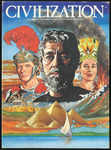 Randomness can be used in many ways. It can rule the outcome of a player's actions (and tell if he or she succeeds or fails), it can rule the outcome between two or more players (and tell who wins and who loses) and it can rule the actions of a third party, affecting some or all of the players. The latter is an example of artificial intelligence, where the players have to adapt their gameplay not only to each other but also to this uncertain being. This being can be something tangible, like the robber in Settlers, or intangible, like the calamities in Civilization. The latter is an example of randomness which players can mitigate (by trading them off to other players). In my games, I generally try to avoid randomness and leave the game in the hands of the players. Knights & Damosels use drawn cards for random events but they merely provide the setting for the players' actions. Tre Kronor Infernum uses artificial intelligence to spread the fire but it's simulated through combination of cards played by the players themselves. Hidden information
Own actions
I have experimented with similar mechanisms in Bake the Cake!, where a player's careful collecting and compiling ingredients may be ruined by other players taking them for their own purposes (or even eating them!). This leads us to the fourth source of surprise: the interaction. InteractionFor interaction to be a source of surprise, two conditions must be fulfilled. First, the other players' actions must be unpredictable, and second, their actions must affect your own play. As discussed in Replayability, many tactical and strategical options increase the variation of a game but also decrease the predictability as it will be more difficult to predict other players' actions. Nevertheless, if their actions affect your play, you must constantly try to be one step ahead of your opponents to win the game.
In my opinion, interaction is the best source of surprise as this emphasizes the social aspect of gaming. Analytical challenges are best saved for solitaire games. I do appreciate analytical masterpieces in chess, where one player finds a combination that leads to a forced victory, but they shouldn't appear until after a fierce interactive struggle. Nevertheless, my most memorable games are games that are decided by a perfectly timed guess or bluff or something similar. One such memory comes from Diplomacy, where my Austria had a strong alliance with Germany while yet encouraging her enemies until I was strong enough to claim a solo victory. My game Vasa Regalis is based on the unknown actions of the players. If they spend a lot of material on a part, you should do the opposite and vice versa, but you don't know until the end of the game. In Iconoclasm on the other hand, the board and the remaining tokens are known to all players but you will never know where on board the others will place their tokens and hence if they will support or ruin your strategy. Equal opportunityLife may not always be fair but we do want our games to be fair. If some players have advantages, it may cause an imbalanced game where the winner is questioned in the end. But how do we create equal opportunities? To answer that question, let's first look at the different reasons for unequal opportunites.
Let's look closer at each of those. First-mover advantageFirst-mover advantage is typically a problem in games where the players play for positional or material advantage. The first player in turn will be the first to claim territory or accumulate resources. If the game ends when a certain condition is fulfilled, the first-mover may also enjoy the benefit of more moves than some or all of the other players. Symmetric games like chess and go may suffer from this problem. Last-mover advantageLast-mover advantage is less common but may appear in games with take that mechanisms, where the last player can perform an action against another player without fearing retaliation. Trick-taking games may risk this problem if the last player in turn can benefit from knowing the other players' actions. Starting differencesStarting differences appear where the players have different starting conditions. The players may play characters with different skills or start at different places on the board. Asymmetric games may suffer from this problem if not well-balanced. Ending differencesEnding differences appear where the players have different victory conditions. One player's objective may turn out to be easier to accomplish than that of another player. This is also a problem that asymmetric games may suffer from. ExperienceExperience is a challenging aspect of equal opportunity. A game where experience doesn't matter at all may be perceived as too random while a game where experience is everything may have a high barrier for beginners. A beginner will never beat a grand master in chess whereas the outcome of Snakes and Ladders will always be open but that doesn't make the latter a better game. Adding or removing inequalities?To overcome the inequality problems, there are basically two approaches: add inequalities to balance them or remove inequalities (or at least reduce them).
Other games are better at actually removing the inequalities. The simulatenous moves of Diplomacy eliminates mover advantages and the random production of Settlers gives beginners a chance. However, if the inequalities are inherent in the games, it's difficult to remove them without also removing the core of the game. My game Bellum se ipsum alet uses balancing inequalities by giving the first player the advantage of conquering cities first (necessary to gain strength against the other players) but also the disadvantage of losing them first (as the cities revolt). The early versions of Iconoclasm suffered from a last-mover advantage, where the temple of the first player in turn would have to survive all the other players' actions for victory. This was finally removed by a rule that the game ends immediately if, in the last turns, a player is unable to build or destroy a temple. By this rule, the last-mover advantage became something that the players could play for rather than accept. Winning chancesThe previous discussion on Equal opportunity showed the importance of equal winning chances in the beginning to get the players engaged in the game. Equal chances in the end are also important to keep the players engaged throughout the game. A game where every player has a chance of winning in the last turn will be exciting to all. But should a game always have an open end? No, the players must still feel that the ride towards the end has a meaning, otherwise they may just as well skip the early turns. A game must thus be meaningful in all stages, from beginning to end.
To prevent runaway leaders, there are basically three options, as discussed by Matt Pavlovich in the article Positional Balance:
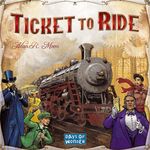
I have experimented with various neutralizing meachnisms in my games where perhaps Vasa Regalis and Tre Kronor Infernum are the ones that are the most open in the end. Here, the players are entitled to the same amount of scoring actions (building the ship and saving/stealing from the burning castle respectively) so they always play on the same conditions. In addition, similarly to Ticket to Ride, it's the sum of all players' actions that determine whether an action is scored positively (if the ship sails/the castle is saved) or negatively (if the ship sinks/the castle burns down). No "kingmaker" effectKingmaker. To some, the word may bring feelings of politics and intrigues, where an éminence grise works behind the stage to further his or her interest through someone else. To gamers, the word may indicate a broken game. Why is it so? The problem
The solutionAssuming that the kingmaker effect is a problem, what can we do about it then? Wikipedia lists different solutions to the kingmaker problem and I would like to group them into "tanginble" and "intangible" solutions.
Intangible solutions would prevent the players' willingness to act kingmaker. One way to achieve this is to ensure that all players have winning chances as per the discussion above, another to simply eliminate players without winning chances. The former contributes to a fun game while the latter works in the opposite direction. Other options include hidden scoring, which makes it more difficult to identify both winners and losers until the end of the game, or ranked scoring, where a losing player still has an incentive to do his or her best to reach a higher position. Other solutions include adding rules that prevent "sub-optimal" actions or unsportsmanlike action but they have the disadvantage that they remove creative control from the players.
In conclusion, beware of kingmaker opportunities in your design or tendencies in your test. If there, try to take advantage of them or, if not possible, to limit its effect without ruining the rest of the game. No early eliminationAll games have winners and losers - that's part of what makes a game fun. But games also have a social aspect. To lose a game can still be fun if the journey to the loss was fun. To lose a game and have to wait for the others to complete is never fun. This was common in many older games like RISK and Monopoly and is one (of several) reasons that they seldom make it to the game table nowadays. So why do games have elimination? One answer is audience appeal. By eliminating the worst players one by one and continue with fewer but better players, you build up the climax to a final where the best settle the game between themselves. It's no surprise that tournaments favor player elimination. But if a game is played for the players' amusement only, it should be amusing to all players. Another answer, I would say, is laziness. By using elimination to determine the winner, no victory conditions are necessary. So to avoid early elimination, one way is to look for alternative victory conditions.
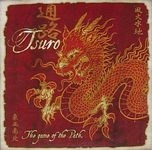
In my own games, I have strictly stayed away from all kind of elimination but Tsuro is very inspiring for any designer interested in making something beautiful out of this concept. Reasonable waiting time
No turns
Simultaneous turns
Interactive turns
Short turns
Sequenced turns
Time-limited turnsTo put a time-limit on turns is the simplest way to reduce waiting time but this is the very reason why you should use it as a last resort. If you need time-limits in your game, it probably has potential for improvement in other areas first. But time-limitation certainly has its merits too. Chess can't really do much else to reduce waiting time but through the use of different time limits, you can create completely different games (from the fast-paced "blitz" chess to the long and study-like games of correspondence chess). Accept waiting time
In my own games, I rely mostly on interaction and short turns to reduce waiting time. Most time-reducing mechanisms are found in Mare Balticum, which contains simultaneous turns (the production phase), interactive turns (the battle phase) and sequenced turns (the movement and investment phases). Creative controlCreative control is about being able to control the progress, both your own and the game's progress. The opposite is a game where you can't choose your actions, only react to the events of the game. Role playing games typically have a high degree of creative control. There are no limits to what the players may do as long as they stay within the boundaries of the game world. It's up to the game master to respond to the players' actions and ensure that the game flows. A board game typically has to manage without a game master and rely on rules and mechanisms instead. They give the game structure but also restrict the players and remove the creative control. The challenge is to find a good balance.
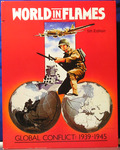
In Snakes and Ladders and similar random games, the players are restricted to one action only, as told by a random dice. In Love Letter, you can choose between only two actions (play one of two cards), of which one is often better than the other. On the other side of the spectrum, we find games like World in Flames, which has the ambition to recreate the entire second world war from production to battle (including over 1 400 counters!).
Generally, I avoid adding events beyond the players' control in my games but in Knights & Damosels, I broke against my own advice with the random events. I reasoned that the events would affect all players equally anyway but in early testing, this was something that disturbed the players. By letting them choose events, I returned creative control to them. UniformityUniformity refers to the title, theme, format and graphics of the game - everything that contributes to the first impression of the game. This is important for several reasons. First, a game that is not uniform will give mixed impressions. If a player doesn't know what to expect from the game, will he or she really invest the time to find out when there are so many other games to choose from?
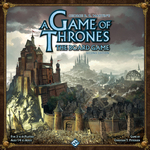
This is the reason why I avoid games based on books or films. Game of Thrones is a game with an artwork that brings the players to the world of Westeros but with a gameplay that has nothing to do with the politics and intrigues from the books. It's a standard war game with a pasted theme.
Unfortunately I lack the artistic skills to give my games the look they deserve. Instead, I try to keep the artwork at a simple level, using uniform symbols. Free art is available at sites like Openclipart but I use it with caution and try to stick to images from the same artist to maintain a uniform look. Two of my games are based on a similar mechanism - use clues to find a hidden item - but they're aimed at completely different audiences so uniformity was very important to distinguish them. In the game Find the Bug!, which is aimed at IT professionals, I used simple process flow images to give the game an "IT look". The game Find the Treasure! on the other hand borrowed map symbols from one artist and weapon symbols from another artist to give a the game a pirate look more appealing to children. Quality of componentsEven the greatest games can get better with high quality components. It's no wonder that we keep seeing luxury versions of popular games, aimed for gamers who already love the game and want to bring ther gameplay to a higher level. But what is quality? One definition of quality (as stated by the Project Management Institute), quality is the degree to which a solution fulfills the requirements. Well, the main requirement is that the game is fun and this is fulfilled by many more criteria than the components, so let's instead focus on the components themselves. Requirements are usually grouped into functional requirements (what does the component do?) and non-functional requirements (how does the component do it?). Using this grouping, you should first ask yourself what the component does to the game (what kind of component do you need?) and then how well it does it (what color, material etc. do you need?).
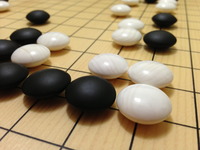
For the playing pieces in my game Iconoclasm, I weighed back and forth between elegant glass gems (similar to Go) or more functional double-sided cardboard chits. I finally chose the latter, since I needed a way to visualize to the players whether a playing piece is part of a temple area or not (by flipping them and display a temple side). Ideally, I would like the temple area to be marked by the temple instead (perhaps a hexagonal ring of pillars or something similar) but had to adapt to the limitations and make the best of them. Target groups and consistency of elements"Know thyself" may be a good advice in other areas but game design is all about knowing your players or your target group. As we've touched upon in previous articles, no game will appeal to everybody so don't try to get too much into your game. Instead, think about who your game is for and make sure that all your elements appeal to them first and foremost. Even if each element in a game is good, the overall game may still be bad if the elements are inconsistent. Let's look at some element decisions where you need to be consistent. Strategy vs Luck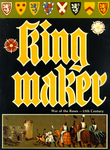
The strategy vs luck dimension is perhaps the most critical when it comes to consistency. If you design a game for party gamers, they're happy with simple and/or random decisions, while hard-core strategic gamers will be disappointed if a game full of strategic and tactical decisions are determined by a dice roll. The latter happened to me in my first (and only) game of Kingmaker, where hours' of play ended with the last heir of the throne randomly being placed next to my units. I got the victory but without satisfaction. Experience vs BeginnerThis is partly related to the first dimension. Do you want the game to reward experienced gamers or be approachable to beginners? If your targeted gamers enjoy the challenge of digging deep into a game and learn its different ways, they may feel that their time has been wasted if a beginner beats them. Casual gamers on the other hand may prefer games where experience is less important. Abstract tactical games can be very rewarding to experienced players but unforgiving to beginners while party games can be played by anyone at any time. Long time vs Short timeThis is also partly related to the first dimension. A luck-based game is usually best if it can be played in a fast pace while the players of a strategic game generally accept (and expect) to have time for their actions. But a mix of fast and slow actions may feel frustrating to all players. The inconsistency can also manifest itself in deviations between playing time and realistic time. A boardgame simulating ice-hockey where a player's rapid movement across the ice would take several minutes to play would feel too slow (which is why I gave up designing one). Fortunately the opposite isn't true - an epic civilization game can be played in shorter time. Seriousness vs Humor
Abstract vs RealisticThere is often a sharp line between abstract and realistic games if you ask gamers. Chess players are not interested in Star Wars chess sets while war gamers want to move around legions or divisions, not symbolic counters. Some players refuse to play games with miniatures, some refuse to play games without miniatures. Make sure that you know what your targeted gamers expect. Adults vs Children
Cooperation vs Competition
TensionA game where the players have no pressure and follow simple predefined paths is seldom fun. Instead, we want to make interesting and challenging decisions; interesting in the sense that our decisions are meaningful and challenging in the sense that our ability to make decisions is limited. In other words, we want our games to have tension.
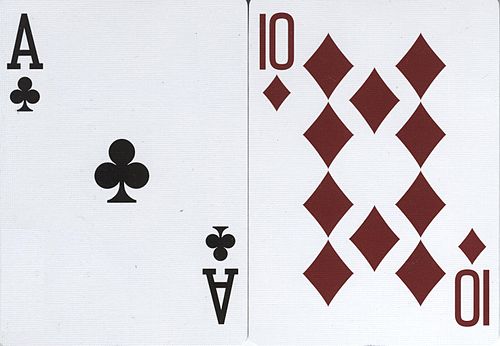
Press your luckThe outcome of the decision is random but you must decide whether to gamble for more and risk losing all. Black Jack is good example of pressing your luck combined with assessing probabilities of success or failure. Outguess your opponent
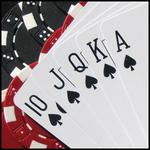
The outcome of the decision is dependent on other players's decisions. Variants of the rock-paper-scissors can be used to achieve this, as in the tactical part of Diplomacy. It's often the case that your opponent may make one attack but in two directions and you must correctly guess his or her intentions to decide where to defend. The outguessing can also be combined with press your luck, as Poker is a good example of. Not only must you decide whether to drop cards for a better hand but you must also assess how good hands your opponents have. "First to" condition
|



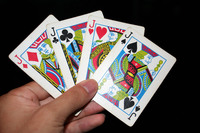



|
|
|
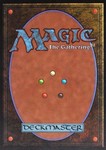 A final word about about information recorded outside the rules; a game can be defined not by its rules but by its components. This is particularly true for collectible card games like Magic: The Gathering, where there are 17 000 different cards, each with its unique abilities. There is no way a player can learn all those cards and instead they are evaluated when played during the game. Personally, I'm a bit sceptical to those kind of games due to their unpredictability. I prefer games where all the rules can be summarized in a rulebook and all the decisions be predicted using the rulebook, not to make the game easier to learn but to make the game easier to master. That leads us to the next topic.
Mastering a game
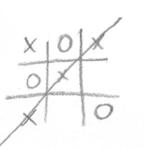
While it's often good with a short time to learn a game, the same isn't always true about mastering a game. Tic-Tac-Toe can be both learnt and mastered in a short time but after that, the game really hasn't much more to often as all games will end with a draw. A game that's impossible to master isn't good either, as players may feel that their engagement in the game isn't rewarded. As mentioned above, the game Magic: The Gathering can never be mastered, since there will always be new cards to learn, nor can chess with its immense depth. On the other hand, while a Magic player may be surprised by a new card, a chess player will always have the same rules to master. It's a matter of personal taste but I prefer the chess player's game experience.
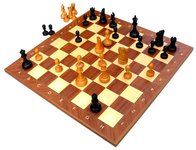
A good "mastering" curve is step-shaped curve where the first is only about learning the rules and where each new step brings new dimensions to the game. A player that keeps finding new things in the game, not because there are new things as such but because he or she sees the game with new eyes, will keep returning to it. The typical development of a chess player serves as a good example. At the first few games, chess may only be about finding and taking undefended pieces. Later, tactical tricks may enter the game, such as double threats or forced moves. A strategic sense is slowly growing, where the pieces begins to act together rather than individually and where positions are more important than material. The various openings are explored, as is the typical endgame positions, and the ability to calculate moves and foresee positions is developed. It's no longer a game of random moves and exploitation of mistakes, it's a battle of brains. The game is still the same - it is the player who is different.
This sounds all great but how do you accomplish this in your own games? The first step is to offer your players options. Add variation, open paths and differentiate elements to create opportunities for the players to play the game their way rather than being played by the game. However, don't overdo it but always stay close to the core of your game. Add only elements that support the game core and remove elements that don't. Second, critically assess your options simulating different player styles. Which tactical and strategic options do you have? Are any clearly overpowered or underpowered? What will a defensive game look like and what will an offensive game look like? The only anwers to those questions are test, test and test. If you can test a game in just a few sessions it's probably too easy to master and if the testers keep playing without plans there may not be anything to master.
As part of my game design, I always write strategies and annotated games based on my testing experience. They help me critically review my games and see what strategic options they have and whether they are balanced.
Complexity and depth
Complexity can be defined as how easy it is to differ between legal and illegal play and depth as how easy it is to differ between optimal and suboptimal play. Relating to the previous article, the less complex a game is, the easier it is to learn it, and the deeper a game is, the harder it is to master it. However, the important thing is not the levels as such but the relation between the complexity and depth. If a game is deep, players generally accept complexity and if a game is complex, the players expect to be "rewarded" with a deep playing experience.
 If you have a game that can be played with little or no reference to the rules, it has a low level of complexity, but if you constantly need to refer to rules, tables or information on cards to evaluate decisions, the game has a high level of complexity. Let's take the battle mechanism in war games as an example. In the simplest of mechanisms, you take an opponent piece by simply moving your piece to it. This is the case both in shallow games like Ludo as in deep games like chess.
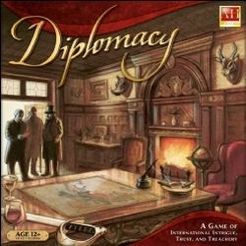
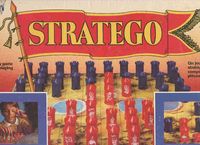 A slightly more complex mechanism involves some kind of evaluation as to which piece that wins the battle. It may be the strongest of the two pieces, as in Stratego, or the piece with the strongest support from other pieces, as in Diplomacy.
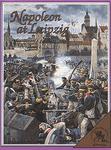
 The most complex mechanism can be found in realistic war games like Napoleon at Leipzig. Here, it's not enough to consider the strength of the engaged units but you must also take into account factors like terrain, leaders, morale, initiatives and much else.
 Does this mean that Ludo is a better game than Napoleon at Leipzig? No, the latter may be more demanding but it also rewards the player with more depth. The Ludo player will only have the choice of which pawn to move while the Napoloeon player will have a range of factors to consider in his or her decision to make an attack or defence as optimal as possible. Should I advance along the road or take a shortcut through the forest? Is it better to fortify in the village or establish a position on the hill? Are my men motivated enough for an attack or should I withdraw and route them during the night? Those are the kind of decisions that add depth to a game and makes us wanting to return and discover new layers.
So a game can always get better through additional rule details? Again, no. A game can always get more complex through additional or detailed rules but the lesson from the previous article can never be repeated enough: add only elements that support the game core and remove elements that don't. Diplomacy is played over the entire European continent with plenty of opportunities to add rules on politics, terrain, production etc. But should such rules make the diplomacy more interesting? No, Diplomacy is about diplomacy and the more other rules that would be added, the less important would the diplomacy be. (And don't even consider the idea of introducing special skills and hit points to the chess pieces.)
In my games, I've been careful with adding complexity unless I've been sure that it adds depth as well. Mare Balticum comprises several elements from other games, such as politics (acquisition of titles and voting for national actions), economy (production of goods and building of units) and war (land and naval battles against a simulated enemy). It's complex but it works because the elements are not something that make your decisions more complex but something that you must include and balance in your overall strategy to win. In other words, it adds depth.
With that I would like to conclude the article series on what makes a game fun. There are may things to consider and few games will satisfy everything. But I hope that the articles will help you understand why a game is fun or not and what to add, keep or remove to make it fun. I would also like to extend my thanks to all you game designers out there - experienced as well as thriving - that have inspired me to my games and to those articles, and who make the world a funnier place.
Articles
- Testification - Learning Testing Through Gamification
- Know Thyself
- Don't Learn how to Do, Learn how to Think
- Encourage Creative Thinking
- Represent Test through Games
- Find the Bug!
- Find the Bug! Agile
- Learn the Experience of a Tester
- Plan with the End in Mind
- Analyze with a Quality Mindset
- Test the Right Things and Test Things Right
- Execute as Planned and Replan Execution
- Close when Everything is Properly Packed
- Conclusion
- What makes a game fun?
- Testing Methodology Applied to Games
- The Test Process
- Planning and Control
- Analysis
- Design
- Implementation
- Execution
- Evaluation and Closure
- Learning by Gaming
Please leave a comment on the games or contact me directly at nicholas.hjelmberg@gmail.com.