 |
Home | Game | Rules | Theme | Strategy | FAQ |  |











































|
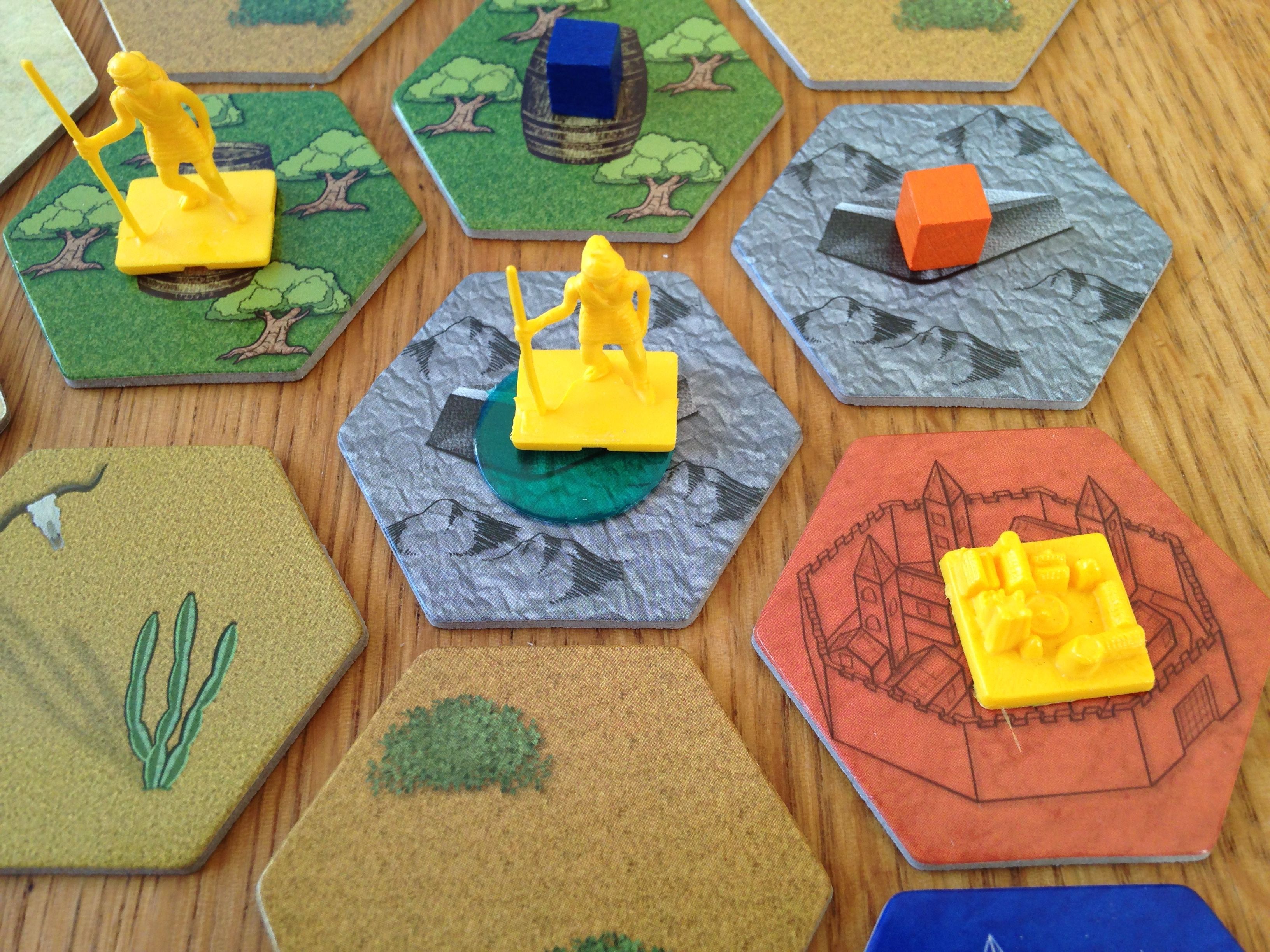
Game designThe "inspiration" to Explorers & Exploiters came from The Game Crafter Sprue Challenge. Why the quotes around the inspiration? Because I didn't find the contest inspiring at first with its only requirement of using the new sprues or miniatures. The fact that I don't even like miniatures didn't help. But then I saw that there were also civilization sprues with settlements in various sizes. I enjoy civilization games so perhaps I could give it a try after all? But again, there are many of them out there already, so how would I be able to design something new? Usually, game ideas just come to me naturally and design themselves but with this civilization game I really had to struggle. A miniature itself doesn't add to the game experience, it's what you do with it that counts. But given the price of $4 per color and the cost limit of $30, there wouldn't be much left for other components. How about having only one color then and let the players share the components? This was a tough limit but also opened up an opportunity for uniqueness. The players could either use the components collectively or divide them at start and use them individually. With few units (14 explorers and 8 soldiers) and plenty of settlements (12 hamlets, 12 villages, 10 towns and 8 cities), it was logical to make the units collective and the settlements individual. It was also natural, since units are usually moved over several turns while settlements are usually placed once and remain where they are (unless destroyed of course). So far so good, but I still didn't have a GAME. Should you be able to place settlements anywhere at any time? Obviously not. How about the classic resource dependency then, like in the computer game Civilization? I could add resources to the game board, either on a fixed map or on a modular map. A modular map of tiles usually gives more replayability and by letting the tiles be turned face down at start, I could add uncertainty as well. The explorers could now be moved around the game board, discover and connect resources, and build settlements. The more resources, the bigger the settlement, and the first player to build all their settlements win. But would this really be a GAME? I didn't need much testing to see that the game was entirely about turning tiles and placing settlements on a game board where eventually all tiles would be connected. I needed more drama in the game, I needed bad guys. Then the barbarians were born. In some of my previous games, like Tre Kronor Infernum and Mare Balticum, I had simulated enemies, but for Explorers & Exploiters, I played with the idea of letting the players manage the enemies as well. But would this not cause kingmaker problems where one player's barbarian actions only served to bring down some players and pave the way for other players? Not at all, the rise and fall of a settlement would not damage other players (since they have already removed the settlement from their hand) but benefit yourself by giving room to place new settlements. Suddenly a number of tactical options opened up. A player could use the barbarians to cut access to resources for some settlements so that others may use them to grow or even destroy settlements to place new ones - all depending on what size of settlement you would like to place. This would give an asymmetrical gameplay where some players are interested in growth (expansions) and others in decline (expulsion). Incidentally, I covered the traditional "4X" concepts before even knowing about them but in a very minimalistic form. Finally I dared believing that I had a GAME! The rest of the design work was more about challenging details in the game and find solutions. Which tiles were needed to create an interesting game board? Settlement spots and resources to make at least two tiles necessary for a settlement. Optional tiles to restrict movements and/or connections. Wouldn't players be able to stall the game by moving the same unit back and forth? Not if I disallowed the same unit to be moved that turn. Would the resource destruction be managable? Wouldn't you eventually lose track of how many resources each settlement is connected to? Not if you add markers to show which resources are connected to which settlements. Slowly the "ugly sprue" evolved into a GAME! Game components
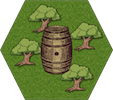

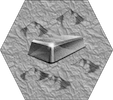

|
Annotated gamesIf you like those game mechanisms, I can also recommend: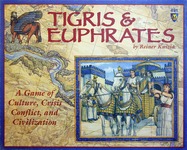

|