
 |
Vision | Projects | Blog | Articles | Awards | Order | Reviews | |








































|
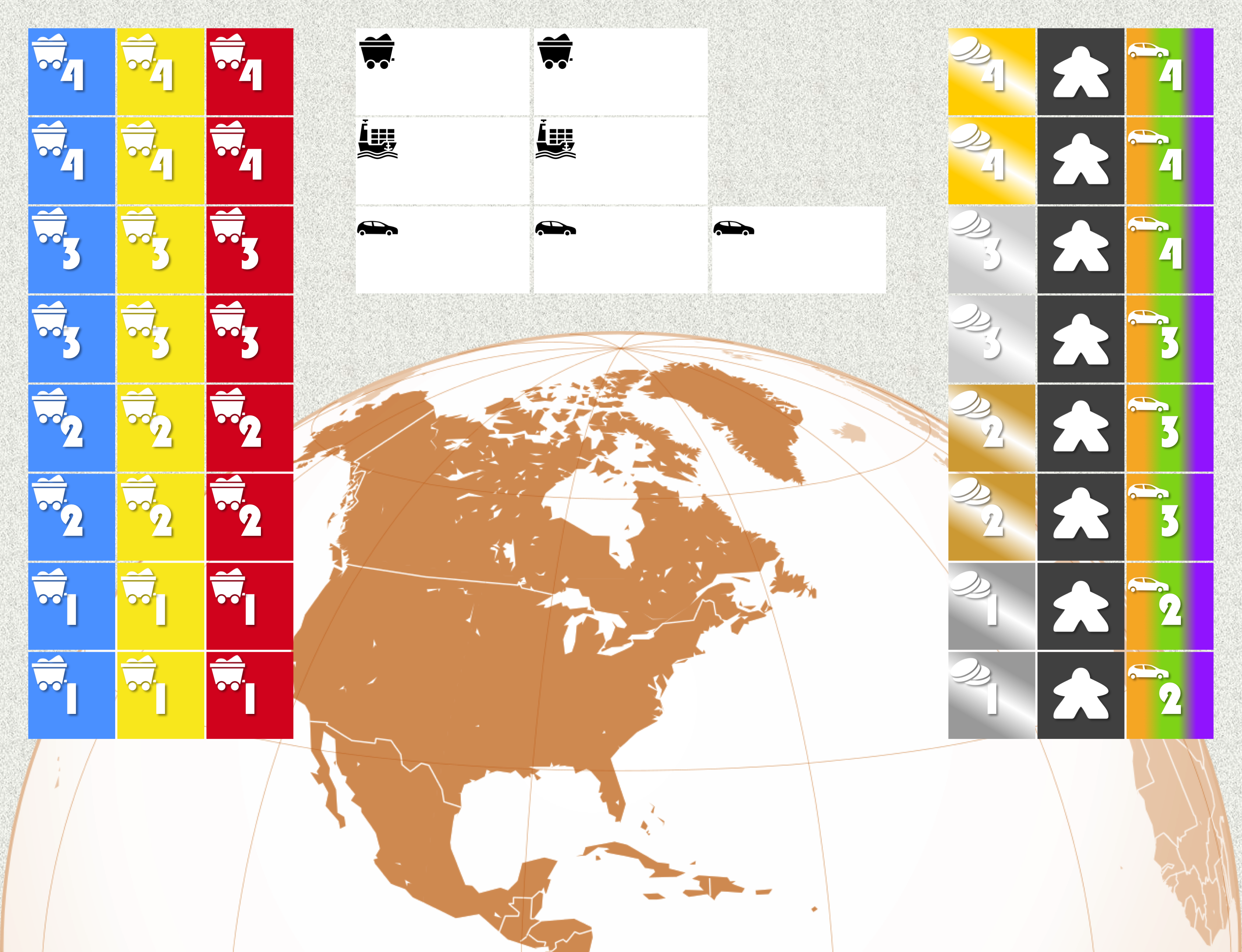
December, 2020 After additional testing of Politeia, it was clear that the action board was interesting but that the rest of the game needed some more challenges. The solution was a new map where with connections and area majority as added spatial mechanics. A new design guideline was that the rules would not only be easy to write but also easy to illustrate with icons. 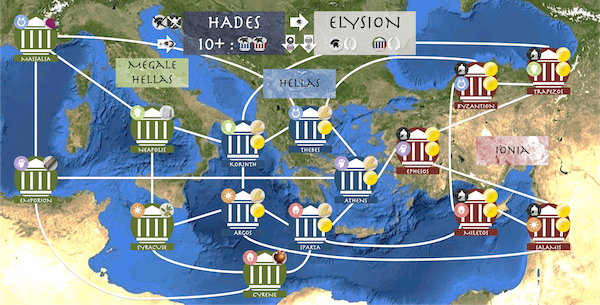
This meant that Cartel had to wait again but I did have time to start writing the draft rules and getting an important revelation: the game contains way too many components and the Gamecrafter price would exceed $100! I had already questioned whether the resource tracks would need resources just to fill the most expensive price spaces and now I had a reason to remove them. Besides, with the new timing system, resources never actually leave the market, since they are always acquired and sold in the same turn, so one resource per market as a price indicator is enough. I also dropped the managers, whose ability was to take more actions in a turn, since such actions would probably be pointless if a company not also had several factories. Taking several actions with one factory would lower selling prices too much so why not simply let several factories enable more actions in a turn? The workers were more difficult to rationalize, since they are physically moved to the company, but at least the Gamecrafter price was more acceptable now. With that the year of 2020 is concluded but there are certainly no lack of projects for 2021. November, 2020 In the wake of the pandemic, a new chapter was written in Nova Suecia Games' history as I started to test games online regularly. Politeia saw several updates, including a board to replace the tiles, simplified war rules, and "accelerated actions", whereby more resources enable stronger actions. 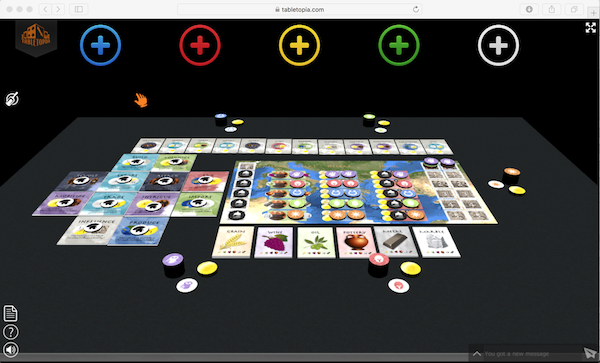
This also meant that a lot of time was spent upgrading components and publishing new versions. Nevertheless, I did have time to come up with solutions for my newest game Cartel. I had struggled to find a good timing mechanic that would be neither too static (which would give players early in turn order better market conditions), nor too random (to deny players the ability to plan ahead). Finally, the acquisition of Olympos and its time track mechanic provided the solution. (I also get another trading game, Oltre Mare, for free but its mechanics have not yet provided any inspiration.) By letting the company tokens advance on a time track depending on the action taken, the players would be able to use time as an additional resource when deciding between short term production and long term investments. Once the Politeia tests are completed, Cartel will get the chance to be tested! 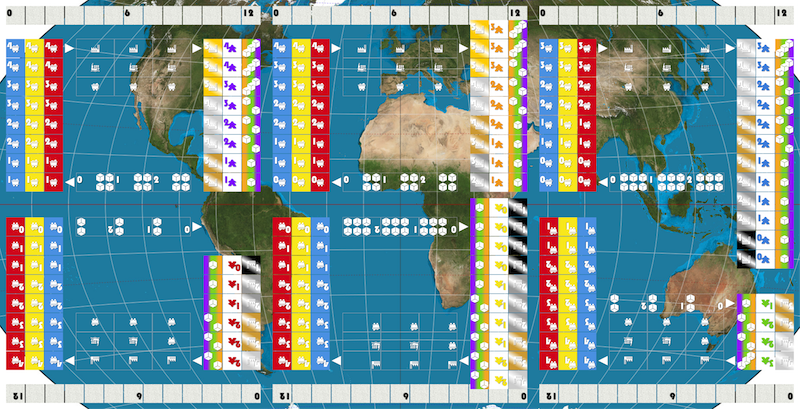
But who knows, I've also had players approaching me regarding my second newest game Peoples - Civilizations, a game that has received less attention than it deserves. Hopefully I'll find time for that as well eventually. October, 2020 It took longer than expected but finally I got the latest prototype for Tales from the Loop. Three test sessions later we could conclude that the game mechanics had improved but that the game still needed more development. We also got time for a test session for our own games, during which I took the opportunity to assess the innovative action board mechanic of an old classic of mine: Politeia. It turned out not only to work well but also to be so popular that a deeper test session was requested. To facilitate this, I put up the game on Tabletopia. 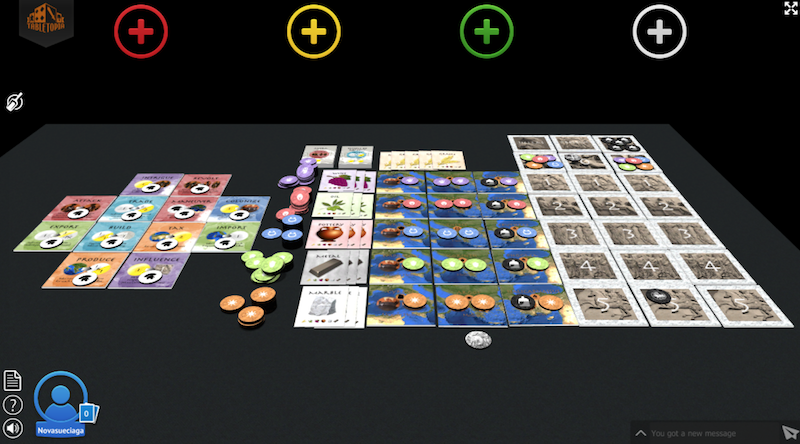
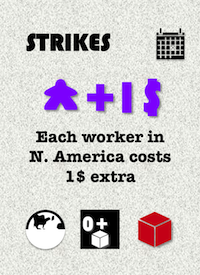
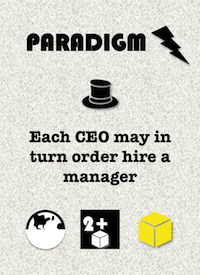
The little time left for my newest game Cartel was spent finishing the simulation spreadsheet and the card design. Hopefully next month will be more productive. 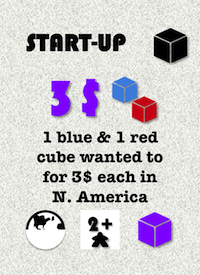
I also had time to reach a small milestone as I reached the top 3 in Tigris & Euphrates top list at Triqqy. 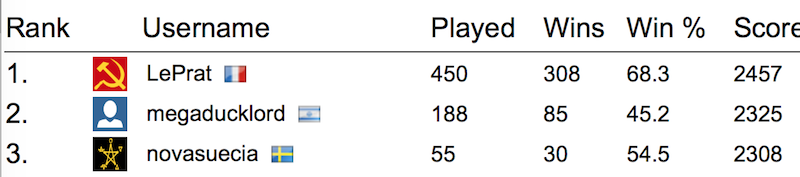
Finally I received my awards for Cosmoclasm from the 2nd World Original Design Contest of Board Game. Now the question is what to submit next year. 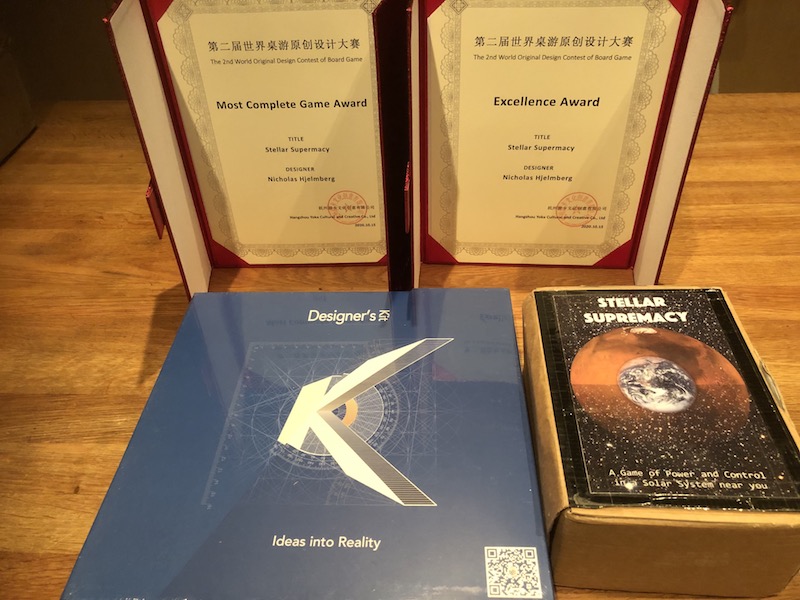
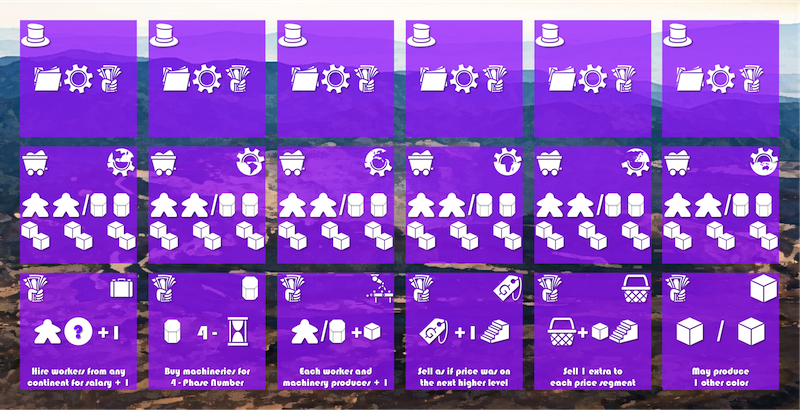
September, 2020 Last month's many ideas for Cartel were finally turned into components as both the game board and the company boards were completed. The many event cards remain to be completed but hopefully I'll be able to start the beta testing and the rules writing next month. 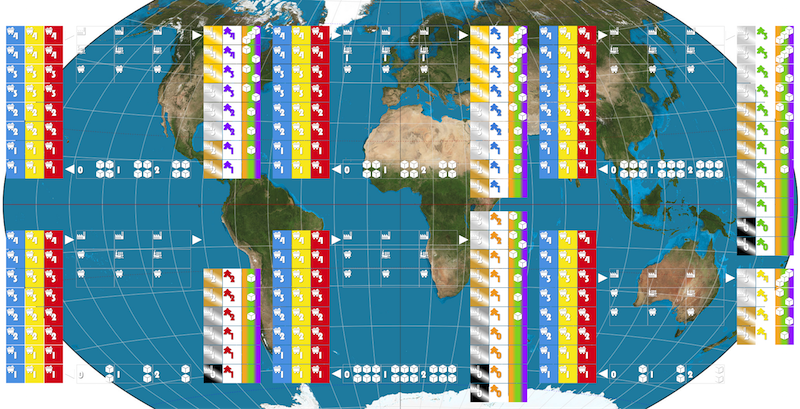
I also decided to acquire Wildcatters after all, since I was able to get it for about as much as I got for the similar but lighter area control game Maharaja. Another game I bid farewell was Amyitis, a game with clever mechanics which unfortunately no longer stands out in the competition, and the fun but perhaps too simple Tsuro. Following last month's roll back of Peoples - Civilizations, I followed up with a roll back of Iconoclasm. Although I still like the idea of player-driven support, it was too complex for an abstract game, and I was also happy to see the original theme of clashing faiths returned instead of the clashing elements. However, I did keep some of the rule simplifications, among them the rule that colors never support against each other instead of making a difference between internal and external clashes. Last but certainly not least, I was proud to learn that Cosmoclasm the finals in the 2nd World Original Design Contest of Board Game and was awarded an Excellence Award and a Most Complete Game Award. 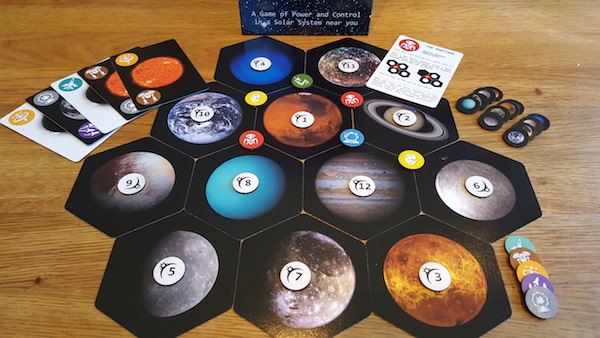
August, 2020 August became more of a play month than a design month as I studied and played several games in pursuit of inspiration for Cartel. Most important among them were Wildcatters and The City of the Big Shoulders. Unfortunately I wasn't very happy with any of them. Wildcatters has an interesting mechanic of using shared infrastructure to transport goods. Unfortunately the goal of area control feels a bit disconnected. The City of the Big Shoulders combines the company development of Arkwright with an 18XX style share market. Unfortunately, both those mechanics feel a bit watered down in comparison and the endless rounds of stock trashing put me off a bit. Nevertheless, they did give me some ideas. In addition to the production decisions, the companies could take investment decisions represented by simple tiles with accumulated benefits (such as +1 production) and/or finance decisions represented by either taking loans or issuing shares. I also consider a brave share mechanic without a price chart where the players secretly bid for issued shares to represent a "true" market value. Finally I found a simple solution for the market replenishment: combined event cards where one part adds supply and demand (such as more purple cars demanded) and one part results in immediate or long term effects (such as strikes for higher salaries). Unlike my normal process, I have few components and no rules at all but perhaps the ideas needed this time to mature. Speaking of event cards, the inspiration to them came from a previous iteration of Peoples - Civilizations. This may have contributed to my decision to roll back the current iteration with a time wheel (for fewer turns but more actions) and buildings (to provide number and quality of actions). Those ideas may still be interesting but I'm not sure they are interesting enough for my civilization game where I want the players to progress slowly to convey an epic feeling. Another radical game decision was to remove all "sticks" of Suecia and replace them with "carrots". Instead of the convoluted priority rules for the supply and demand, the players may choose freely (but earn less if the supply to or demand from the Castle to encourage them to accept trade with opponents). I also removed the complicated nobility and clergy rules of giving peasants to exchange resources and supply more rows to simply collect goods (where the former also adds to the City while the latter only removes from the City to make it as thematic as possible). The test is still in progress but so far it looks promising. My studies also brought new games like Colonialism (cooperative/competitive area control), Irish Gauge (simple share mechanic), Power Struggle (political majority), Gentes (abstracted civilization elements), and Babylonia (Knizia's latest tile-laying game, by some compared to my favorite game Tigris & Euphrates). Fortunately I managed to remove some games from my collection to make room and said goodbye to Patrician and Paris Connection - all good games which are left behind because of even better games. 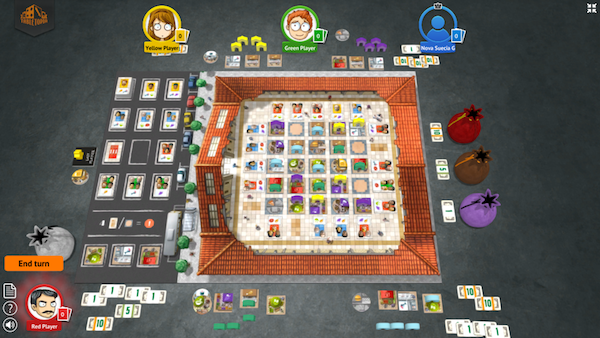
Finally, my studies drove me to complete two reviews this month: the classic Inca Empire and the coming Mercado de Lisboa. The latter has a very simple and elegant mechanic for matching customers and shops which puts Dyce in the corner but I still decided to submit it to Fastaval together with Cosmoclasm and Explorers & Exploiters. For those submissions, I've tried a more graphical representation instead of my normal textual sell sheets. 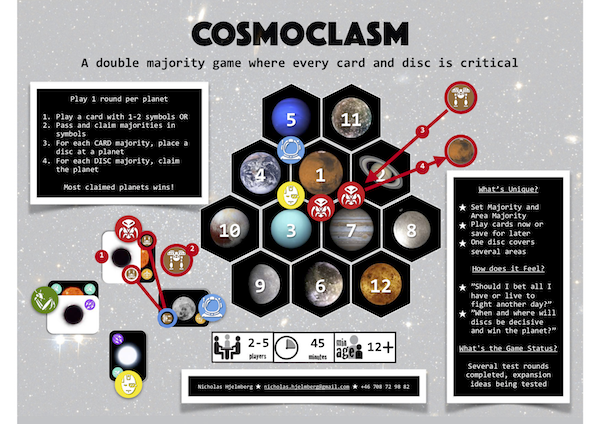
Last but certainly not least, I had a meeting with a newly founded Swedish Game Designer Alliance called SIGMA. The idea is to offer mentorship for upcoming designers and help each other to complete games. Hopefully this will be another source of inspiration that also lets me give something back to the community. July, 2020 July meant vacation but not necessarily more design time due to travelling and work in the house and garden. My main focus was to prepare Find the Treasure - The Card Game, Cosmoclasm, and Politeia for the Ravensburger pitch. In particular, I took the opportunity to extend Find the Treasure to allow up to 5 players and more tactical options through more cards on the hand and crossways movements. I also took advantage of my PowerPoint videos to present key mechanics through a shared screen instead of playing them out in front of a web camera. As expected, the games were too heavy for them but Cosmoclasm got some encouraging feedback. In addition, my latest game project proceeded slowly but steadily with some preliminary sketches of
game components. Hopefully it'll be ready for a first test soon.
Finally, Apokalypsis and Suecia got some more test time and the former is now approaching a ready state, much thanks to rules like changing turn order to avoid left-right binding. Less fun was the discovery that my webhost Byet removed the support for email functions without any notice. This does not only mean that mails to info@novasuecia.se no longer reaches me but the also that the sender doesn't get any delivery failure. Thus, many hours had to be spent on removing the novasuecia address from the webpage, including the many print & play files. From now on, nicholas.hjelmberg@gmail.com is the safest way to reach Nova Suecia Games. Besides game design, I also spent a lot of my vacation playing games, which triggered a reassessment of my collection. Games that I didn't expect to hit the table had to leave my collection, such as Genoa, Santiago, Britannia, and Spirits of the Forest. In return, I welcomed Concordia Venus, Food Chain Magnate, and the previously kick-started Iwari. The gaming also inspired me to resume my reviews and the first to game to review became The Palaces of Carrara. 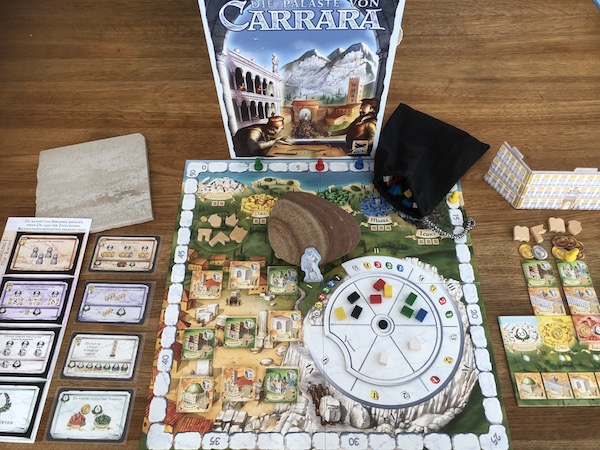
June, 2020 An unusually hot June was bad for my creativity and I didn't get much work done. Perhaps the heat explains why it took so long to come up with a mechanical foundation for my next project Cartel. Nevertheless, I managed to get a lot of calculations and simulations done with varying success - sometimes I walked around in circles and sometimes I took giant leaps forward. Among the many figures that had to be determined were the number of economic sites, the transport distances, the labor costs, and the supply and demand curves, not to mention the many profitability calculations for various locations and scenarios - all this to ensure that the different continents will go through different economic phases. I also doubted whether public companies would work like in train games, given the many small business decisions, and considered traditional private companies instead. However, thanks to simplified mechanics like market prices for resources like in Power Grid (instead of the prices determined through player actions), labor paid when used (instead of paid regularly until fired), and shares being exchangeable for market values (to enable players to "cash in" from stagnating companies and invest them in upcoming companies instead). But perhaps it's good that all this is set before I start working on the components.
My own collection shrunk a bit this month as I decided to clear out seldom played games, even if I find them good and inspiring. About twenty games were put up for sale, of which I was sorry to say goodbye to Vanuatu and Hansa. I also managed to resist interesting games like Immortals (possible inspiration for Iconoclasm, where defeated pieces resume fighting on a secondary board) and Trinidad, where a common city must be built while also watching out for external enemies. I wasn't happy with the former game's too chaotic warfare, nor the latter game's fiddly point salad but in the case of Trinidad, I did get inspiration to revisit the similar games Demokratia and Politeia. One such opportunity may be another online designer pitch, this time hosted by Ravensburger. After all, my early designs were innovative and deserve some of the effort I've put into promoting my later ones. May, 2020 May became unexpectedly busy. Inspired by the Kickstarter game Mini Express, I found the last piece to my heavy economic game puzzle and started working on it immediately. The idea is to let the players take shares and actions in nine interdependent companies; 3 mines, 3 transports, and 3 factories, similar to my very first board game design attempt "Cartel" as a kid.
As costs go up too much in one area, the players will have to seek cheaper options offshore to satisfy the increasing demand, eventually bringing prosperity to those areas as well. Thus, the game simulates a globalized economy and builds on several economic theories. The work so far has involved a lot of calculations and simulations to ensure that each business strategy has its good time and bad time but so far it seems promising. To free time for this new project, I worked hard to complete the rule books for Apokalypsis and Suecia. The games are now in a mature state but could need more test and polishing. For the former, I set up a new game of Apokalypsis at Tabletopia to be prepared for online testing. 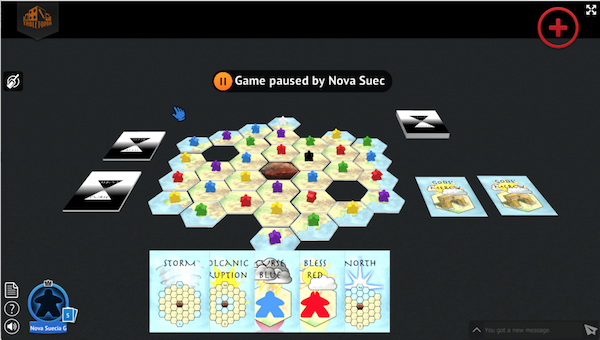
Another online novelty was Pegasus Designer Days, an opportunity to pitch games online. I took the opportunity to pitch Apokalypsis, Cosmoclasm and Dyce. It was a useful exercise in preparing a game (I set up a position in advance on a tray to quickly switch games) and present its key characteristics in a short time frame. Finally I was happy to see another childhood game at Kickstarter: Drakborgen. It was an easy decision to sell my old copy and get this updated version for half the price. Its dated mechanics is nothing I'll get inspiration from but with casual gamers it may still get to the table. April, 2020 The game testing continued with several restarts but smaller and fewer changes between them. Apokalypsis got two neutral colors (one blessed that protects the tile and one cursed that flips the tile) to give more tactics in the movement action and mandatory apocalypses if enough wrath cards are played to give more tactics in the card action. Suecia got more free expansion actions to give more "big moves". Meanwhile the success continued for Cosmoclasm as the game reached the semi-finals in the 2nd World Original Design Contest of Board Game.
In addition, the previous semi-finalist Warring States, the advanced successor to Cosmoclasm, recorded its first sale. 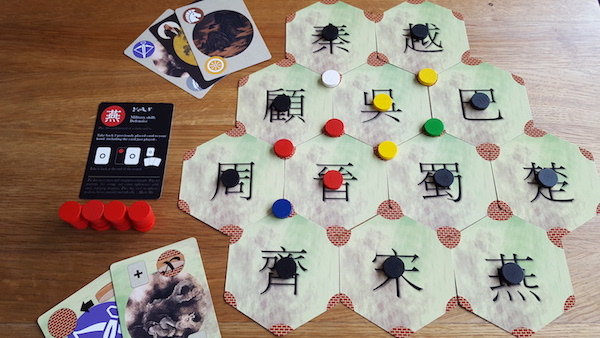
March, 2020 Most of the plans set out for this year were cancelled or modified due to the ongoing Corona pandemic. Tabletop Game Expo was cancelled, only one of my two shipments of Cosmoclasm for SF-bokhandeln arrived, and meeting restrictions made it harder to attend designer test sessions. The only positive thing was that I had to force myself to complete my own tests of games like Suecia, Nova Suecia, and Apokalypsis. The two latter games approach a maturity while Suecia have taken major steps forward, mainly thanks to expansion rules that promote the constructing of infrastructure and provides more opportunities for "big moves". Hopefully all those tests will be completed by the end of the month. If so, I hope to resume the test of Peoples - Civilizations and I even added the simple and elegant civilization game Tempus to my collection for further inspiration. It pushed out one of my oldest games, RISK, but in spite of many fond memories, it's not a game I'll miss or get inspiration from. February, 2020 Sometimes plans get crossed in a positive sense. The plan for February was to complete the testing of Nova Suecia and Suecia for the 2nd World Original Design Contest of Board Game. Instead, I passed the local store SF-bokhandeln to buy sleeves for my latest game acquisitions On Mars and Age of Steam and happened to meet the man purchasing Apokalypsis earlier. He was interested in another purchase and decided that Cosmoclasm would be a good fit. Funny enough, I only went there because the closest store didn't have the sleeves I was looking for.
This meant that I had to put everything else aside and prepare an order. This time I took help from a designer forum and got plenty of good advice for rule revisions (which of course took even more time). When the order was finally placed, there wasn't enough time for Nova Suecia and Suecia so what to do about the WODC? For one replacement, Cosmoclasm was an obvious candidate, but could I find a second one as well? My thoughts went to the other bestseller, Apokalypsis, and all of a sudden I came up with a solution for an issue I had struggled with a long time: the perceived randomness of the hidden omen cards. The simple idea was to let the omen cards be open but move the event phase to the beginning of the turn. In that way, the players would have to play their cards to put the next player in turn in fait accompli. To give the players even more sense of control, I added new actions like rescuing meeples as well as old actions like pushing but with rules regarding support to enable offensive and defensive maneuvering. (Why didn't I think of those before?) I even found a way of using only one sheet of tiles by adding mountain tokens and thus I had no need for all tiles. The hidden omen rules survived (pun intended) in the new advanced rules but overall Apokalypsis turned into a much more elegant game. Hopefully the WODC jury thinks the same. 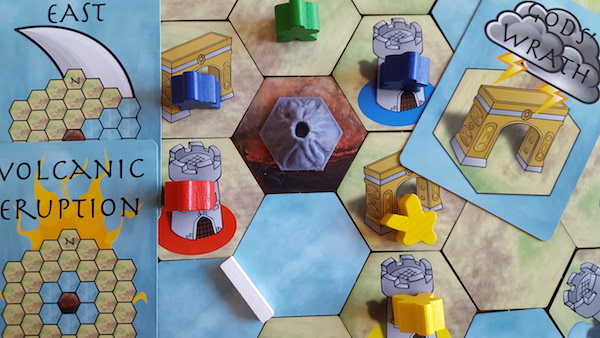
January, 2020 The new year started with a return to my own game projects. Nova Suecia got some further internal testing leading to further (minor) balance adjustments while Suecia kick-started its testing with an external (and successful) testing. The game economy turned out to work fine and only the way the action cards are played had to be adjusted. 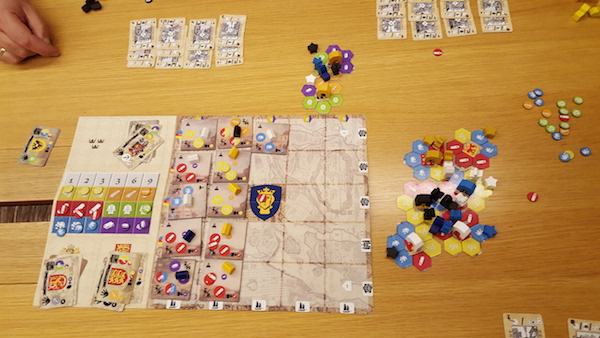
Unfortunately, lack of time stopped me from completing the testing and I expect to continue next month. In particular, my return to chess took more time, both in terms of training (self training as well as student training) and playing. I was also happy to record my greatest victory so far against a player with a rating of 2118. Perhaps it will inspire a return to my abstract attempts. Finally a small change in my collection: One Night Ultimate Werewolf left it and Bus entered it, a clear sign that my gaming preferences move from lighter party games to heavier games from publishers like Splotter Spellen. Old blog posts may be found here:
|
Please leave a comment on the games or contact me directly at nicholas.hjelmberg@gmail.com. |
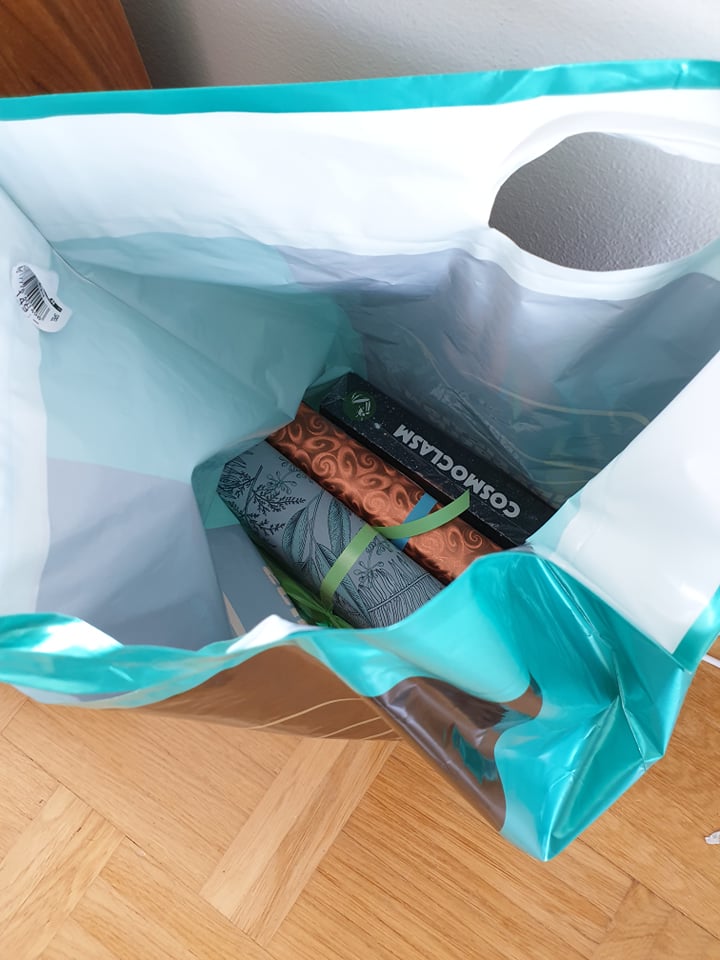 I was also happy to finally receive the late second shipment of