 |
Home | Game | Rules | Theme | Strategy | FAQ |  |








































|
Game design 2nd-3rd Edition - Reengingering a BoardgameThe old gameThe first edition of Nova Suecia was also my first attempt to design a board game. I had just taken my first step into the world of "real" board games, beyond the world of family games and war games, and just began to understand the genius of designers like Reiner Knizia and Wolfgang Kramer. Nova Suecia started with the idea of designing a "real" economic game, where the players interacted with each other in an setting full of interdependencies. This basic mechanism spawned several new mechanisms, partly in response to design challenges and partly to incorporate the theme of the picturesque but short-lived colony of Nova Suecia. The result became a mishmash of mechanisms that individually worked well but together drew attention from the core of the game. The thought process could look like this:
Similar mechanisms can be found in games like Advanced Civilization (the direct trade of resources to build sets), Amun-Re, (the bidding for provinces, where the "true" value depends on your strategy), Archipelago (the semi-cooperative nature, where all players may lose but only one player may win), and Puerto Rico (the decision to switch from "money engines" to victory point engines). But in those games, the games and the mechanisms are one - the mechanism serves the purpose of the game ("what should it feel like to play the game?") and the game is built around the mechanism ("how does this mechanism bring me closer to the objective?"). The game wouldn't work without the mechanism and the mechanism wouldn't work in another game. In Nova Suecia on the other hand, no single mechanism defined the game and none of them would be missed if removed. Also, the sheer number of mechanisms prevented the full utilization of each one of them. Nova Suecia may have had breadth but certainly not depth. So how to proceed from here? Abandon the game and start all over? Yes, that's normally the best advice when a game doesn't work, but I was emotionally attached to my first game attempt and there were some qualities that I felt I hadn't given justice to. Nevertheless, it's not until now that I feel ready to return to Nova Suecia and reengineer the game. The beginning of a new gameThe coreLet's start by identifying the core of Nova Suecia: the interdependence. The players should be faced with several necessities to run the colony but, not having enough time and resources to produce them themselves, be dependent on other players to do so. Rather than picking one or two necessities and move on to other mechanisms, I decided to stop here and identify as many different necessities as possible to allow different strategies. But where to find inspiration? In the theme of course! The real colonists of Nova Suecia needed more colonists (particularly the lack of women was a common source of complaint), food, shelter and tools. In return, they were expected to deliver fur and tobacco to the motherland. How to turn this into game elements? Well, the colonists are simply workers that are placed at different tasks, similar to many other worker placement games. The cost is the food, which is necessary for the workers to work, while the revenue is the tobacco, that is produced by the workers. The distinction between raw material and ready goods add an extra trade step, where a player may either produce tobacco plants or buy tobacco plants and use them to produce tobacco, depending on where the margin is the best. So far, the mechanism worked like in the first edition, but I wanted to utilize it further. Two other economic decisions to improve the profit could be to decrease the cost or increase the revenue. Timber could be used to build shelters and reduce the food cost while iron could be used to build tools and increase the production and hence the revenue. So far so good but how about fur? Already in the first edition, I had played with the idea that letting fur be better the more players that produce it (unlike the other resources, where it's best to be the only producer and control the market). The idea was implemented in the second edition by letting the production depend on the total number of fur producers. Producing fur would thus increase not only your production but potentially also that of other players. On the other hand, too much production may cause the prices to fall - just the kind of cooperation/competition balance the whole game was supposed to be about! 







With all those elements, I felt that I had implemented several interesting perspectives of interdependence. Do you focus on low costs or high revenue? Do you monopolize one product or spread your risks over several resources? Do you cooperate with an opponent to increase both your revenue and if so, when do you abandon her and pull out of that market? The game had many interesting decisions so far. The mechanismsThe next step was to turn the actual interaction into a game mechanism: how should the players trade? Direct trade was the answer in the first edition but that's a mechanism that's prone to downtime and the increased number of tradables would make it even worse. How about indirect trade then? A game like Power Grid uses a simple but elegant market mechanism, where the number of products in a market shows the price. By letting the players buy and sell their products on similar markets, they would still be affected by each others' trade, not by paying each other directly but by the fluctuating market prices. Both this market mechanism and the previously discussed production mechanisms were aligned with the core of the game - the interdependence - and was even more more convinced that I was on the right way. 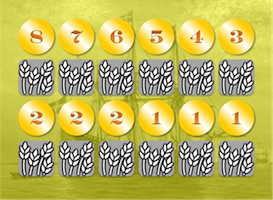
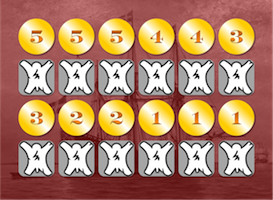
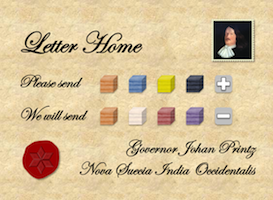
But at all markets, it's beneficial to be first, so how should the first mover be determined? In the first edition, the player paying the highest tax was also given this benefit, while Power Grid's classic catch-up mechanism gives this benefit to the player furthest behind. However, both solutions are based on games played in fairly fiddly rounds. The first edition contained rounds divided in several phases started by a setup phase and ended by a cleanup phase that added constant interruptions to the game flow. Instead, I wanted to move to an action-based game, where a player completes all her actions before handing over to the next. But how to reconcile this with the replenishment of the markets? In the first edition, some products were added to the market and some removed from the market at the end of each round to reflect supplies and demands from the motherland. To let this happen at the end of each turn would effectively remove the market game as one player's attempt to influence the market in her favor would be followed by the other players immediately taking advantage of the lower/higher prices before it's the first player's turn again. This was the issue that for a long time stopped my ambitions to reengineer the game until I finally got inspiration to a solution. One source of inspiration was the intriguing "plan-actions-ahead" mechnism of Mombasa, another was a famous Swedish novel covering the second and bigger wave of Swedish emigration to America: The last letter to Sweden. The colonists of Nova Suecia wrote letters home, requesting supplies (and received letter, requesting deliveries). Why not adding those letters to the game? By letting the players place their workers and influence not the current but the future market, they wouldn't plan their actions in the future but rather act according to what they plan the future to be. Do you want to sell tobacco on your next turn? Place your workers at tobacco production tasks, send "tobacco letters" and enjoy higher tobacco prices when your turn returns (no sooner, no later). Simple and elegant! 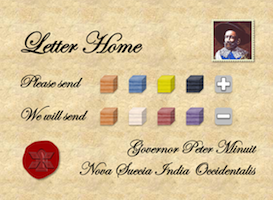
With those three main mechanisms; products with different benefits, markets with fluctuating prices and letters for manipulating future prices; I finally had the foundation for a game true to its core. So far, the game only existed in my head and on various loose notes but now the actual design work could start... Going from soul to bodyWhile the soul of the game, or how it should feel to play, can be expressed in visionary terms, there are no shortcuts for the body of the game, or how it should actually be played. A lot of work is required to realize a dream with a lot of agony on the way as the dream meets the reality. Post-it notes, spreadsheets and text editors are my best friends here - post-it notes to capture ideas, spreadsheets to estimate initial game stats and record game simulations and text editors to formulate draft rules and challenge them. The post-it notes - the actions of the gameLet's start with the post-it notes. Most of the early game design takes place in my head and post-it notes are great for capturing those early game ideas before they are forgotten (or for realizing that the ideas are not good at all). A crucial early decision was to come up with the actions of the game. What should the players do and in which order? The necessary actions for a market game include producing, buying and selling. In addition, The Last Letter Home needed settlement actions, to acquire productive districts, and ship actions, to demand and supply the resources. My initial idea was to complete everything within one turn, i.e. let the players choose demands and supplies (to change the market prices), buy and sell. However, not only did this become a mathematical exercise (pick the resources that optimize the prices given what you want to buy and sell this turn) but it also removed the tension of money shortage (given that you buy and sell at a profit in each turn). The demand/supply question was easily solved. I simply added the ship bag, from which the players randomly draw resources rather than calculating optimal resources. This added a semi-random element, as the player may control the resource distribution in the bag (similar to games like Orléans) but never be sure what to get. The money shortage question was also easy, although I didn't see it until after some iterations. In the first version of Nova Suecia, the money shortage was accomplished by the option to "buy victory points" by building a fort. This was not very elegant and I wanted something better. A better option was to switch the buy and sell actions so that you sell previous turn's purchases and then buy for the next turn's sales. This lag between buying and selling would give a delayed surplus that would be needed to pay for increasingly higher costs (more colonists and higher production). Simulations showed that this mechanism stretched the players' resources every turn. Incidentally, this switch made the idea of choosing your ship resources less mathematical as you could never be sure if the resources supplied by the ship one turn would be the ones you wold need the next turn. Nevertheless, I kept the ship bag for the basic game (for quicker turns and less analysis paralysis) and removed it in the advanced game (for experienced players who wish to remove all luck elements). Other actions didn't survive the early simulations. One was the idea that you first pick districts for settlement (but don't get to settle until the other players have done so), since this gave you less control of your strategy. Another was the idea that colonists arrive in the same way like resources do, since the first player would always hire all available colonists. A third was the idea that the ship could demand fort building (worth victory points in the end) but given that money shortage was achieved, money instead of victory points could be used to determine the winner. To maintain the balance between supplied and demanded resources (the ship supplies the two resources of grain and iron but demands the three resources of timber, fur and tobacco), I tried adding gold instead of colonists as a third resource. But why would you ever choose a resource (possible profit) instead of gold (certain profit)? Gold was initially removed but made a comeback thanks to the money shortage - by letting the gold be a loan, the players could use gold for investment but have to pay back more at the end of the game (so they'd better invest the gold wisely!). 


The time was now ripe for the spreadsheet. The spreadsheet - the balance of the gameA game should not play like a spreadsheet but a spreadsheet is great for designing a game. All game decisions offer different paths and each of those paths has a level of success, whether it be a probability or an expected return or something else. For the decisions to remain interesting, they must be so balanced that one path is not always better than another but not so balanced that it doesn't matter which path you choose. Although spreadsheets may not tell you the exact game values (if they do, the decisions may not be interesting or the game may even be solved), they will help you assign starting values to be further refined through testing. Balancing the strategiesFor The Last Letter Home, I had to design balanced resource markets so that one resource would not always be better than another. First, I needed a number of price levels high enough to give price variations but not so high that the markets become fiddly. I settled with twelve, a flexible number that can be divided with many other numbers. Second, I needed prices for each of the twelve levels and each of the six resources. I wanted the price curves to be different so I made some steep (very low and very high prices) and some less steep (small differences between lowest and highest prices) but let the total sum be the same (all prices had a sum of 42, giving an average of 3.5). Third, I needed to modify this average for resources that required less or more investments. In the normal case, 1 resource (grain) yields 2 resources while 2 resources (grain+iron) yields 4 resources. In the case of fur, 1 resource (grain) yields 1-4 resources, and in the case of tobacco, 3 resources (grain+2 plant) yields 2 resources and 6 resources (grain+iron+4 plant) yields 4 resources. This made it clear that the fur average should be lower and the tobacco average 3 times higher to maintain the 2:1 ratio between input and output. Fourth (although I didn't realize this until after some initial iterations), I needed curves with diminishing returns, where a price shift at one part of the curve has less impact than a price shift at another part of the curve. Why? Say that a player enters the tobacco market. Increased tobacco prices will increase only her revenue while decreased food prices will decrease all players' costs. With no diminishing returns, a tobacco price level shift of 1 will always have the same impact as a food price level shift of 1 so player 1 will only be interested in the former, thus reducing the number of interesting decisions for her. With diminishing returns on the other hand, it may at some point be more profitable to keep the food price low than continuing to keep the tobacco price high. At what point? That's part of the interesting decision! 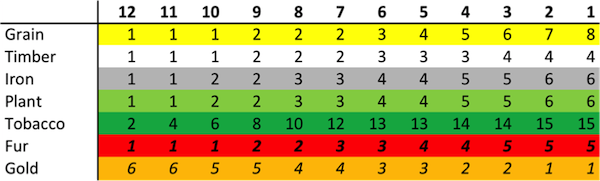
Balancing the overall gameAnother important design decision was how to balance the production so that there would be just enough of each resource. Here I started with a basic example of one of each production area (farm for grain, forestry for timber, mine for iron, trade posts for fur, and plantation and spins for tobacco) and one colonist in each. I assumed that two will be engaged in building log cabins (requires timber), two will be engaged in manual production (requires nothing) and two will be engaged in tool production (requires iron). The spin requires plants from the plantation to produce tobacco while the trade post needs nothing to produce fur. All colonists need grain but since one third build log cabins, I assumed that on average only two thirds of them will need grain. This requires the following each turn:
Another aspect was that timber could be expected to be in less demand towards the end of the game (as the payoff time is shorter) while iron could be expected to be in more demand (as the players get more money to invest) but this was also aligned with the theme: timber could be demanded by the ship (the ships often needed to be repaired after the journey) and iron could be supplied by the ship (the colonists often requested tools). This balance was more difficult to calculate in the spreadsheet but it did offer a starting point for future simulations and tests. One such starting point was the lowering of the timber average to 2.5, since the price could be expected to lie on the upper market half where the average is 3-5 anyway (3+3+3+4+4+4 divided by 6). Of course, the market and the production aren't supposed to be balanced all the time - the players are supposed to act on and take advantage of imbalances, eventually restoring the balance again, just like in a real economy. Balancing the turn orderMore challenging was the turn order balance. All games must assess the first (or last) mover advantage and take it into consideration. In the first version of Nova Suecia, the first mover advantage was the opportunity to receive more colonists and buy and sell first and it was rewarded to the player paying the most tax each round. For the second version, I wanted to move away from this fiddly and sometimes unfair mechanism. (Ties in tax payments were resolved through random drawing.) Many games, like Puerto Rico, use a rotating starting player so I started exploring this mechanism. Somehow the idea of "short rounds" came to me, where the last player is excluded from one round but becomes the first player in the next round instead (when more colonists are available). This idea had several intriguing complications:
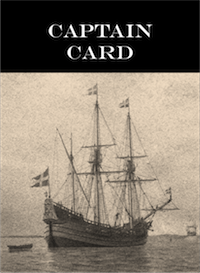
In theory this looked great but would it work in practice? First, I needed to find a mechanism that would allow a variable number of turns. The very first game board showed the Delaware river (based on an authentic map), around which the historic colony was based, but since districts were bid for, the river never got any game purpose and hence was removed. What if I could return the river and let the players choose districts by moving a Swedish ship along the river? In addition, I could let the players move a Dutch ship that removes districts from play and bring the game closer to the end (i.e. when no more districts are available). This would not only let the players influence the number of turns but also let them choose which districts to get for themselves and which districts to deny their opponents. It also fit the theme - the real colony was raided by the Dutch (districts removed) and eventually captured by them (end of game). Perfect! Second, I needed to check the range of turns. At first, I let the Dutch ship remove districts permanently and the game end when no more districts are available. Simulations gave an acceptable range of 2-10 removed districts out of the total 24 districts (or 14-22 turns). However, I later came up with the idea of allowing districts to be returned into play for more variation and added a money limit to end the game if necessary. The important thing was to give the players the option to shorten and prolong the game depending on their strategies. Third, I needed to check and adjust the turn order balance. Would there be a first or last player advantage and if so, how should it be mitigated? For the simulation, I assumed that each colonist would cost on average 1 thaler (for feeding) and yield on average 2 thaler. I also assumed that once the game end has been triggered, each player gets to sell at on average 1 thaler less than the previous player (because of lower prices). The result surprised me - it turned out that the player would end up almost exactly the same irrespective of turn order! I guess you have to be lucky sometimes, this convinced me that there was no specific turn order advantage and that the outcome was dependent on the players themselves. 

Testing and tuning and testing and tuning...No matter how much you try to balance a game in theory, unbalances will remain that only a lot of practical testing and tuning can remove. With the first edition of the game, I made the mistake of introducing it to testers before I had done my own testing and tuning. I didn't take any shortcuts this time, although I often wanted to because this is probably the part of game design that I like the least. You run a simulation, assess the outcome, adjust a number and rerun the simulation over and over again. Spreadsheets help to keep track of all iterations and avoid repeating them with the same number combinations but this is still a daunting task. 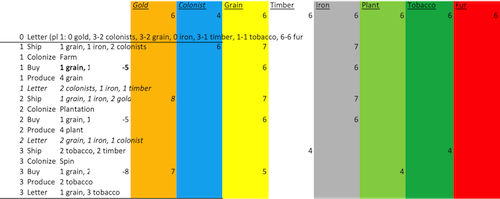
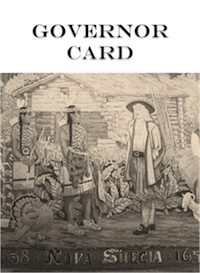
Nevertheless, it was during this phase that I learned things like having diminishing returns on the markets and how to make the strategies equally strong. The simulations also inspired new markets like the colonist markets (different strategies have different preferences regarding the number of colonists) and the gold market (the possibility of extra funding opens up new strategies). It was also during this phase that I realized a flaw in the simulation: the flow of new colonists wasn't enough to maintain the money shortage. It was true that in the first rounds, where going from 1 to 2 colonists meant a 100% increase and so on, but when going from 5 to 6 colonists, the money earned in the previous turn was more than enough to finance in the current turn. Would this force an "alien" mechanism after all? No, I already had one! The gold market, meant to offer players loans in the beginning, could also be used to offer them deposits in the end. Just like the other markets, the conditions would be worse the more money that enters this market, so the players would have to find out whether the gold market or the other resource markets give the best return on investment. Streamlining the gameHaving come this far, Nova Suecia was balanced and challenging. However, the fact that a player takes ALL actions with ALL meeples in a turn did take too long. But since the underlying economic system was so stable, it was a simple matter to divide the turns into 1 action/1 colonist. The only thing that had to be added was the assembly action to take back all colonists and encourage players to acquire more colonists (to minimize the number of improductive assemble action). Thus, the third edition of the game was born. It's not only the inside that countsNo matter how great a game plays, the appearance of the game significantly impacts how it's received. Art has never and will never be a skill of mine but I don't let that stop me. There are a lot of free resources and for historical games like The Last Letter Home, you have many old paintings in the public domain at your disposal. The early drafts of the first edition of the game used a game board based on the map drawn by Peter Lindstrom during the last years of the colony as well as game cards depicting the historical governors. However, they turned out to be redundant and were removed but I was glad to find a new use for them in the second edition as placeholders for ship movement and letters home. 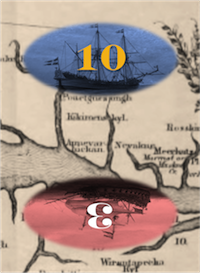
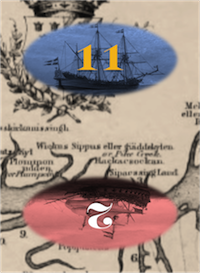
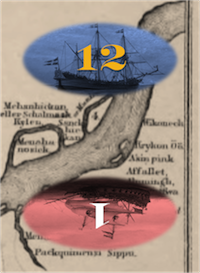
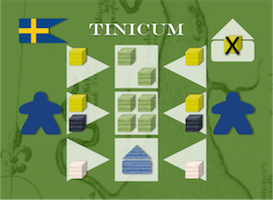
For the resources, I simply relied on the excellent icons from Game-icons.net. It's also interesting to note that I've worked more on functional art. The first edition district shows simple empty squares and circles for the resource placeholders whereas the second edition districts uses symbols to convey the functional meaning of them. 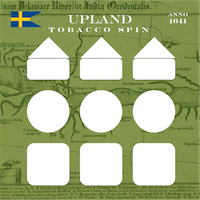
Last but certainly not least, I put some effort into the box. The front was made more colorful, with a special place for the governors, and the back was made more representative for the game with component photos and lists, including sleeve size, as well as more formal information such as a CE marking. My very first game, the ugly duckling of Nova Suecia, had finally become a beautiful swan! 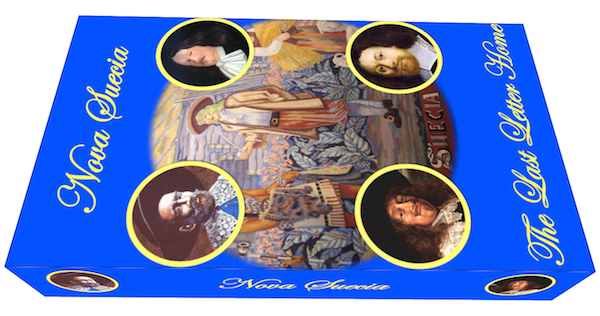
Game Design 1st EditionNova Suecia was my first attempt to design a board game. It built on an old game idea of mine, where the players would have to trade with each others to manufacture raw material into goods. The shorter value chain would be safe but yield less return and the longer value chain risky but yield more return. The last step in the value chain would be to sell the goods to fluctuating market prices. This was combined with the idea that the players would act individually but face (positive or negative) outcomes together and so was the tax table born. Bidding for production facilities (districts) were introduced early, to allow the players to choose their strategies as well as removing first-player advantages, and so were manufactories (later log cabins), to allow the players to invest for long-term gains. At that stage, I started to think of a theme and a colony seemed to fit well for the game mechanisms. The choice fell on Nova Suecia, a rather poor attempt of Sweden to become a colonial power and I started to study my theme. Grain (short value chain), plants-tobacco (middle chain) and ore-iron-metal (long chain) fit both the game and the theme. Fur (from native trade) came from the theme and was initially added as non-investment good. Coming so far, I began to feel that grain and fur were dull. In addition, low risk may work in real life but not in a game where such a strategy only leads to a middle position whereas risk-takers ends up first or last. Instead, they were given influence on the overall game balance instead. Grain got important for colonists (to engage in the production) and fur got important for the colony (to pay taxes for common expenses). Thus all production types have a bearing on the game balance! The final additions to the game were the "take that" mechanism in the taxation, which allowed players not only to pay taxes to promote their interests but also to damage other players' interests, and the "invest or spend" decision in the fort building, where builds get more expensive the longer the player wait. Fans of Reiner Knizia's masterpiece Amun-Re may recognize several mechanisms from this game and it's true that it served as a source of inspiration. I even went to the length of finding a copy to be able to see what such a game would feel like to play. Others may think of Puerto Rico (at least my first testers did) but if anything, I tried to steer away from role selections (with the problem turn order influencing the outcome) and engines (with the problem of rich get richer). Nevertheless, the testers kept calling the colonists slaves, although the real Nova Suecia never had any.Looking back on my first game, there are many game mechanisms applied: bidding, worker placement, investments, production, trade and common expenses. Are there too many? Nova Suecia certainly opens up for many strategies but also for the agony of decision as each action has an outcome that is not easily assessed. For the hard-core gamer willing to dwell into this intricate web of dependencies, Nova Suecia may offer a challenging gameplay, but in subsequent games I would stick to one or two game mechanisms at the time. Game components
|
Annotated gamesComplete test games are presented under Annotated Games.
If you like those game mechanisms, I can also recommend:
|
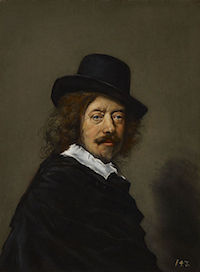 (Well, to be honest, there are only paintings of two of the governors - Peter Minuit and Johan Printz -
so I selected portraits painted by
(Well, to be honest, there are only paintings of two of the governors - Peter Minuit and Johan Printz -
so I selected portraits painted by