
 |
Vision | Projects | Blog | Articles | Awards | Order | Reviews | |







































|
December, 2017 After some busy months with little time left for game design, December and the Christmas vacation becamen an opportunity to catch up. It started with the game convention SmashCon 2017, where Apokalypsis and Mice in a Maze were well received. 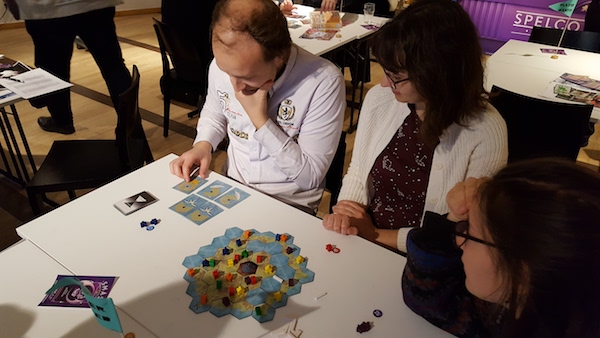
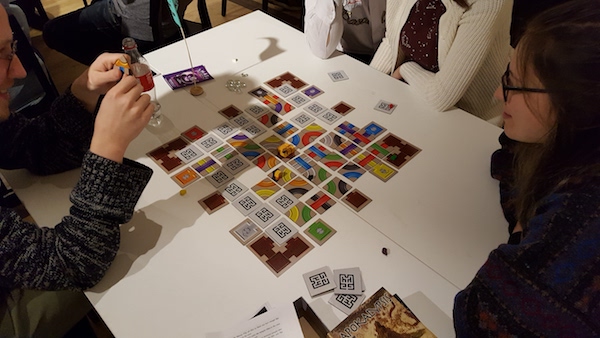
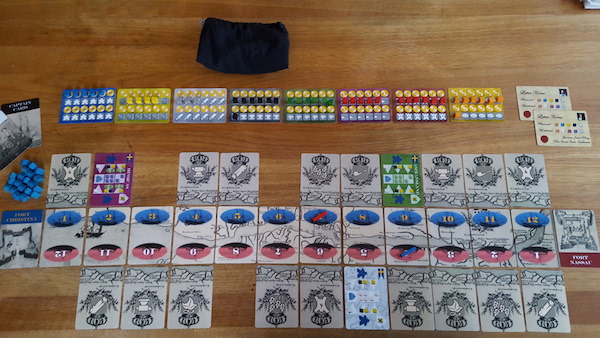
Afterwards, the unpacking of my received games could be concluded with a satisfactory opening and photoing of Politeia and the new components for Nova Suecia. 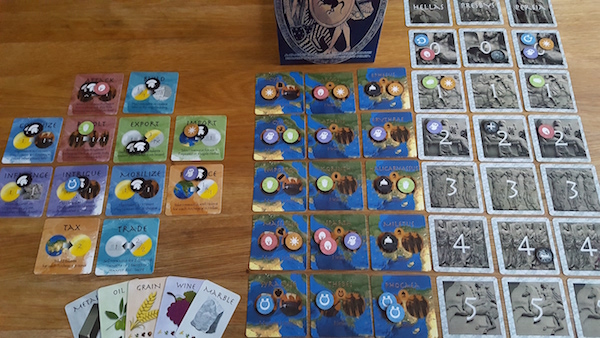
However, I did notice some color deviations in the Comrade series and decided to modify them all, particularly Politburo, which got less text and more icons instead. 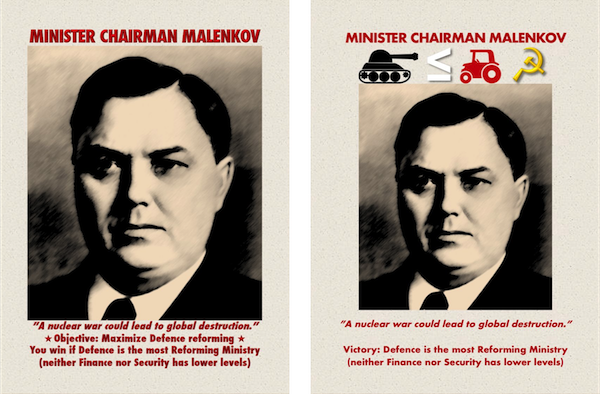
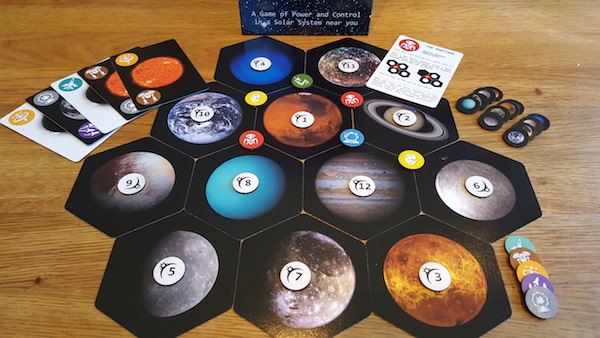
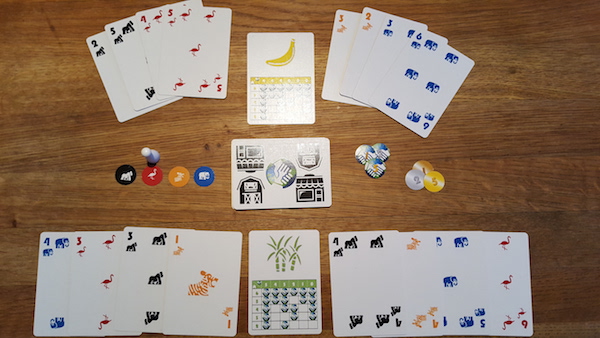
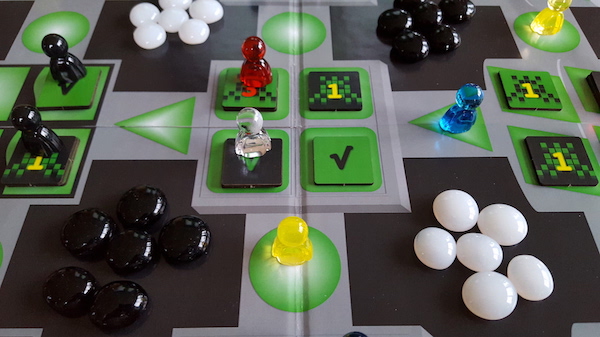
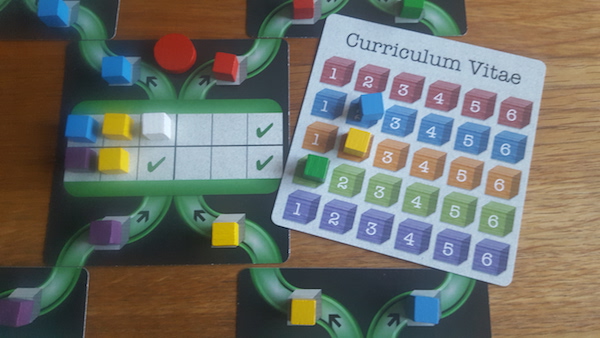
The game test of Knights & Damosels was completed with further modifications that brought the game closer to what it's supposed to be about: outguessing each other. Of particular interest was a prisoners' dilemma mechanism where one player can betray the others at wars and quests to score more (but potentially risk the score for everybody). As if this wasn't enough, a new and inventive abstract game, Bug, inspired me to have another look at my own abstract games. Particularly, it encouraged me to move away from the perception that an abstract game must have a predetermined outcome of an action and add an out of turn conflict resolution for Lucca, where the colors choose which tiles to remove. The idea is pending further testing but much more promising than the "remove neighbor tiles" mechanism. My return to Peoples - Civilizations, however, had to wait for all the cards to be changed to a smaller size. The reason was a decision to allow each player to physically hold a card and hence a need to reduce the cost. Finally I could welcome Sherlock Holmes Consulting Detective to my collection. It was a gift as thanks for sending games to a German fellow geek and its story-telling cooperative gameplay turned out to strike a chord with my wife. November, 2017 The game test of Knights & Damosels was finally started and overall the simplified rules work well. The mechanics for gaining and losing worship may feel more random compared to what I prefer to design today but they are really just incentives to the core mechanic: tempting targeted players to take your damosel cards. I also got a chance to play one of my favorite games, Advanced Civilization, a long session that also inspired me to resume the game test of my own shorter civilization attempt: Peoples - Civilizations. Perhaps something for the Christmas vacation? But first I had to take photos and update the box images of the many new games I received last month. Apokalypsis, Cosmoclasm, Fair Trade, Find the Bug! and Find the Bug! Agile all looked great! 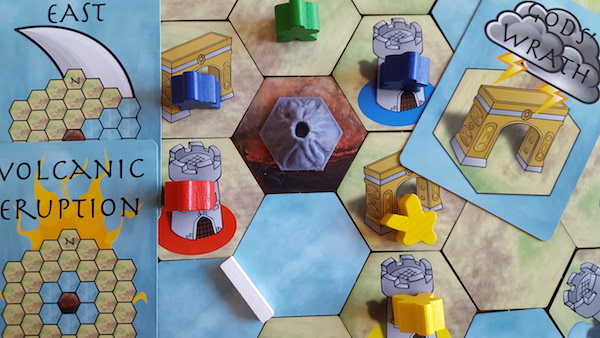
October, 2017 Due to work and vacation, not much time was spent on game design this month. I didn't get to start Knights & Damosels game test but did modify the disaster cards so that they strike specific chivalries to make the decision to choose them more interesting. I also decided to submit Fair Trade to the Fair Trade to give it some exposure and it turned out to reach the semi-finals. More changes took place in my game collection. Kickstarted games like Tortuga 1667 and Keyper arrived, as did a used copy Industry. Tortuga, however, was sold immediately as I came to realize that card management, a mechanism I'm not very fond of, was more important than social deduction. Another long awaited arrival was my big game order from The Game Crafter so now I know what to do next month... 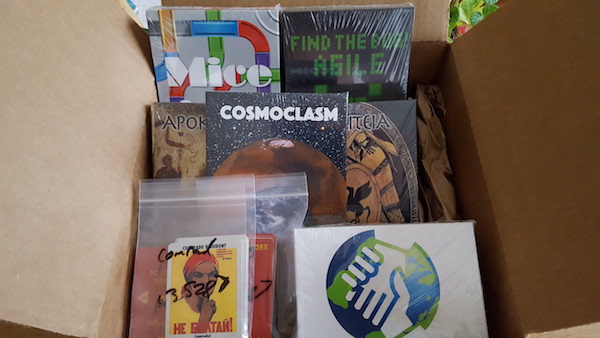
September, 2017 September saw an unexpected game in the spotlight: Find the Bug!. My previously given speech Testification - Learning Testing Through Gamification was selected for the UKSTAR 2018 and Find the Bug! is used to illustrate it.
The news triggered a long due update of the game. When the original large box was replaced by the sturdier retail, the original 10"x10" board didn't fit and had to be replaced by two 5"x10" half boards. I now decided to replace this with a quadfold board, which gave room for a new mechanism: integration and performance tests between components, whereby two test cases are partially executed. This adds a new tactical dimension whereby test cases can be checked and "booked" in advance but at the cost of an extra tester if both test cases would contain a bug. This also triggered the even longer due order from The Game Crafter, where both old but given away games like Find the Bug! and new games like Politeia were ordered. Besides this, I also completed the game test of Lucca with good results. As expected, the 4 player version can be a bit swingy but the game is solid and with precise play, it's a very tense affair. The game test of last month's updated game Knights & Damosels has yet to start but the video was updated from its current still format to my later animated format. Finally the shipping details for my finalist game Apokalypsis were announced and the game sent to Thundergryph. As said, the competition will be fierce but all finalists are granted a prize so Apokalypsis is now officially an award-winning game! August, 2017 August started with some great news: Apokalypsis qualified to the Survival Design Contest Final! The competition will be fierce but just being a finalist gives my perhaps simplest game good exposure. The final may also explain the rise in likes at Nova Suecia Game's Facebook Page. The game test of the new advanced rules was hurried and the video updated and I now only wait for further details about shipping the game. 
Once this was completed, I returned to the last of the three games in my "Greek series": Demokratia. The rules had already been revised earlier but the video needed to be updated from its current still format to my later animated format. Yet another game to be revised was my first card game Knights & Damosels, which was further streamlined by leaving all cards on the table rather than taken to the players' hands. It was successfully demonstrated at Stockholm Boardgame Design Meetup and its unique double goal may help distinguishing it in the future. 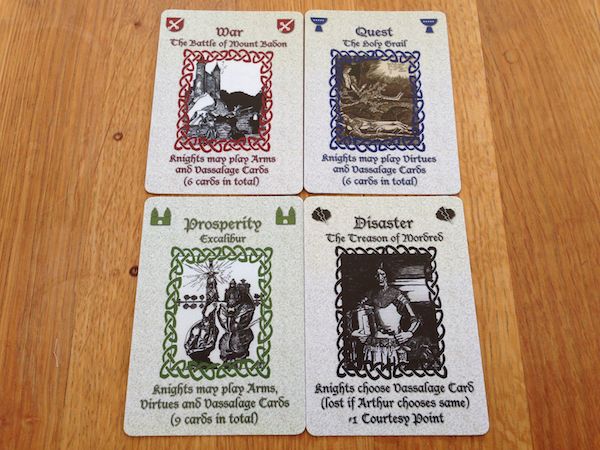
Finally two more games made it to my collection: Automobile and Modern Art. I particularly liked the time aspect of the former, where later production facilities are more expensive but get more benefits than earlier ones, and may find use for it in a future game revision. They replaced some seldom played Settlers expansions Seafarers and 5-6 players as well as the already previous month sold Euphoria. I've simply learned more about what I like and don't like and games with dice often belong to the latter category. July, 2017 The next old game I returned to this month was Politeia. It's been over a year since I last worked on it and I could tell when I started to read the rules. There were a lot of redundant things that I could remove or streamline. The main change was the removal of the action Maneuver (previously Defend) with the much better and "missing" action Revolt. This gives the demos citizens a much more active roles where they initiate attacks themselves rather than being passive supporters of the archegos citizens' attacks. Another often changed action, Trade, also found a better function where resources can be exchanged for either talents or more resources. Of course the changes had to be extensively tested but the finally approved iteration turned out to have just the right balance between the different actions. I also updated the video, this time without cropping! Less good news were that Fair Trade only became the 2nd best game in Value Add Games' call for game designers, while Cosmoclasm got very good feedback from Piecekeeper Games but fell on being less suitable for 2 players. "The game has some unique interactions as you evaluate when to keep playing or retire for the round. Players noted that the concept was intriguing and different than what they were used to in games. I think it’s a game other companies may be interested in exploring. In particular, I think the current game could serve as a pretty good set of mechanics to be part of a more complex game with moving parts. The card play and passing could simply be what happens at some part during the game round, with benefits received from retiring and taking the tokens resulting in gaining different resources or taking more diverse actions on the board." Perhaps I will take all three games to this years' Hippodice Contest. This time I'll try to set up several test sessions and I hope to place an order with The Game Crafter later next month (when the queue clogging game convention of GenCon has ended). June, 2017 After last month's completion of Peoples - Civilizations I once again returned to my old games. The next game in turn was my best-selling Apokalypsis. Due to a change in The Game Crafter's tile sheets, the game now required 2 sheets of 32 tiles instead of 1 sheet of 40 tiles. My first solution was to switch to smaller tiles but I felt that they were too small even for such a small game. Instead, I came up with ideas for additional tiles and ended up with 4 advanced tiles:




The result of the new tiles will be new patterns of "holes" in the game board and hopefully lead to a more varied gameplay. In addition to the new tiles, I added a rule suggested at an earlier Stockholm Boardgame Design Meetup and allowed extension of bridges and also had them placed along tile edges rather than through tiles. The result of this rule is that meeples will never find them stranded on a small area but always have a change to escape to a larger one. With those changes, Apokalypsis is one step closer to a future Kickstarter (with stretch goals like 3D miniature volcanoes, custom bridges and extra tiles) and I plan to place a new order of prototypes for testing and demonstration. 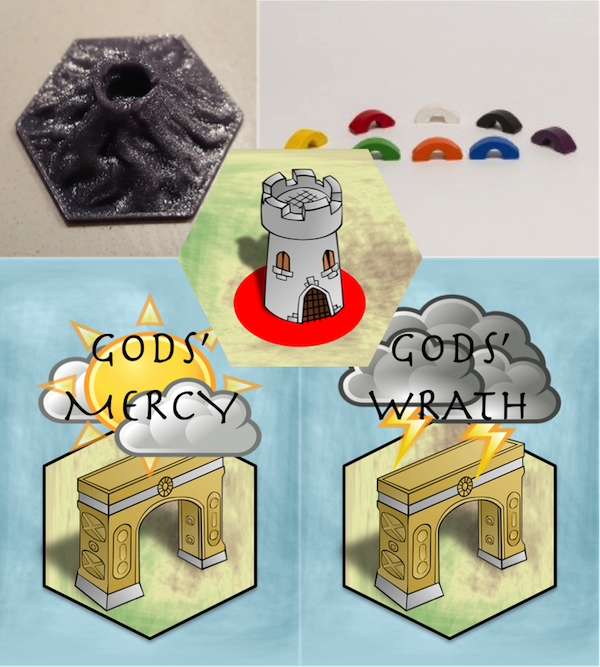
Another old game, Politeia suffered from a similar problem with its 35 tiles but here I decided to replace them with cards instead, since they won't flip during the game anyway. I also had a less fun reason to retur to my old games. A fellow designer observed that one of my Vimeo videos appeared cropped. The reason was a standard feature in iMovie that I had forgotten for my animated videos so I had to redo all of them (including creating the video on a PC, since Apple's PowerPoint lacks this function, adding music on my Mac and uploading the new file to Vimeo). Hopefully it was worth it - one of the games with an animated video was Fair Trade and it was one of three games selected for the final round of call for game designers by Value Add Games. Another selected game was my small card variant 5 Ages, that was accepted for review by Invented Card Games. Finally I bid adieu to Poseidon and instead welcomed four other games to my collection: The brilliant castle building game The Palaces of Carrara, the charming ant simulation Myrmes, the intriguing area control game Aztlán and the very first cooperative game Lord of the Rings. May, 2017 Exactly 1 year after I started working on Peoples - Civilizations I was able to complete a version ready to submit to the Big Box Challenge. It's clear that those kind of sandbox games with plenty of options for the players are demanding to design and in spite of the long time, I would have liked to run several more tests and iterations. Will I do it? I'm not sure - although I like the gameplay it's also very different from what I usually design and from most modern board games. Nevertheless, Peoples - Civilization did change during the development from a traditional civilization game with focus on wars and conquests to a euro influenced game where resource optimization and combination of abilities are important so I'm not giving it up, I'm merely giving it more time to mature. But in spite of my intentions to focus on Peoples - Civilization, I did take some time to both start and complete Fair Trade for a call for game designers by Value Add Games. It was like an echo of my early game designs, where a few words sparked the inspiration to an entire game. In this case, it was the idea of simulate the relation between farmers (balancing between cost and quality) and traders (bidding as low as possible for the highest possible quality). The idea of hidden double bidding may be too simple for a game I usually design but it may be enough for the family game Value Add Games are looking for and I do have ideas for further development otherwise. Nevertheless, it has been an exhausting week and I continued my effort to clear up my game collection and focus on fewer games that I really like. Games like La Cittá, Comrade Koba, Hacienda, Rheinländer, Yspahan and Five Tribes. Only the smaller game Innovation was added, mainly because I got a good price for a sleeved version. What's next? I did get good feedback for Cosmoclasm at Stockholm Boardgame Design Meetup but those meetings occur too seldom to be very useful. Bringing prototypes to boardgame sessions is another option to get feedback but I feel that my games have more in common with the cleaner designs of the last decades than with the more overloaded designs that are popular nowadays. I've also decided to take up chess again, which will give even less time for game design (or more inspiration for abstract games, who knows?). Until I decide, I'll continue this year's project to further develop my old designs and see if any of my "ugly ducklings" can become a beautiful swan. 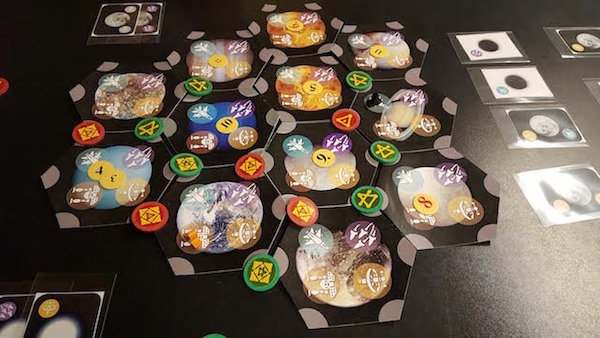
April, 2017 Finally I could devote myself to my next game Peoples - Civilizations. The first game test provided the right balance and I could complete the rules and upload the components to The Game Crafter. The next step will be a second game test, possibly with a printed prototype. The discussions with Piecekeeper Games regarding Cosmoclasm proceeded well and I even compiled a 2 player variant to accommodate more player counts. Unfortunately the scheduled designer meeting, where I had hoped to present the game, was postponed so I'll have to wait for my colleagues' opinions. My game collection also saw some development as I decided to sell the newly acquired Troyes together with Attika and Tower of Babel, not because they aren't good games (they are!) but because they are not different enough to get to the table. Instead I added Alchemists, Louis XIV, Rialto and Tikal and also decided to kickstart Brass. March, 2017 With Cosmoclasm completed, I returned to Iconoclasm and its addition of a mancala mechanism for determining which elements to play and how they support each other. The game test was successful and a new version of the rules uploaded. I also made a quick update of Mingle & Murder, where the unnecessary movement through the mansion was replaced by more streamlined place and take back rounds. This inspiration came from some games I got acquainted with through Boardgamearena.com, in particular Spyrium. This site also made me add Expedition: Northwest Passage, Troyes and Mykerinos to my game collection. After that I could finally return to Peoples - Civilizations. The game test confirmed my fear that this game will require a lot of work to balance but I also like the "sandbox" gameplay so far, where the players get a lot of freedom to form their strategies to make the best use of the conditions presented to them - just like the real civilizations. March also turned out to be a very successful month for Nova Suecia Games. Piecekeeper Games had previously expressed an interest for Cosmoclasm and now decided to order a copy for evaluation. In addition, two copies of Demokratia and one copy of Knights & Damosels were sold. This is the first month where three different games have been sold! February, 2017 February was completely devoted to the new game Cosmoclasm. In spite of being a relatively simple game with few rules and components, Cosmoclasm took time to complete. Free images were picked from Wikimedia (planets) and Game-icons.net (factions) but it still takes time to put together over 100 individual cards and then prepare the usual rules, print & play documents, play video and homepage articles. I also tried to public the draft rules early for feedback at Google Docs and , the former with some feedback but the latter with none. Cosmoclasm was barely completed in time for the Trick Taker Challenge. However, the hard work didn't stop my inspiration and two new projects were started as well this month. First, my attention was caught by two unique Kickstarter projects that manage to deliver something new in the ever growing game market. Tao Long combines the movements of fighting dragons with the mancala mechanism and Tortuga 1667 combines social deduction with a board where the players themselves move between the teams. Both games gave inspiration to a mancala mechanism for Iconoclasm to rule not only which tokens the players may play but also to let them set the support relations themselves. If it turns out successful, it will be an interesting example of how completely different games can give inspiration. No matter what, I decided to back both to acknowledge my gratefulness. Second, a War Game Exhibit at the local Army Museum together with reading about supply challenges during Charles XII's Russian Campaign gave inspiration to an additional supply layer in Bellum se ipsum alet. Currently, the army's supply is drawn from the cities but what if it's drawn from the countryside instead, where gold from the citizens must be exchanged for food from the farmers (but also exhaust the land, forcing the army to be constantly on the move to find new supplies)? That's an intriguing war economy mechanism I haven't seen before and simply too intriguing not to pursue. It also gives me an excuse to once more return to the six "original" Nova Suecia games for reengineering following the successes with Nova Suecia, Christina Regina, Vasa Regalis and Tre Kronor Infernum. Last but certainly not least, Nova Suecia Games celebrated its third birthday with an offer to give away three games. As I concluded last month, I will be busy this year too and expect at least three more year... January, 2017 The first month of the year got productive. There was a good discussion at my Designer Blog about Peoples - Civilizations and the design work proceeded well, although I was reminded one of the reasons I dislike designing component heavy games - creating dozens of unique tiles and cards takes time. Nevertheless, I carefully selected suitable icons from Game-icons.net for all the game's needs and completed all the 80 tiles (each with a unique combination of resources) and half of the 60 cards (15 for each of the two first Ages). 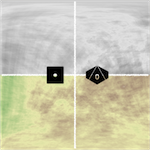
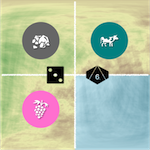
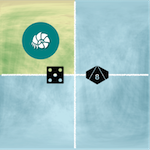
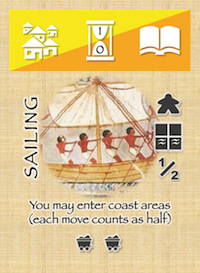
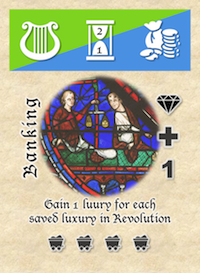
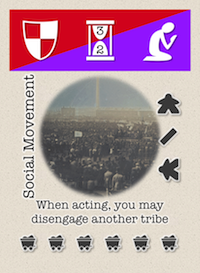
With that, I expected to start the test game when I was interrupted by a spark of inspiration similar to the ones that triggered my earlier game designs. I had played through some of my latest game acquisitions (The Great Zimbabwe, Lancaster, Santiago, Taj Mahal, Hansa, Yspahan and Torres) and found several ideas I would like to use. It was particularly Taj Mahal together with the previously acquired China and The King is Dead that helped me see how I could use some area control ideas I've had since Iconoclasm and the entire game designed itself in my head during my bike ride to work. After just a few tests, tweaks and tunings that I discuss more in detail in the designer notes, the new game Cosmoclasm (named after Iconoclasm, although the theme is different) felt good enough to proceed with. I've also decided to submit it to the Trick Taker Challenge, a contest I previously had rejected due to not even having played any good trick taker game. Now I haven't only played some but also designed one! Another game that was submitted to a contest was Apokalypsis, which turned out to be suitable for the PnP Game Design Awards 2016 for PnP games being developed on during 2016. (Actually, all of my games fulfills those criteria but I chose my most popular game for this.). My second most popular game, Find the Bug!, found another buyer this month, probably thanks to its exposure during the EuroSTAR Software Testing Conference, and I'll soon have to consider a large print run for this popular and eye-catching test game. Sadly, this also meant less time for my two other games targeted for this year. My abstract game Lucca got simpler and more streamlined rules after some tests, including two action turns tower composition linked to block composition instead of the more clumsy "balanced tower" requirement. However, the new tests are yet to be completed while poor Politeia has remained on the shelf for months now, although I really think its unique mancala mechanism has potential. I will be busy this year too... Old blog posts may be found here:
|
Please leave a comment on the games or contact me directly at nicholas.hjelmberg@gmail.com. |