
 |
Vision | Projects | Blog | Articles | Awards | Order | Reviews | |











































|
Week 53, 2015 My "New Year Resolution" to return to my old games got a good start with new ideas for Christina Regina. First, I wanted to remove the rather expensive board. Second, I wanted a better assassination score mechanism, as the current rule of 2 points to the opponent at a failed assassination may be unfair to the other players, who didn't do anything bad. Third, I wanted to prolong the game by letting more than only the first colored tile count in the end. Fourth, I wanted to simplify the rather clunky scoring of first, second, third and fourth color. All this was solved by the simple idea to put aside all tiles moved onto by the Queen and let assassinations remove a tile from the player negatively affected by the assassination. I also took the opportunity to improve the art. 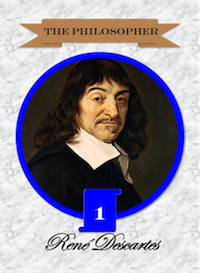


In fact, I like my old favorite Christina Regina even better like this and consider relaunching the game under another name ("The Queen's Path" is my current working title) and submit it to the Cardboard Edison Award. This also requires a good presentation video but one thing at the time - I promised myself to allow my old games time. Week 52, 2015 Apokalypsis did not make it to the finals in the The Survival Challenge but got good remarks ("Interesting mechanics and the artwork did the job."). It was the weak theme that stopped the game ("The theme did not stand out to me. Felt like an abstract game with a theme tacked on."), something that makes me wonder if have reached as far as I can with my Euro style games in those contests. I'm also having doubts about my next contest submission for Learning Game Challenge. It has got a working name, "Social Tourist" after a Swedish Prime Minister's infamous quote, but not even the Christmas vacations have helped the progress of the mechanisms. The theme is definitely there but I want to design games with good mechanisms in the first place, not theme. Until I get some good ideas, I'll put Social Tourist on hold. Instead, I returned to one of my old games, Iconoclasm, and finally completed the strategy booklet. Perhaps this is what I should devote myself to next year: refine my old games instead of designing new ones. After nearly 2 years of game design, I can look back on a journey with a lot of learnings and 25 games designed, but I now find myself thinking less about new games and more about new games. Perhaps it's time to go from designing to developing and see if I can make my games even better. I've already considered giving my very first game Nova Suecia smoother action-based mechanisms instead of the current phase-based so the ideas are definitely there. After all, If I give each of my game a year of development, I'll keep myself occupied until retirement! 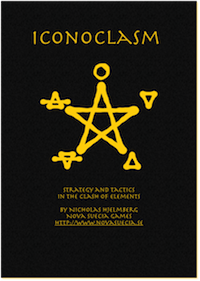
Week 51, 2015 Apokalypsis has now been handed over to SF-bokhandeln for testing and I expect feedback in January. Meanwhile, I tried out different concepts for my Learning Game Challenge game about the current refugee crisis in Europe. The thematic ideas are plenty but turning them into smooth mechanisms isn't easy. Some ideas I consider:
Those ideas all work well in a game that plays itself (which may be good enough for a learning game) but I also want the players to have meaningful decisions, such as route optimization and opponent blocking. Hopefully the next week give further inspiration. I've even contacted UNHCR and asked whether games are considered as media and free to use photos from their site. I expect to resort to texts and symbols in the game but it doesn't hurt to ask. Week 50, 2015 The week started with some good news for Apokalypsis. First, it made it to the semi-finals in the The Survival Challenge. Then, thanks to a friend's good words, I got an offer to show the game to the local game store SF-bokhandeln. If all goes well, I may get an opportunity to sell Apokalypsis in the store! The rest of the week I kept testing and changing Politeia but at a slower rate. Different resources for different territories made the resource game more interesting and by letting the Trade action both take and sell resources and the non-colony city-states score in the end, I managed to maintain the balance between the military strategy and the economy strategy. (The economic power of Thebes still won the test game but only by a well-timed switch to military.) Politeia is by no means completely tested yet but the game has reached a mature phase and I will now let it rest while looking at another potential game idea. I've considered options for the next level of my game design hobby and one such option is games with a message. This is partly inspired by the Learning Game Challenge and partly by the current refugee crisis in Europe. How about designing a game that provokes by putting the players in the roles of the real life actors and having them take difficult decisions? One idea is to let them play cards allowing refugees to move towards safety while at the same time introducing new obstacles. I could even make it a "normal" game first, revealing the true nature of the game afterwards as in Train (although not that controversial). I will assess various mechanisms the next week and the decided how to proceed. Week 49, 2015 With Explorers & Exploiters sent to Hippodice Game Designer Competition, I returned to Politeia and the start of yet another game test. With the balance issues resolved last week, I now focused on decision rationales. The city-states of Politeia were so similar that the decision which one to attack didn't matter. Fearing that this may lead to king-making, I returned to an old idea of different resources for different colonies as well as starting citizens in the Ionian colonies bordering Persia to make that front more interesting as well. I don't expect this to be the last test... Another interesting opening came from a friend who had spread the word of Apokalypsis to the local game store SF-bokhandeln. They may be interested in testing and displaying the game and I've scheduled a meeting with them. To be continued... Week 48, 2015 The work on Politeia was intensified to give time to a final review of Explorers & Exploiters before sending the physical game to Hippodice Game Designer Competition. The rules video was completed, an annotated test game was started and the rules were reviewed... over and over again. You can't stress game design, the test game gave a lot of valuable input regarding balances (lower return on resource sets), decisions (the trigger for the Greco-Persian War was removed from the player actions and linked to the Hellas/Persian political level instead) and the Hellas/Persian political level split into a military level and a political level. (I really need to find better names for them!) After a lot of agony and many restarted tests, I found a good balance where both too much peace and too much war triggers the Persian invasion. The test continues the next week but the game has taken a huge leap forward.Thanks to that, I felt I could return to Explorers & Exploiters with a good consciousness. I played through the annotated game, documented it with photos and ensured that the rules and the gameplay were clear. The only minor change was to let barbarians and explorers defeat each other in the presence of settlers or settlements instead of letting the explorer win, something that will create a more dynamic game. First I was actually surprised that Explorers & Exploiters made it to the contest and not my later games Mingle & Murder and Apokalypsis but now that I look back on the game, there are many interesting mechanisms in the game. I almost feel a bit bad that I didn't return to it until now and it certainly deserves this second chance. Week 47, 2015 The work on Politeia continued in a slow pace with the completion of the Print & Play files and game and rule discussions added to the homepage. Now only the rules video and annotated test game remain to publish. Regarding the latter, there are two main things I'd like the test to tell:

For further inspiration, I finally took the time to play some of my newly acquired games. Both Alchemist and Attika made it to my favorite list thanks to their inventive mechanisms but whether I can build on any of them in my games remain to see. Another game, The Name of the Rose is more about the social gameplay than the mechanisms but may inspire to future game, who knows? Last but certainly not least, I got a positive surprise as Explorers & Exploiters made it to the major round in Hippodice Game Designer Competition! The next step is to send the game to them so I need to review the rules and components one final time first. Is it good enough to go further? Perhaps not but it will get exposure and all participants will get a detailed assessment so in that respect I already feel like a winner. 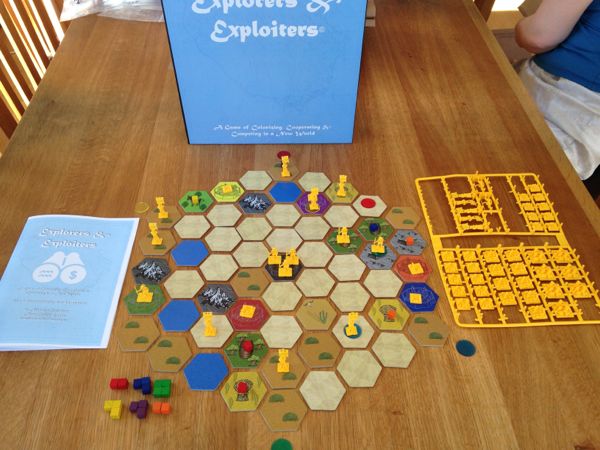
Week 46, 2015 This week was a vacation week with little time for game design. However, I did use the flight to complete the draft rules for Politeia. I still struggle a bit with how to present them in the most logical and intuitive way but hopefully more testing will help solving that. 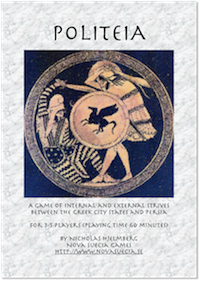
Week 45, 2015 The final components for Politeia were completed and it's now in a shape to be included in a game order if I would get the opportunity to sell any of my other games. 
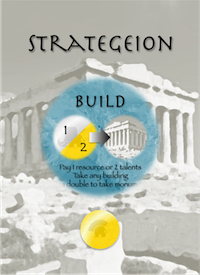
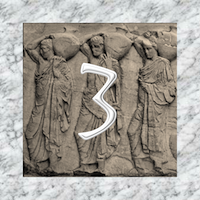
I've also started preparing the webpage material, including the one-page game description, the designer's notes and the thematic overview, something that helped me decide on some of the outstanding art questions. Not only did I find Athenian analogues to my buildings but also inspiration to my monuments. The seven wonders were self-evident, at least the five Greek ones, but I also added the Athenian democracy and the Spartan military academies among others. Even the challenge of getting the political tiles numbered 0-6 good-looking was resolved by illustrating them with images from the Parthenon frieze, 1 figure for number 1 and so on. Even the rules got some help - rather than letting both Greek and Ionian city generate 2 talents, I let the Greek cities generate 1 talent and 1 resource (reflecting for example the Athenian silver mining and agriculture). This also made it easier to return a rule that let the conqueror and the conquered share the income from the city (and let the active player choose first). With more resources in play, I also added 1 resource of each type. Politeia is growing more and more but I will nevertheless hold the order as long as possible so that I can test it properly. The long-term plan is submit the game to next year's Hippodice Game Designer Competition. Week 44, 2015 Continuing with my latest game Politeia, I came up with drafts for most of the tiles (areas and actions), cards (resources) and markers (citizens and talents). 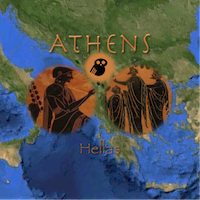

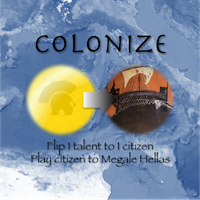
It's a tough balance between art and function. Take the action tiles for example. Initially, I considered (and worried about) how to illustrate the act of colonization. A sailing ship or farming colonists? Pottery style or oil painting style? Instead, I went with the functional illustrations of map (the action takes place in Western Mediterranean), color (the colony actions share the blue color), symbols (the talent symbol and an arrow towards the colony symbol, meaning that 1 talent gives 1 citizen in 1 colony). The first test game was also completed (Sparta won!) and the end game condition determined: end the game when any player runs out of markers but count only the ones that have been placed on the board. This gives the players the ability to end the game at the right time while still giving the game a natural end. Politeia dosn't have any "big scoring" opportunities but is more about using the right time and place to accumulate small advantages for a final victory. I think I prefer my games like that! Week 43, 2015 My games got a lot exposure this week. First, Find the Bug! was demonstrated at the SAST (Swedish Association for Software Testing) 20 year celebration with 800 visitors, of which many stopped by to play. Then, Apokalypsis made its first public appearance at at this month's boardgame cafe with good feedback. 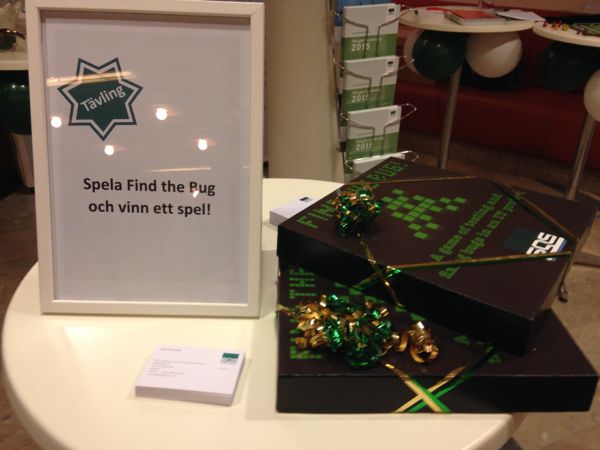
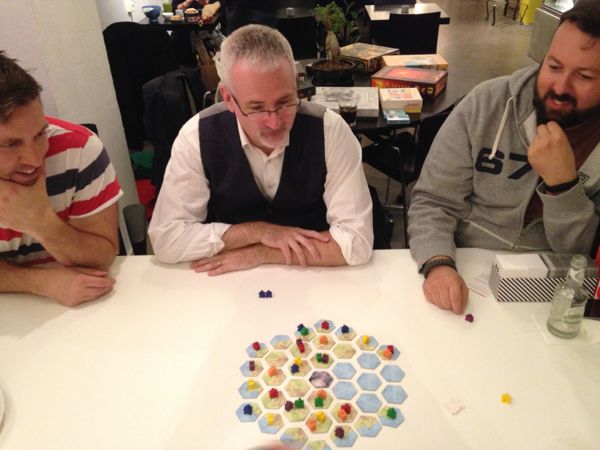
Those energy kicks were welcome because the work with Iconoclasm game video really drained me. Not only did the 15 round game require nearly 100 animated slides but I also discovered errors in the gameplay that I had to correct, only to introduce new errors that had to be corrected. Perhaps it would have been best to play a completely new game but after many iterations I had a correct and well played game with a similar endgame twist like the original one. Then came the next surprise: PowerPoint for Mac didn't include animations in file exports - only images. The alternatives to bring the presentation to a PC or Keynote only distorted it so I had to resort to Snapz Pro X, a program for recording the presentation when run on the screen. It felt like in the eighties, when you had to record music by playing it on another recorder! I did consider creating animated videos for rules as well but given all those problems I abandoned that idea. At least the video could be published. Unfortunately, this meant that I had little time left for Politeia but the rules feel solid and I started working on some of the art. The logo and the player powers can get simple symbols as usual and the city-state tiles can get geographical contours but what about the action tiles and the building cards? Civilization games benefit from good art so this will be a challenge. Finally I prepared the submission files for this year's Hippodice Game Designer Competition. Apokalypsis, Mingle & Murder and Explorers & Exploiters will represent me and I wish them luck! Week 42, 2015 Sometimes it's not enough with rules, you may also need rules for situations where the rules are not followed. This was my main concern about Apokalypsis. What happens if a player accidentally reveal omen cards that shouldn't have been revealed or do not reveal omen cards that should have been revealed? What happens if players start doing it with purpose? Wouldn't that even threaten to break the game? Clearly I needed a to discourage that and the solution was to add a penalty of removing 1 meeple. Incidentally, another rule (that ties are broken clockwise from ending the game) makes it even worse to try to break the game, since you'll only help the player following you in turn to end the game and put you last in the tie break. With that final rule change, I submitted Apokalypsis to The Survival Challenge and could finally return to my older games. Well, that's not entirely true. With Demokratia and Apokalypsis, I started a series of games set in the Ancient Greece. However, I felt that I missed a game depicting the struggle between the city states and thought of which mechanisms that would give justice to this dynamic epoch. A light civilization game? An area control game? A war game? The answer came from another old wish to design a game with a quick and smooth action system instead of the rather downtime-prone system of rounds and phases. How about a system where the players choose only one action at the time? Perhaps a rondel mechanism like in Murano or a mancala mechanism like in Trajan? Those two fine games inspired me to a more dynamic system. Imagine only one mancala board, like in Five Tribes, where the players may open and close opportunities for each other, to determine both number and cost of actions. After some thinking a simple but brilliant system emerged. Similar to my latest games, I started trying out rule fragments (which actions, what would they cost, what would they return etc.) and then proceeded to put them all together in draft rules, partly to get them organized and partly to facilitate the process of making them intuitive and consistent. Although similar to my latest games, this is the most fun phase of game designing when everything feels new and exciting. The next phase can be more daunting, when test starts bringing the game back to earth again and pointing out issues, but I look forward to it nevertheless. How about my older games then? Yes, I did manage to get back to Iconoclasm. Inspired by last week's review of Mice in a Maze, I decided to turn one of my annotated games into a game video, using PowerPoint's animation and export functions. The work is tedious but the results looks promising and I hope to have it done by the end of the next week. 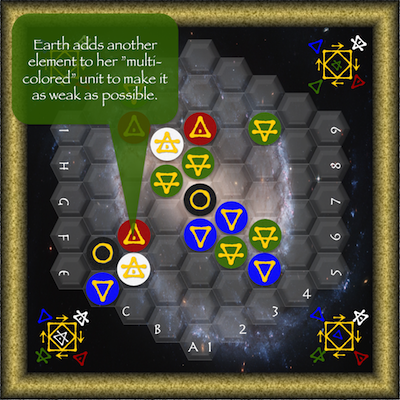
Speaking of Mice in a Maze, it now has an entry at Boardgamegeek! Week 41, 2015 With several things on my to-do list completed, I could return to annotating the game tests of Apokalypsis and Iconoclasm the Card Game. The former seems solid while I'm not sure whether the latter is strategic, tactical or just chaotic. I consider another test where the players may play diagonally adjacent as well to allow them to prepare their positions before clashing. Two rule modifications came out of the test: ranked end game scoring (to allow tournament scoring and prevent kingmaking) and solo rules (play all cards from a shuffled deck, either to dominate with 8 cards of 1 element or to balance with 4 cards of each element). 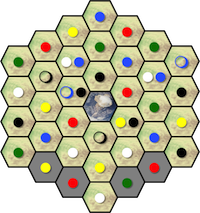
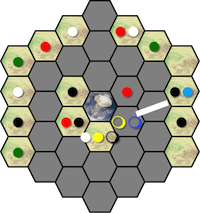
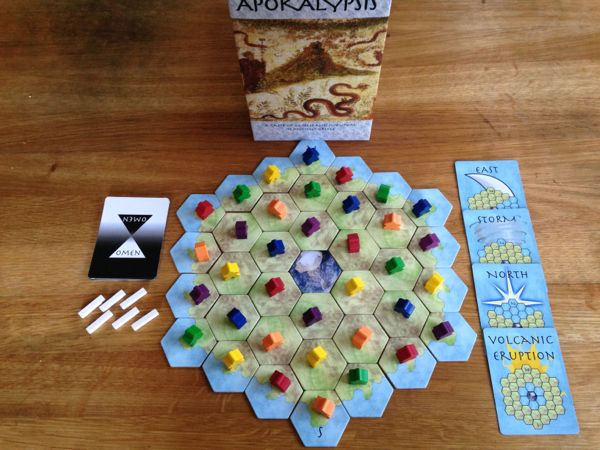
I also noticed that Hippodice Designer Competition 2016 is open for submission until end of October. Should I enter this year as well? Candidates I consider are Explorers & Exploiters (unique strategy game), Mingle & Murder (finalist in Killer Gamer's Remorse Challenge) and Mice in a Maze and Apokalypsis (simple family games). I have some more weeks to decide. Speaking about Mice in a Maze, it became my third game after Iconoclasm and Mingle & Murder to get a video, this time from Matt Games: Apparently, the reviewer thought that the mice have to choose a different path out of the Cheese chamber but besides that, they understood the rules (although they were less mean to each other than I've been in my own games). Besides designing own games, I continue to expand my collection of other designers' work. Relatively unknown gems like Alchemist, Attika, The Bridges of Shangri-La, Comrade Koba and The Name of the Rose found their way to my shelf. I look forward to exploring the mechanisms of those games soon. Old blog posts may be found here:
|
Please leave a comment on the games or contact me directly at nicholas.hjelmberg@gmail.com. |