
 |
The Quest for the Perfect Game - Reviews to Extract the Essence of Games by Nicholas Hjelmberg | |








|
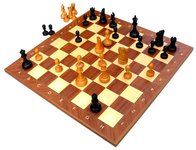
Chess - The Antithesis of a Modern Boardgame (Published 29 April 2019)This review has also been published at Boardgamegeek. What follows is a modernized translation of a 15th century Italian manuscript on chess. The author did not sign his work but presented himself as an authority on modern boardgames. "Having returned from my journey to the Teutonic city of Essen, I hereby share my impressions of the centennial game fair. I regret to inform you that most of the new games were disappointing. The expansion to knucklebones left most players lukewarm, the innovative sphere-shaped dice were deemed outright broken, as were the cube-shaped marbles, and the long awaited demonstration of new art for playing cards was cancelled due to copyright issues between the abbey and the city. Instead, the game on everybody's lips was a modernized version of an old boardgame called chess. At first glance, this game gives a very contradictory impression. The board is abstract, consisting of eight times eight squares. Half of the squares are black but as far as I can tell this has no impact on the gameplay and is just confusing. Perhaps the board is meant to represent the German fractured political map? The pieces on the other hand are the opposite - crude miniatures that remind more of the vulgar New World trash games that the Spanish brought back to our continent. 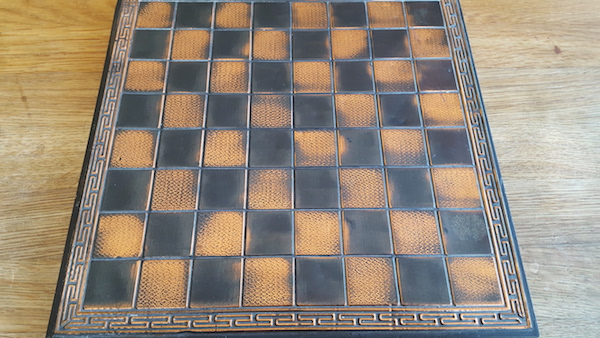
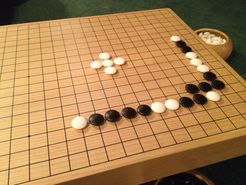
Moving on to the setup, this is a cumbersome activity as thirtytwo pieces has to be positioned on specific squares before you can start playing. Words have reached me about an Asian chess version called Run or possibly Go, where all pieces start off the board with no setup time at all. The designers of chess should have learned from this example. The gameplay itself is fairly simple. Take turns to move one piece to one square, discard any piece on the square you move to, and end when one player's King piece cannot avoid being discarded. As you can tell from this, chess represents everything that modern European boardgames have abandoned centuries ago. 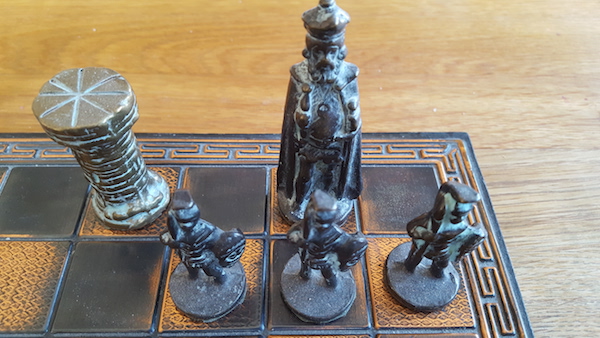
First, the pieces are terribly unbalanced. The Pawn may only move one square at the time and only forward, the Bishop may only move diagonally while the Rook may only move orthogonally, and do not get me started on the Knight's complex movement rule. But stronger than all of them is the Queen, which may move both diagonally and orthogonally. Why anyone would ever choose to move another piece than the Queen is beyond me. 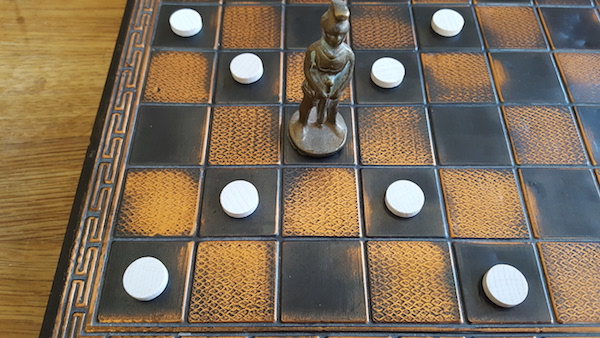
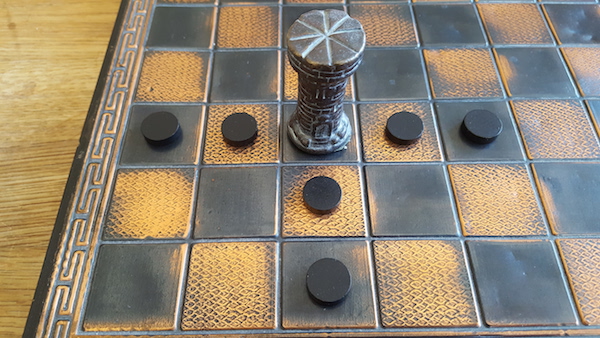
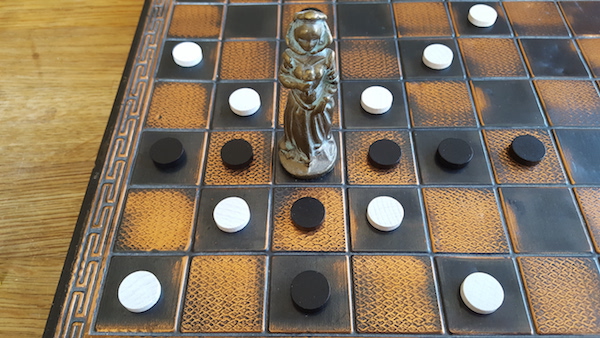
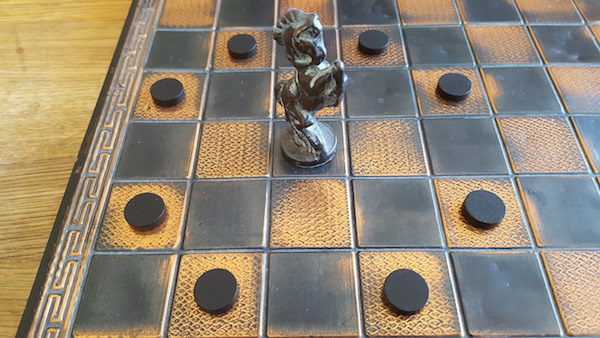
Second, chess suffers from a severe runaway leader problem where it is very difficult to recover from initial piece losses. Some argue that there is a catchup mechanism in the rule of Pawn promotion, allowing a pawn which reaches the last row to be exchanged for any other piece, but good luck getting this weak piece all the way there. 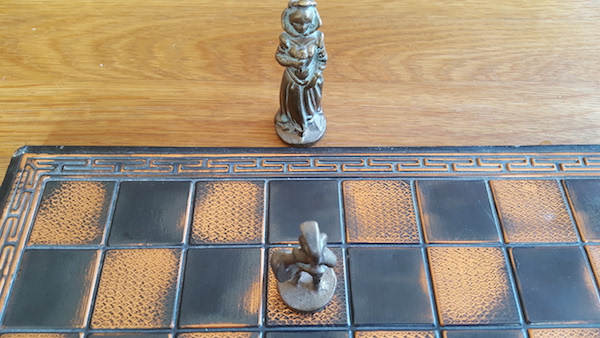
Third, there is a distinct lack of progress and arc in the game. You are supposed to be a ruler of a kingdom with a strong army but neither of them improve during the game. Your kingdom will produce no resources, your military will not unlock any new abilities and your soldiers will earn zero experience points. The only "upgrade" is the aforementioned Pawn promotion but in my humble opinion, a pawn deserting from the battlefield should not be promoted but rather executed. Fourth, there is a disturbing disconnection between gameplay and theme. The idea that the Queen is stronger than the King is preposterous and the rule that a simple peasant can defeat a mounted knight by merely moving to its square proves that the designers are either blatantly ignorant of military theory or secretly supportive of subversive thoughts. 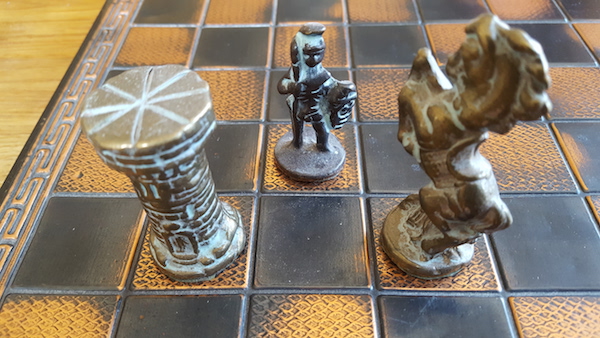
Why not let the encounters be determined by dice or cards instead? Imagine if chess would have captured the noble one-on-one duels of the battlefield where heroes are born. What an epic storytelling we would have got. What a lost opportunity we got instead. 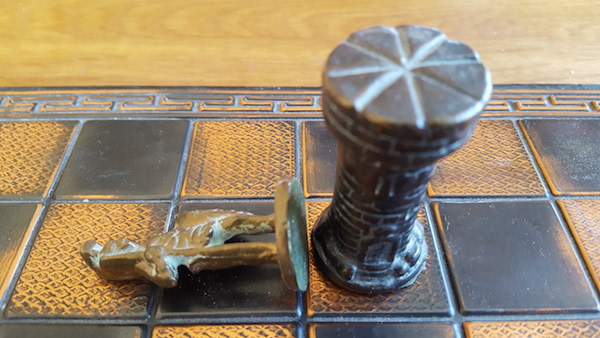
This leads us to the fifth problem, namely that this lack of healthy randomness makes chess prone to analysis paralysis. Many are the men in the bloom of their youth that I have seen pondering in vain at the chess board. And who can blame them? 16 pieces to choose from, each with several options which are difficult to predict anyway due to the constantly changing game state. A basic rule of boardgames is to provide the players with few but meaningful decisions. I regret to say that chess fails utterly in all those respects and I seriously fear for our youngsters' health if they spend too much time staring at a checkered board instead of seeking outdoor leisures. Each of those problems is in itself enough to break a game and then I haven't even mentioned the player elimination, the take that mechanic and the lack of solo versions. My final verdict is that chess is an expression of the prevalent cult of the new, doomed to be gone from the hotlist and forgotten by everybody within a decade or two." 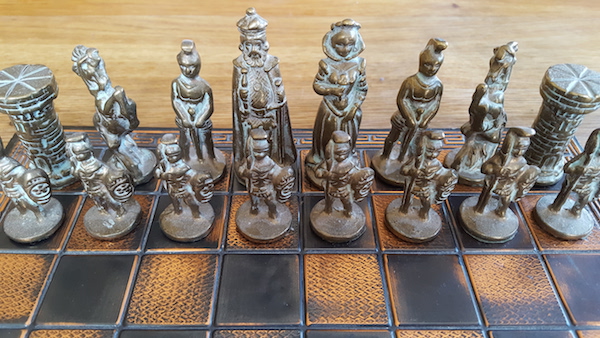
Translator's comment: Some scholars believe the author of the manuscript was Pedro Damiano, who would later write Questo libro e da imparare giocare a scachi et de li partiti, the first known book to describe modern chess rules and strategies. I guess he eventually changed his mind about chess. |
|