 |
Home | Game | Rules | Theme | Strategy | FAQ |  |













































|
Annotated Games: 4 players, version 0.1This game was played during the game testing of Peoples - Civilizations. The players tried different strategies to assess how balanced they were.
Starting positionsThe starting continents are by default separate but that may soon change. The Egyptians start on the smallest continent so we'll see how that affects their gameplay. The Olmecs have a future resource (coal) nearby, which may promote their industrious strategy later on.
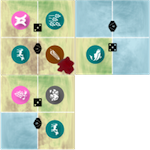
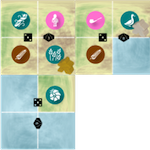
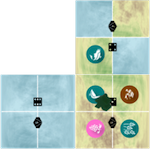
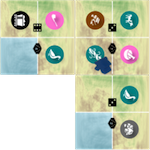
Round 1The game starts with a special round where 1 of the 2 starting tribes is moved, revealing a new region, and a neutral tribe placed in the continent. The Romans move to a commodity area and, since their continent now exceeds 2 areas, must reroll until they discover an area already in play. This happens to be the Olmec continent. They place their neutral tribe in a food area with the intention of taking advantage of it with military force. The Babylonians move to a food area. Since their continent doesn't exceed 2 regions yet, it may remain unconnected to other areas in play and the die roll add a sea region to it. They place their neutral tribe further away so it won't interfere with its city building plans. The Egyptians move to a luxury area. Their continent gets connected to a southern polar region and they keep their neutral nearby, at a commodity, with the intention of converting it later on. The largest Olmec-Roman distance remains 4 so any region may be added to it. However, it happens to become a northern polar region and when placed there, it also happens that the continent gets connected to the Egyptian continent. Three player continents have now found their place on the world map.
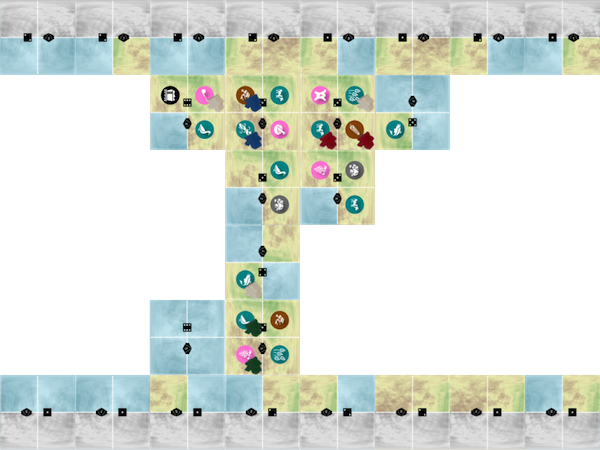
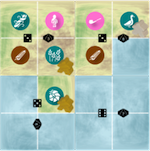
Round 2-4All civilizations produce 1 food with their 1st tribe. With their 2nd tribe, the Romans and the Olmecs produce 1 commodity to spend on development, the Babylonians produce a 2nd food, and the Egyptians 1 luxury to spend on advances. We already see the different strategic paths.
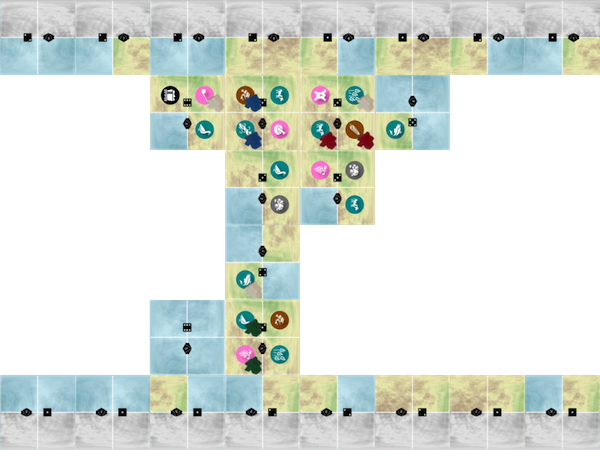
Round 5-7The Romans and the Olmecs buy development cards; Slavery and Farming respectively. The Romans are stronger than the Olmecs but an early war would be a waste of time. The Egyptians plan for both culture and religion to boost their production while the Babylonians grow for quicker production.
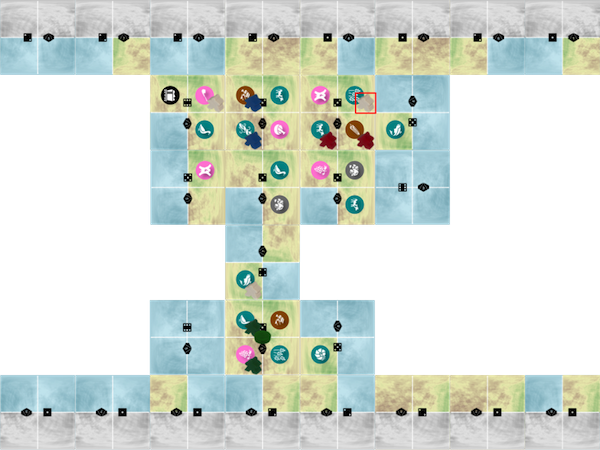
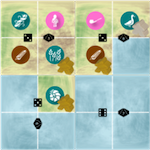
Round 8-10We now see the different strategic patterns. The Romans use their Slavery card to enslave the neutral tribe and immediately use the plundered grain to grow. The Babylonians found their town and also grow a 4th tribe. They have no development or advance yet but will now produce at a higher rate. The Egyptians are still on 2 tribes but can soon look forward to a +1 bonus for both development and advance investments. The Olmecs have 3 tribes and is close to a 2nd development card but will they withstand the Romans if they attack? The Roman and Olmec growth also reveals 2 new regions but mainly sea areas, making their clash more imminent. The Babylonians exceed a distance of 4, forcing their continent to be connected and it happens to be the Roman continent, although the sea separates them.
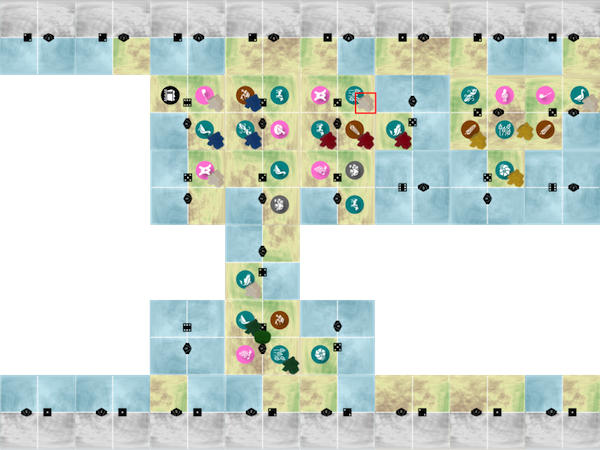
Round 11-15The Romans focuses on growth and plan to advance against the Olmecs. However, with less tribes the Olmecs launch their Revolution 1 round earlier and invest in a commander (one time military action point) to defend against a Roman attack. The Romans decide to grow southwards instead to claim as much as possible of the shared continent. Meanwhile, the Babylonians invest in Farming to start growing (and pay only 1 commodity but to the Olmecs, since they were the first to discover it). The Egyptians find themselves isolated on a small land mass and focus on growth instead to prepare for spreading Religion.
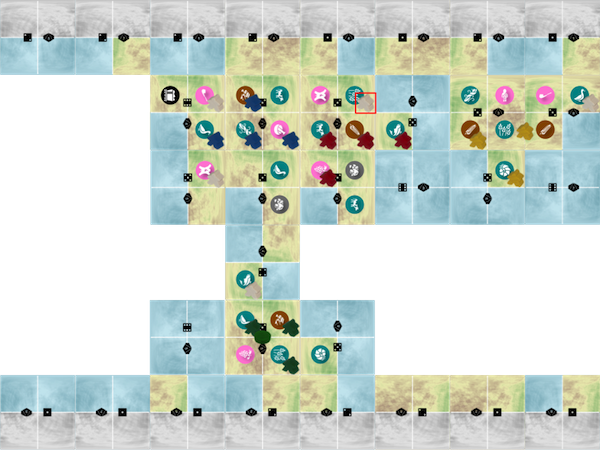
Round 16-21The Romans focus on producing for growth and development and invest in Mining. The Babylonians invest in Law to be able to use Civics as Culture and vice versa. The Egyptians finally spread Religion and will soon see how well their Culture/Religion strategy pays off. The Olmecs' trade strategy pays off already this round as they now have access to 3 different luxuries.
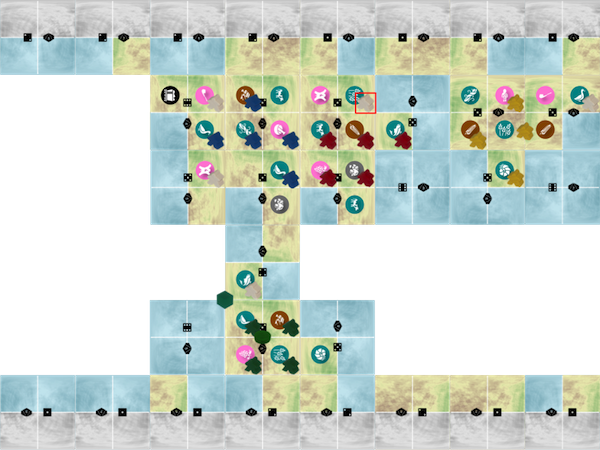
Round 22-28The Romans no longer grow and prepare an attack by acquiring a commander. Note that the Olmecs have too many turns left to their next Revolution to prepare a defence. The Babylonians continue their settlement building strategy by using Law to found a city (allows them to pay with Civics and Culture). With both Culture and Religion, the Egyptians are now ready to expand and do so by acquiring Theism and converting the nearby neutral tribe. The Olmecs prepare 2 strategic paths by founding a town and investing in Sailing to sail to new land. However, the Roman imminent attack interrupt that and they hurry to produce along the border areas before they get plundered.
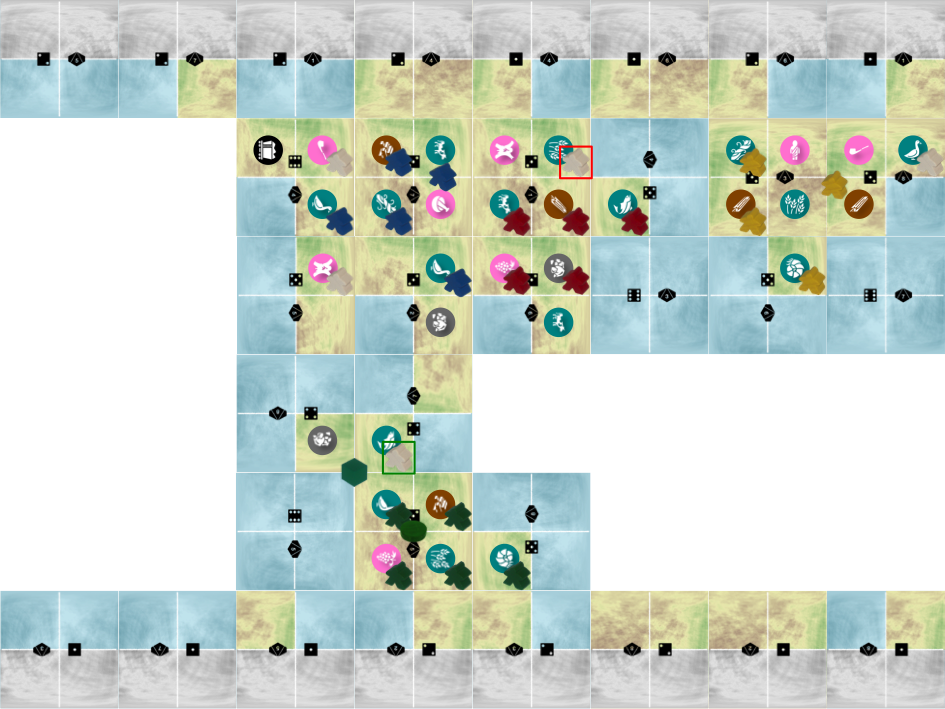
Round 29-35The Romans attack and enslave an Olmec tribe and reach 8 tribes. The Babylonians invest in Culture and, since they have Law, use 1 Civics and 1 Culture to fully produce from the newly founded city. They will now produce rapidly. The Egyptians fill the last productive space of their continent and invest in Navigation to find new land while also founding their first settlement. The Olmecs don't worry too much about the last tribe as they produce so much food elsewhere. They are also fortunate to find new land when sailing westwards and can look forward to further growth. Note that their town (2 tribes)+1 commander can only be attacked by a military strength of at least 3 so for the moment they're safe from further Roman aggression.
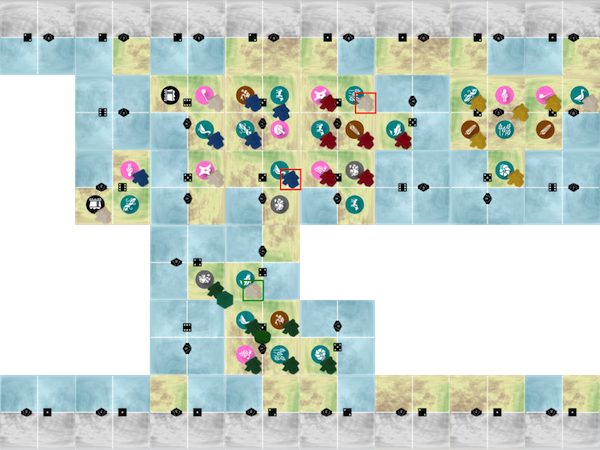
Round 36-44The game now develops more rapidly as all civilizations reach Age 2 in a civilization trait. The Romans use their roads to produce twice in a luxury area so that they can invest in Military 2. They also get Sailing as "public domain", since it has been discovered by 3 civilizations. The Babylonians continue their grand city plans by investing in Civics 2 and founding a metropolis. The Egyptians seek new land instead of their crowded one but also increase their production through a town and Cults (more commodities around Religion). The Olmecs continue their economy strategy with Economy 2 to trade more each round.
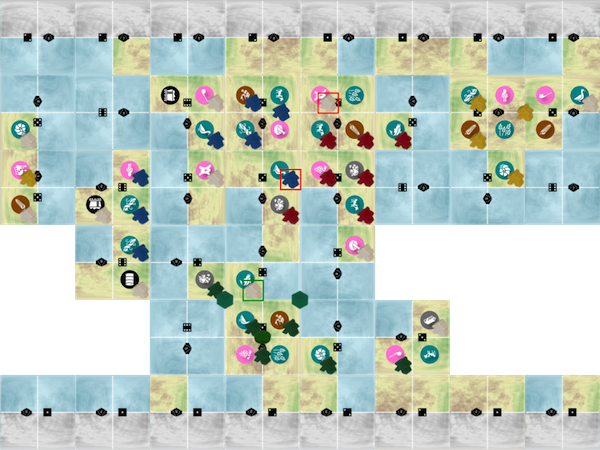
Round 45-53The Romans attack the Babylonians but also found a town to consolidate their empire. Their aggressiveness triggers both the Babylonians and the Olmecs to invest in Military while continuing their exploration of new land. The still isolated Egyptians pursue their Culture/Religion strategy with level 2 in both as well as adding Monuments to their previously acquired Cults, hence getting both extra luxuries and extra commodities.
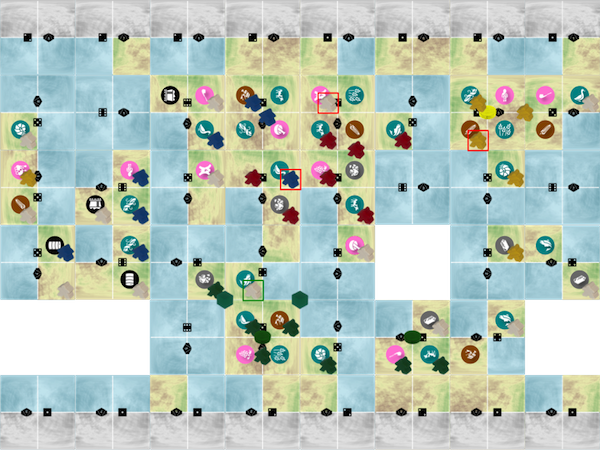
The game was halted here and resumed with more resources at start and during game. |
Annotated gamesIf you like those game mechanisms, I can also recommend:
|
|||||||||||||||||||||||||||||||||||||||||||||||||||||||||||||||||||||||||||||||||||||||||||||||||||||||||||||||||||||||||||||||||||||||||||||||||||||||||||||||||||||||||||||||||||||||||||||||||||||||||||||||||||||||||||||||||||||||||||||||||||||||||||||||||||||||||||||||||||||||||||||||||||||||||||||||||||||||||||||||||||||||||||||||||||||||||||||||||||||||||||||||||||||||||||||||||||||||||||||||||||||||||||||||||||||||||||||||||||||||||||||||||||||||||||||||||||||||||||||||||||||||||||||||||||||||||||||||||||||||||||||||||||||||||||||||||||||||||||||||||||||||||||||||||||||||||||||||||||||||||||||||||||||||||||||||||||||||||||||||||||||||||||||||||||||||||||||||||||||||||||||||||||||||||||||||||||||||||||||||||||||||||||||||||||||||||||||||||||||||||||||||||||||||||||||||||||||||||||||