
 |
Home | Game | Rules | Theme | Strategy | FAQ |  |






































|
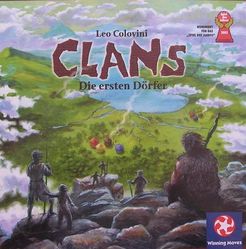
Game designI've always wanted to create a purely tactical "battle of the minds" game like chess or go but never been able to come up with a unique mechanism. Movement mechanisms are already perfected in chess and area control mechanisms in go. But then I discovered Reiner Knizia's master pieces Tigris & Euphrates and Samurai and got more inspiration. Perfect games can still be made! The missing piece in the puzzle came in a discussion with another game designer about another game, where the innocent words "cycling gods" were dropped. All this created a chain reaction that ended up with an Iconoclasm! How about a game where the players can build and destroy kingdoms, like in Tigris & Euphrates, but where they have to build them together, like in Samurai? Add to that an element of uncertainty, where the players don't know each others' colors but can play any color (similar to Leo Colovini's Clans, although I discovered this gem only later). And an element where the colors have a circular supporter/opponent relation. This was an idea that I initially came up with for a political game but never found a good way to realize. Now the "cycling gods" could use it. Iconoclasm is a purely tactical game but the theme of cycling gods fits it very well. Together, the gods build a world and attract followers. As the four elements of the world are interdependent, so are the gods, but as in all mythological dramas, the gods have different agendas and their means are their followers. The inspiration to the name came from another favorite game of mine: Advanced Civilization and the calamity card "Iconoclasm".
Game components
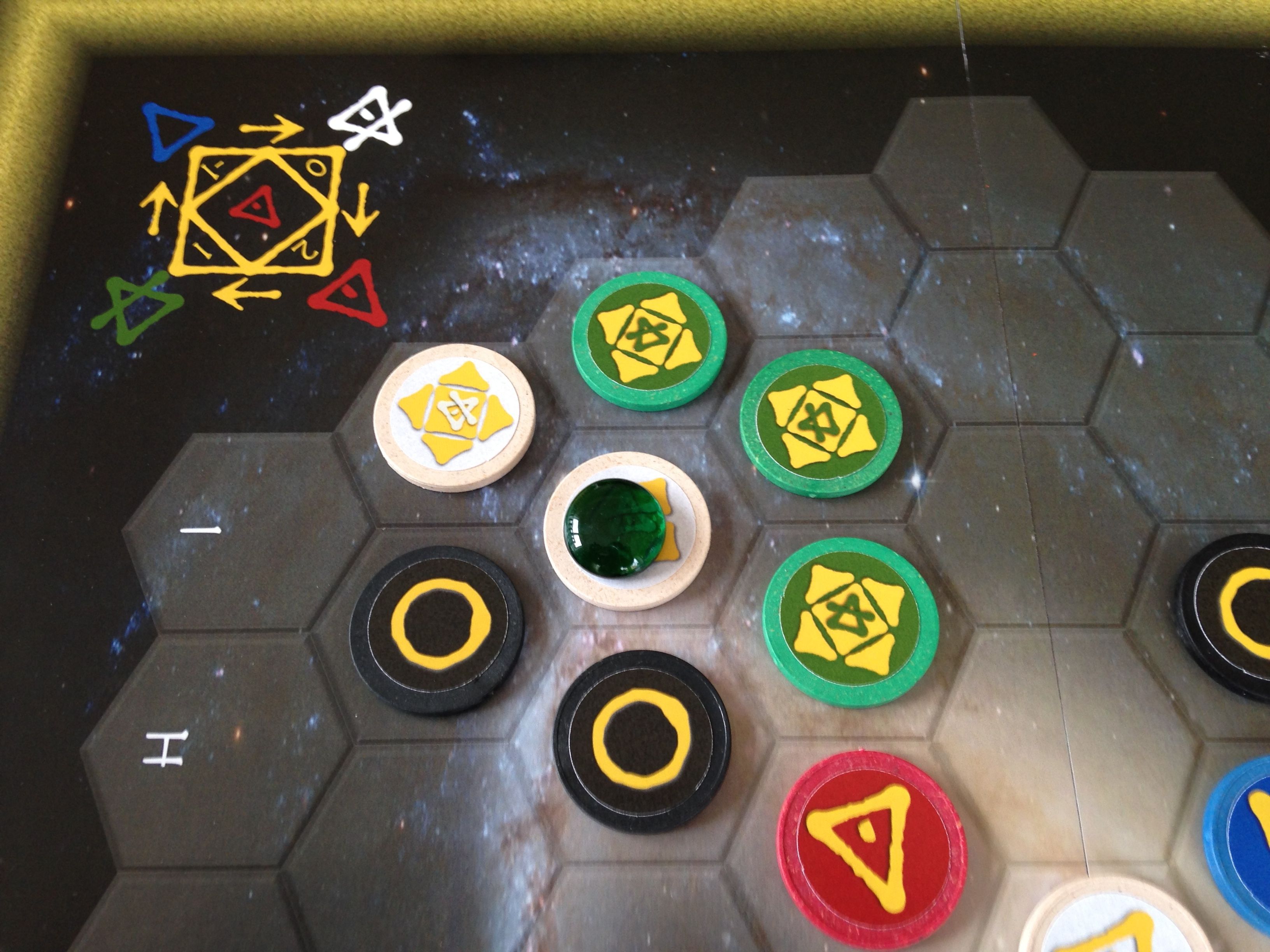
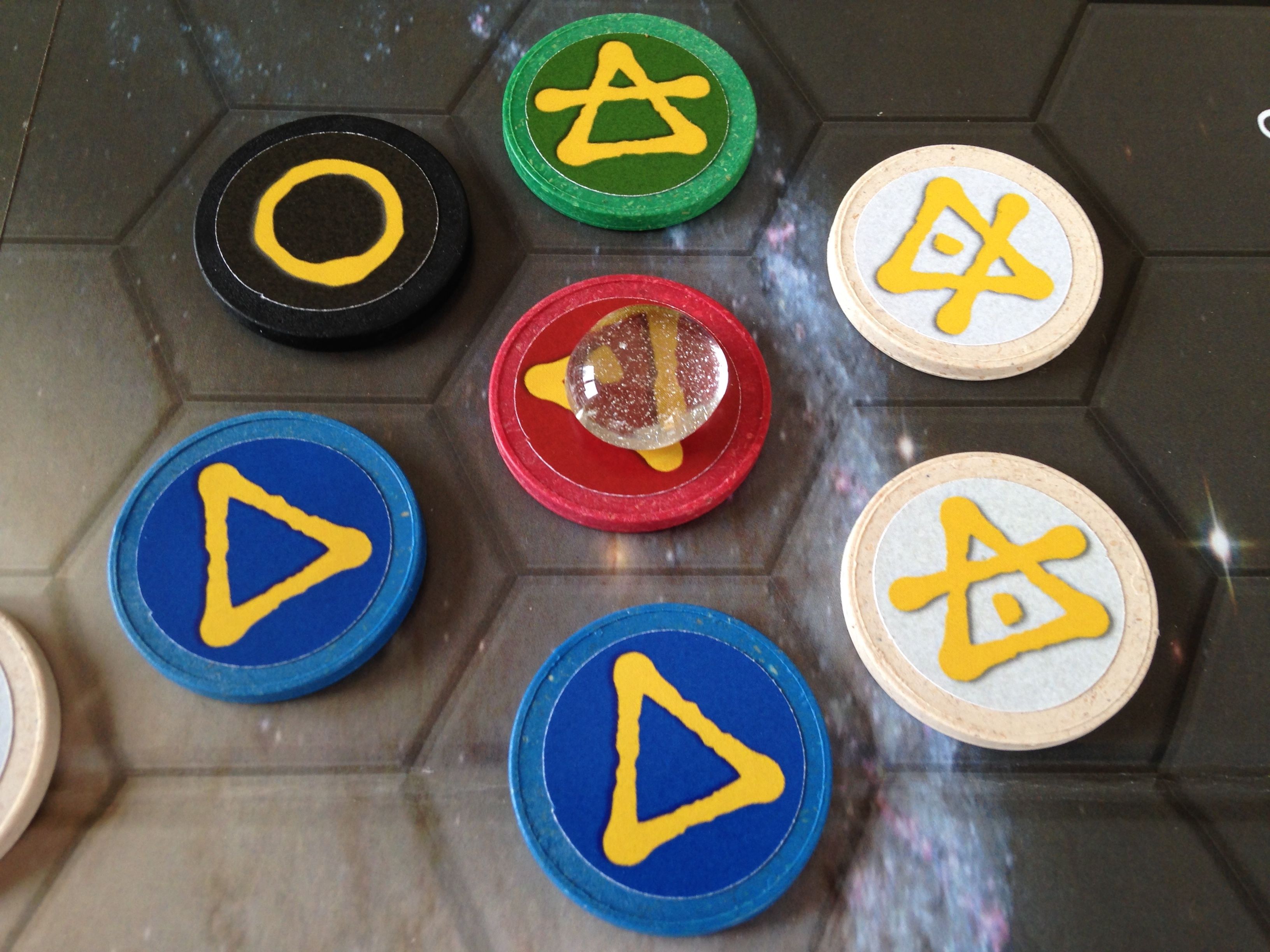
In spite of the dramatic name, I wanted Iconoclasm to be a primarily abstract game where the art would not cloud the tactics. As often in my game designs, I went to the history for inspiration and what could be better for a world building game than the classical four elements of fire, water, air and earth? 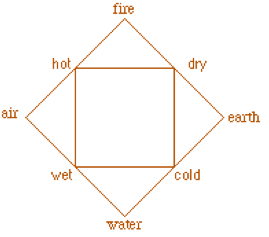
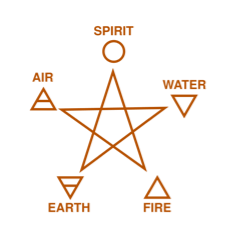
There I had my playing pieces and to make them as clear as possible, I gave each piece a distinct color as well. 


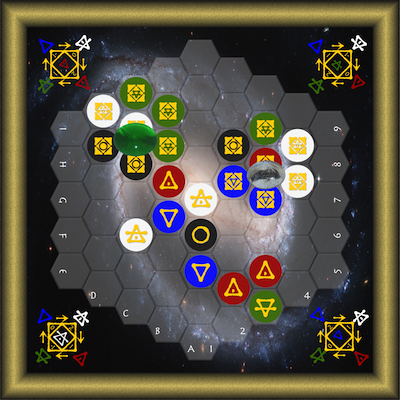
Why including the fifth element of spirit, you might wonder? The answer is an interesting example of the unexpected turns a game design may take. Initially, I wanted to have up to 5 players so when I found information about spirit (or aether, as Aristotle called it), I happily included it. However, early game testing showed that five elements made the circular relation rather complex but I had started to like spirit and even included it in the game logo. Those are two very poor arguments for including something in a game but maybe the spirit influenced me for I finally came up with the idea of letting spirit be a neutral non-player element! (As a matter of fact, I even came up with an idea of a five-player version where the spirit player aim at cosmic balance but more about that under Rules.) To use hexagons for the game board was an early decision for two reasons. First, hexagons allow connections in six directions compared to the four directions of squares (which is why it's so popular in battle games). Second, the sum of a hexagon and its connected hexagons is seven, a number that is not easily divided and thus could help avoiding ties when counting which color occupies most hexagons in a group. (Again, read more under Rules about colors and groups.) Since the players build a world, it was a natural choice to have a void background and the dark space fit the theme colors of black and gold as well.
The initial design relied on fixed colors and relations, where each player had fixed number of tiles of each color to play and a fixed support from another color. The reason was simply to remove all randomness but this also gave the game a slightly lethargic feeling, as pointed out by some game testers. But could a game like Iconoclasm be both dynamic and non-random? The answer came from another cyclic abstract game: Tao Long, where a mancala mechanism governed which actions that are available for the players. This mechanism solved both the color problem and support problem by giving the players an opportunity to decide for themselves which colors to add to the board and get support from. It made sense thematically too: by placing an opponent color on the board, you also secure support from that color. This is a good example of how both other games and themes can be used for inspiration. Unfortunately this mechanism was eventually abandoned. Although intriguing, Iconoclasm is first and foremost an abstract game and should be kept simple. But who knows, perhaps the idea gets reused in another game? |
Board Game Version
Annotated games (video v 1.3)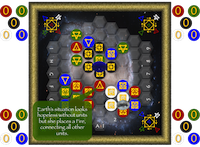
Annotated games
Card Game Version
Annotated gamesIf you like those game mechanisms, I can also recommend: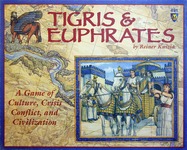
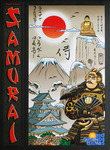
|







-->