
 |
The Quest for the Perfect Game - Reviews to Extract the Essence of Games by Nicholas Hjelmberg | |

































|
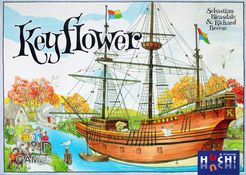
Keyflower - How can a chaotic point salad with lots of mechanics be so good? (Published 29 January 2018)This review has also been published at Boardgamegeek. The Journey to the Key WorldI'm generally a fan of elegant game designs where the goal is clear and where the players play against each other instead of against the game. Keyflower should be the opposite of all this but is yet one of my favorite games. How is this possible? 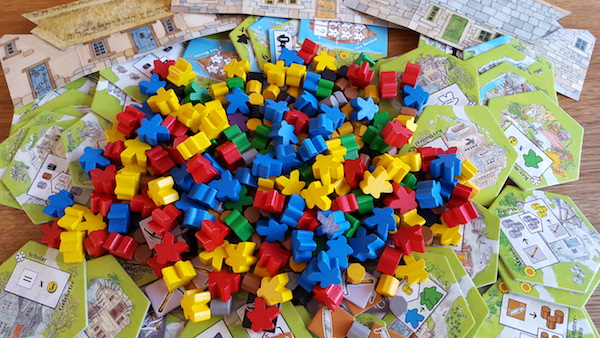
My journey to the key world started with the great review "The charms and challenges of Keyflower" by BGG user entwife, particularly this beautiful paragraph that I would like to quote in full: Beyond the above restrictions, I found the rules surprisingly liberating.
One would think that such a lack of restrictions would deprive any game of all its challenges but not so with Keyflower. Let's start with an overview of the gameplay. In Keyflower, you bid for various village tiles. On a tile you may place workers to produce resources and/or transport them to other tiles. Tiles and resources will earn you victory points at the end of the game and most victory points wins. This sounds like the standard euro on steroids. Keyflower has managed to squeeze in mechanics like bidding, trick-taking, modular board, worker placement, resource conversion, network building, pick-up & deliver, and set collection into the same game. (Did I miss any?) Yet, it's not any of those mechanics that make the game stand out but rather main characters of the game: the workers or the Keyples. The Keyples are more than simple workers but rather the body and soul of the game. Your Keyples are your universal currency that are used in all of the mechanics. Let's continue our journey by following the everywhere present Keyples. The KeyplesThe Multi-TaskingThe Keyples are very versatile. They are used both for bids (on tiles) and for taking actions (by being placed on tiles). Some tiles let you pay with Keyples to get resources, others give victory points for Keyples in the end game scoring. I think they can make a good coffee as well. 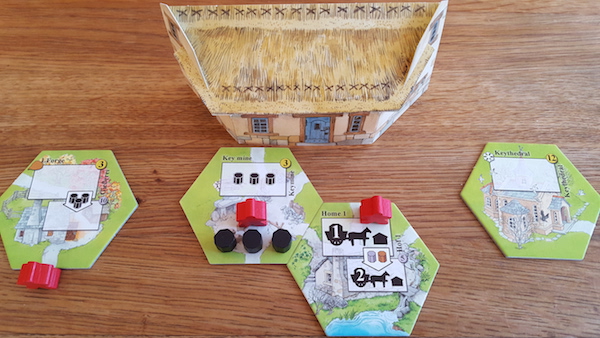
Is this a lazy design by Richard Breese to avoid balancing monetary values? No, it's a brilliant design that provides a challenging restriction. Do you want to bid with a Keyple? Sorry, that means one less Keyple for tile placements. You will never have enough Keyples. The SuitsThe Keyples come in four colors. The different colors are just colors without any special powers. The tricky part (pun not intended) is that you must follow suit whenever you use them. Did someone place a red Keyple? It doesn't matter if you have tons of blue, you can only place red there from now on. There is also the rare color of green, available only through certain tiles (or, in some cases, lucky draws). 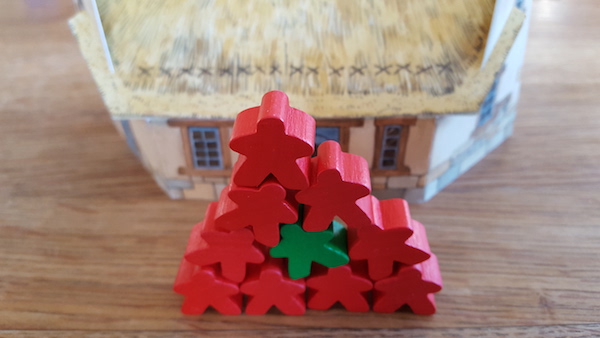
We see here how Richard Breese with the simple attributes of colors and scarcity has managed to create a lot of tension regarding which colors to use and which to save for later. The Diminishing ValueAll Keyples are not equal. As in many good games, actions are available on a first-come, first-serve basis. Whether you bid or place, being first is good. But as entwife hinted above, Keyflower is a friendly game in the sense that spaces are never completely blocked. However, the later you come, the more Keyples you have to add. (Well, not really, there is a limit of six keyples on a tile but if you would like to place more Keyples on a full tile, you're probably in trouble anyway.) Do you really want to spend three keyples on that tile when they could be spent on three other tiles instead? 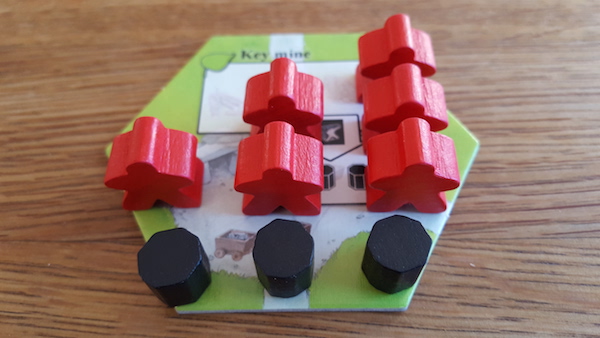
When I first saw Power Grid's market mechanic I was amazed at how the concept of supply and demand was made simple in a game. Richard Breese has done something similar with the concepts of limited resources and diminishing value. The VillagesNow that we know the Keyples of Keyflower, let's visit the Villages they inhabit. In many games where you improve your engine, you just do it with impersonal modifiers (+1 good or whatever). However, the village tiles of Keyflower add both flavor and challenges to the game. TilesEach tile of Keyflower is unique. If you miss a tile, there won't come another one later. Unless playing with the full player count, there will also be different tiles that appear in different games. This adds variability (good) but also unpredictability (less good). However, since all tiles enter the game through the bidding mechanic, they are equally available to all players so there is no luck of the draw. 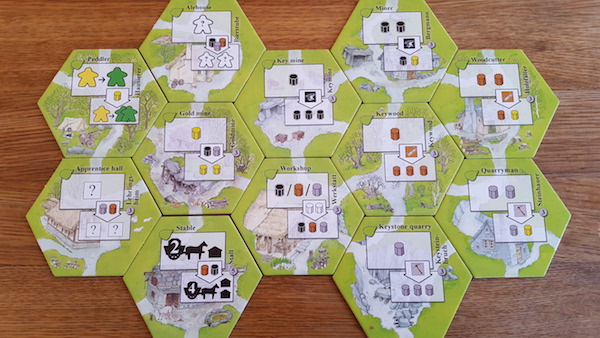
Is there a risk that your strategy makes or breaks because a specific Summer or Autumn tile is missing? I haven't seen it happen myself and I think that any mix of tiles work for any strategy. The Winter tiles, which earn you a lot of victory points, are more critical but since you see some of them at the start of the game and get to choose which ones to enter the game, you retain control. RoadsHaving individual tiles in your village is not enough, you make sure that they are connected to each other through their roads as well. Why? Because it's often necessary to move resources produced on one tile to another tile to upgrade it or score victory points (and the longer you have to move, the more movement actions you need and those cost - you guessed it - Keyples.) 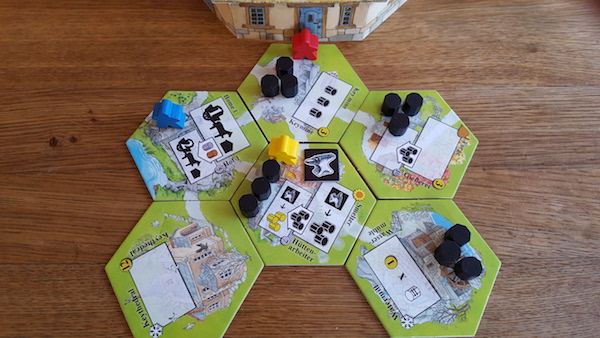
This aspect, however intriguing, can be challenging to new players, so it may be good to advise them to keep roads from resource producing tiles open. Again, your road network doesn't make or break your strategy but rather affects how well future tiles fit and hence how much you're willing to bid for them. Neighbor BorrowingDoes your village lack the tiles you need? Don't worry, you can Always borrow from neighbor. You'll have to leave your Keyple behind (for use by your opponent the next season) but you'll get the resources you need. With this simple mechanic, Richard Breese has turned what could have been a multi-player solitaire, with players hoovering over their own villages, into a highly interactive game, where the players keep visiting others' villages. So neighbor borrowing is a win-win situation? Not necessarily, remember that your opponent will have to use more Keyples if he or she also wants to use the tile. Did I say that Keyflower was friendly? I lied. The ArtTo me, art is usually a minor aspect in game but the art of Keyflower is worth mentioning. Personally, I find the fairy tale art by the artist Juliet Breese, most appealing. Every little tile you acquire tells a story and every game of Keyflower ends with your personal and beautiful village. 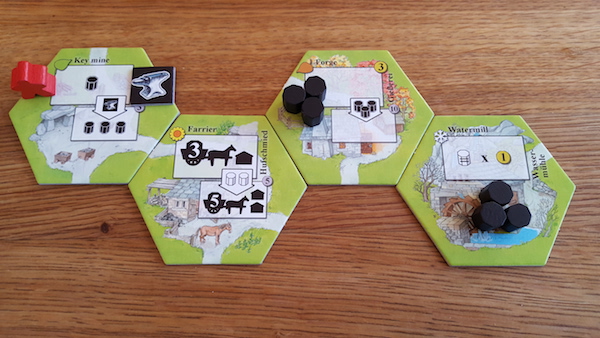
But there are players that are put off by what they think is childish art. More crucial is the risk that players think Keyflower is a shallow and friendly game whereas the truth is the opposite. I have indeed found it difficult to get Keyflower to the table, but the loss is entirely the other players'. What does it all boil down to?This review started by characterizing Keyflower as a chaotic point salad with lots of mechanics. There are indeed a lot of mechanics but they are all connected by the key element of the game: the Keyples. (Is this why they are called Keyples?) To have such a multi-tasking character for only one or two tasks would be pointless so it's necessary to give them as various options as bidding, producing and transporting. How about the point salad then? Yes, there are many ways to score points but points don't come to you for every action. The biggest mistake you can do in Keyflower is to do everything, only to find yourself with a lot of resources but no victory points. Instead, you have to choose a few victory point sources and then use your Keyples optimally to maximize them. Keyflower doesn't reward short-term gains but long-term planning. But aren't the many tiles a false depth, preventing long-term planning and resulting in chaos? A valid point but there is a logic in the order that the Season tiles appear. I've tried to outline this in the strategy article Keyflower - How to see your Village for all the Tiles and Keyples and one statement is that Spring is for resources, Summer for upgrades and Fall/Winter for victory points. You won't do well after your first game but you will grow fast in your following games. As for me, I crush newbies and get crushed myself by experienced players so you may not trust my strategic insights but trust me when I say that Keyflower is good! 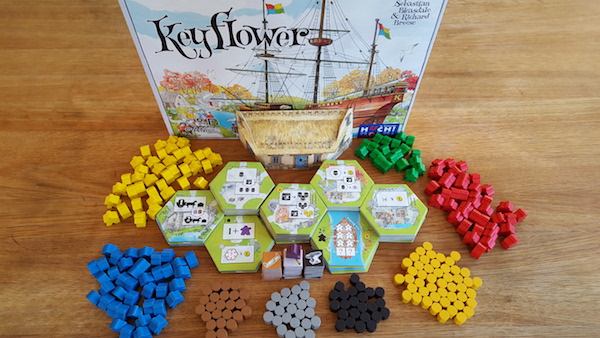
|
|