
 |
The Quest for the Perfect Game - Reviews to Extract the Essence of Games by Nicholas Hjelmberg | |





































|
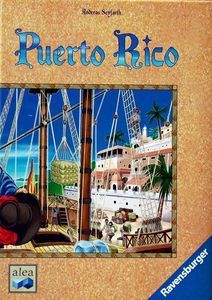
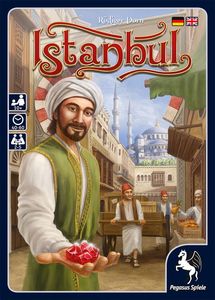
Istanbul - Where to Go - Istanbul or Puerto Rico? (Published 30 December 2014)This review has also been published at Boardgamegeek. IntroductionI had the benefit of playing Istanbul and would like to share my first impressions of this interesting game by comparing it to other economic games. Why comparing it to Puerto Rico then? Aren't those two games completely different? Yes and no. In my opinion, both games are about finding an optimal path with limited time and resources. But whereas paths in Puerto Rico can be permanently shut by other players beating you, paths in Istanbul remain open, it's only the deal that gets a bit worse. But let's start with the basics. The BasicsThe bazaar of Istanbul is made up of 4x4 tiles (preset or randomly allocated) where each tile represents a location where deals can be made. The players play merchants, moving around in the bazaar and trying to make profit. The artwork conveys the atmosphere of the buzzing bazaar of Istanbul and the components are sturdy and of high quality. The heavy use of symbols may be a hard to absorb for a beginner but are quickly learnt and they are all described in the individual player aides as well. As in all economic games, there are several paths to profit that may be better or worse depending on your current strategy and the current conditions. At the various locations, you can get money, goods, cards that give you special one-time actions and tiles that give you permanent abilities - everything with the sole objective of acquiring the precious rubies that will determine the winner. The RestrictionsSo far, it sounds like a rather straight-forward race for the bucks but it's when we start looking at the restrictions that Istanbul is unveiled. First, there is the common money restriction. You always have more options than money so you must choose your actions wisely to get the most return on your investments. This is no different from Puerto Rico's investment choices. Second, there is a movement restriction. You can only go 1 or 2 tiles at the time so you must plan your path carefully. In addition, a merchant moving to a tile where there's already a merchant will have to pay him. This a welcome difference compared to Puerto Rico, where the players have their own mats. Third, there is an action restriction. Your merchant doesn't do anything, it's the servants that he drops at each location that take actions. It's not enough to plan where to drop them, you must plan when and how to pick them up again or else you'll be left with no actions. I must admit I haven't seen this mechanism before but it certainly does add a challenge. Fourth, there is a space restriction. Each player has a wheelbarrow which can take a limited number of goods. You can make it bigger but that will cost you not only money but also time. It's not only a question of whether you'll get return on your investment but also whether it's worth delaying a deal. This may be comparable to the ship limits in Puerto Rico but with the positive scoring of getting more goods rather than the negative scoring of losing surplus goods. This leads us to the fifth restriction and this is the one I feel really differentiates Istanbul from Puerto Rico. At the start of the game, there are plenty of great deals out there. The prices of rubies are low at the gem dealer, the Sultan requires few goods to part from rubies and little is needed to make an impression at the mosques worthy a ruby. But for each player getting a ruby, the price gets higher and the deal gets worse. Note that the deal gets worse, it's not lost forever. You can always get things at the bazaar, they only tend to get more expensive the later you come. In Puerto Rico on the other hand, things are strictly limited. If a player beats you to a building that you've built your entire strategy upon, no money in the world can help you but you have to switch to a new strategy with the apparent risk of falling behind. The InteractionThis leads us further to the discussion on the (lack of?) interaction in Istanbul. Some players in the community claim that there's no interaction in Istanbul as the player are free to choose their "overpowered" paths and stick to them for the rest of the game. This would also lead to run-away leader problem as players are unable to interfere with each other. My experience of Istanbul is limited but I would like to disagree with the above. The players act on the same board and can physically interfere with each other by simply moving to locations before them and beating them to deals. Skilled players, I believe, will predict the intentions of leaders and cross their paths. Does this give a kingmaker problem, where a player may choose to give up her game to ruin the game for one player and give the victory to a third player? Not necessarily. The rule that a merchant moving to a tile where another merchant already stands have to pay money accomplishes two things. First, the leader's game isn't ruined, only more expensive. Second, the interfering player doesn't have to give up his or her game since she gets paid for the interference. Compare this to Puerto Rico with its known problem of seating order, where a player may select roles that benefit some players and hurt others. Skill vs LuckElements in Istanbul that I'm less certain about are the luck elements of card drawing and dice rolling. On the other hand, those do not make or break your game and can be mitigated. When for example drawing a card in the Caravansary, you can choose an open card, and when gambling in the Tea House, you can use an ability to change a dice to a four. There are more luck elements but they serve to alter the conditions and constantly force the players to reassess their strategies. Those include the shifting markets, where different goods combinations will be in demand, and the the governor and the smuggler, whose random placement may make some tiles temporary more attractive. The StrategyHow do you win Istanbul then? As always in economic games, there are plenty of "winning strategies" out there, but just like in Puerto Rico, I expect winning strategies to come and go as players learn to handle them. The fine thing about Istanbul is that the more players that adopt a strategy, the worse deal they will get. Although it's good to plan ahead, you must still keep your eyes open for good deals, just like in a real bazaar. I actually won my first game and I believe it was due to efficient use of resources. I started by getting money at the Tea House (in spite of my concerns regarding dice), pimping my wheelbarrow and filling it with goods from the Warehouses. I did spend a turn recalling my servants to the Fountain and only later did I learn that this is considered a loss of time. It may still have been better than wasting time to return to the Warehouses, since my wheelbarrow was already full, but I won't argue with the entire community on this. I then left (and this time returned to pick up!) servants in the Mosques to acquire the two abilities and a ruby while always keeping an eye on the "right" goods combination in demand in the Markets. Once it came, I traded in five goods for a decent amount of money and acquired the rubies necessary to go for victory. Some other players blocked my last visit to the Wainwright (or rather, made it too expensive to meet them) but I spent a turn to get exactly the money I needed at the Tea House (I swear, I usually don't like gambling!) before getting my fifth ruby with exactly 0 money, 0 coins and 0 cards left! SummaryTo sum up, there are many aspects of Istanbul that I appreciate. The many different options, the balance between long-term strategy and short-term tactical gains, and the subtle interaction that carefully avoid both run-away leader problems and kingmaker problems. The brilliant "worse deal" mechanism also makes the different options easy to compare. Whereas Puerto Rico often sees players counting which goods to ship first to maximize their gains and minimize others' (with downtime as a result), Istanbul immediately shows what deal the next player will get. Yes, Istanbul may be a light-weight game in comparison but you get a lot of game in a short time! Throughout this review, I have compared Istanbul to Puerto Rico. However, it is not my intention to judge between those two fine games, I merely want to state the differences. Both games have options, strategy, tactics and interaction but where Puerto Rico may permanently block strategies, Istanbul still (literally) offers alternative paths. Which playing style you prefer will determine which game you prefer. I have yet to explore the many alleys of Istanbul but I certainly enjoyed my first game and I'm certain I'll enjoy the next few as well! |
|