
 |
The Quest for the Perfect Game - Reviews to Extract the Essence of Games by Nicholas Hjelmberg | |



















|
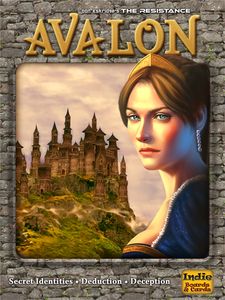
Avalon - the Party Killer? (Published 22 February 2016)This review has also been published at Boardgamegeek. IntroductionThis is a short and personal first impression review of Avalon that I hope will be helpful both to people who haven't played the game yet and to people who want to introduce others to it. (Spoiler: if you haven't played it yet - do it!) Let me start by putting my first impression into context. From a designer perspective, I bought Avalon because I was intrigued by the simple yet deep deduction mechanisms. From a player perspective, I thought such a game could appeal to my closest friends since we have known each other for decades and learnt to read each other. (Damn, we're getting old!) Avalon was one of many games that me and my friends brought for a weekend together in the countryside and it turned out to be the only game we played over and over again! The playersAmong us, several player characteristics were represented (no names mentioned, I want to survive my next game evening):
The componentsLet's move on to the components. I had read the rules but left the components unpacked, partly to share this wonderful feeling of unpacking a game for the first time and partly to present an unsealed game where we all could start at the same level (read: save myself from accusations of cheating). Well, the latter didn't work since I was branded evil anyway and the former was a mistake since there were some components whose necessity we didn't fully grasp until we had played through a couple of games. There simply seemed to be more components than needed for such a simple game. (Lesson learnt: read the rules AND look and feel at the components.) The 3 score tableaus are obvious. They all display 5 quests with different numbers of required knights and you simply pick the one that corresponds to the number of players and put aside the rest. With the score tableau comes 5 scoring markers used to indicate whether a quest succeeds (Arthur's blue sigil) or fails (Mordred's red sigil). The colors and symbols could have been more distinct to make them easier to tell apart but fulfill their purpose. Less obvious was the necessity of a round marker. If for example 2 of the 5 quests have a scoring marker, do you really need a round marker to indicate that you're in turn 3? The vote marker, used to keep track of how many times the players have tried to vote for a team, was not used either in the beginning. This is because we agreed on a team in good democratic order before voting so that the actual voting was merely a formality. However, our "good democratic order" deteriorated the more we played so this marker turned out to be very necessary indeed. The 14 characters caused no confusion. As for the scoring tableaus, pick the ones that correspond to the number of players and put aside the rest. Named characters (such as Mordred) have certain abilities but for the basic game, only the named characters of Merlin and the Assassin are used. The 20 vote tokens (10 white yes and 10 black no) to approve or reject the proposed knights for a quest were distinct and self-explaining. Only make sure to keep them on the table until the quest is completed so that players can compare the quest result with the way other players voted. (This is also something we realized was necessary the more we played.) The leader token, used to keep track of who plays the leader, and the 5 team tokens, used to keep track of which players are proposed for a quest, may be considered unnecessary. Nevertheless, the more we played (or was it the more we drank?), the more necessary those tokens became. It took me some time to realize that the blue (Arthur) and red (Mordred) cards were the Loyalty cards used with the Lady of the Lake token. We never used this optional rule so those components are best put aside, particularly the Lady of the Lake token as she kept distracting some players. The gameNow to the game. I had feared that the revelation phase, where certain roles make them known to each other using eye and hand signals, would be difficult to get right the first times. Fortunately I was wrong. There is a clear and easily remembered script in the rules for this ("Minions of Mordred, open your eyes...") and we didn't do any mistakes. Well, with one epic exception. In our first game, I took on the responsibility ro read the script and happened to play Merlin. Unfortunately, I remembered when I was supposed to open my eyes and observe the evil players but forgot to read this part loud. Fortunately, the only player that noticed this and realized that I had to be Merlin was good, otherwise it would have been an easy victory for the evil. (The reason Merlin WAS assassinated was due to my poor play later.) Another thing we missed in our first games was that the leadership role moved to the next player in turn not only after failed votes but also after each quest. I know, both conditions are clearly stated in the rules but at two different sections. Anyway, we quickly realized that the leader had more power than simply that of a discussion moderator and corrected our misinterpretation. But in spite of those beginner mistakes, we were quickly absorbed by the gameplay and did all we could do to persuade, agitate and manipulate each other, often at the same time, and new strategies were constantly tried out. Initially, the good sent similar quest teams and used the process of elimination to identify the sympathies of each new knight on the team. Later, evil countered this by pretending to be good in the first quest and fail the later quests to put the blame on the new (good) knight on the team. Each game was followed by an engaged discussion before the next game. We did bring more games for the weekend but none other made it to the game table. We didn't even bother adding any optional cards as we were fully occupied exploring the depth of the basic game. Not until some players got so tired (or drunk) that they couldn't tell whether a player was evil this game or the previous game we reluctantly put away the fascinating world of Avalon. SummaryA game can have many different dimensions that contribute to the playing experience. If you're appealed by games where you can set up a long-term strategy and carefully steer your efforts towards it relatively uninterrupted by other players, Avalon is NOT a game for you. However, if you enjoy a highly social and interactive game where you must be constantly observant on other players' signals (not to mention the signals that you send out yourself), Avalon is a MUST game. Avalon is probably best to play with players that know each other (or at least think they know each other). Not only the game itself but also the discussion afterwards engage all players throughout each session and its dead moments are minimal, if any. The short learning curve and playing time makes Avalon an excellent game to bring to any social event and it certainly deserves it's first place on the BGG party list. So why the headline "Avalon - a party killer" then? Simply because if you start playing Avalon, it firmly establishes itself on the table and takes over the party. It doesn't take a Merlin to predict that! |
|