 |
Home | Game | Rules | Theme | Strategy | FAQ |  |







































|
Annotated Games: 4 players, version 0.2This game was played during the game testing of Peoples - Civilizations. The players tried different strategies to assess how balanced they were.
Starting positionsRome is the last player and selects first. She chooses the biggest land mass, Slavery and placement on food resources with the intention to grow rapidly and take advantage of neighboring tribes. Olmec is next and also intends to grow rapidly but with the help of Herding and placement on one commodity resource (for additional development). Egypt aims for early monuments with placement on one luxury resource and Arts while Babylon aims for early city building with placement on two food resources and Law.
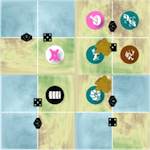
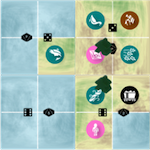
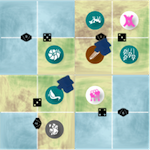
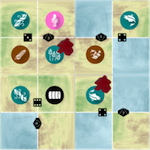
Round 1-2Babylonia produces 2 cattle with her 1st tribe and founds a town with her 2nd tribe. Egypt produces only with 1 tribe (2 pulses) and lets the 2nd tribe take a Culture action and place a Culture token. Olmec produces food with 1 tribe (3 poultry thanks to Herding) and commodities with 1 tribe (2 timber). Rome produces food with both her tribes (2 grain and 2 fish).
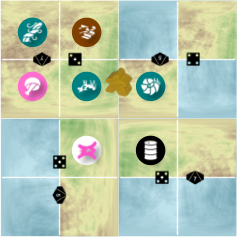
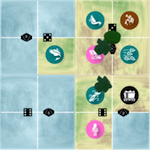
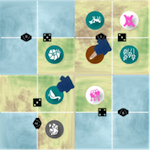
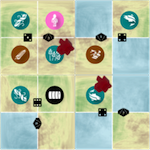
Round 3 (Revolution)Babylon spends 1 cattle to disengage her 2 tribes and another 1 cattle to add 1 tribe. Egypt spends both her pulses to disengage her tribes and add 1 tribe. The die roll 1-4 merges her part with the Northern polar regions. Olmec spends 2 poultry to disengage her 2 tribes and add 1 tribe. She also invests 2 timber in Mining to be able to exploit the Metals. The die roll 1-1 merges her part with the Northern polar region adjacent to the Egyptian part. Rome spends all her 4 food to disengage her 2 tribes and add 2 tribes (the 1st costs 1 food and the 2nd costs 2 food). The die roll 5-8 adds another region to her part (with a neutral tribe). Note that neither the Babylonian part, nor the Roman part have found their places in the world yet.
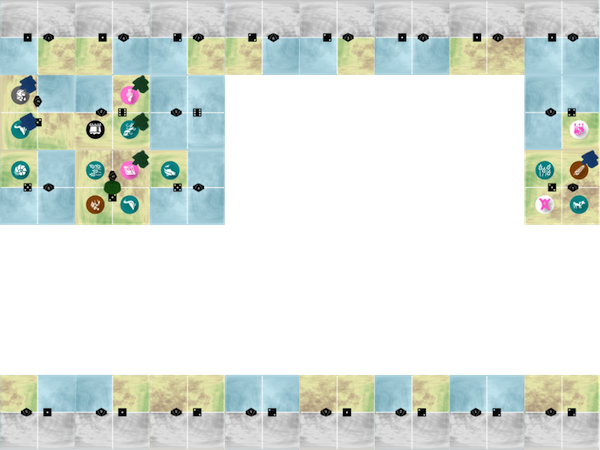
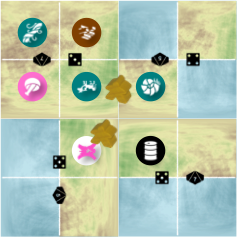
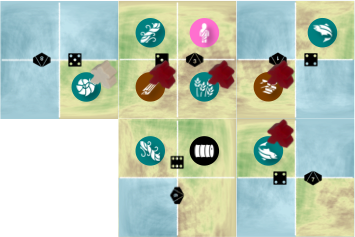
Round 4-6 (Revolution Babylonia)The Revolutions start coming at different rounds now due to all peoples having entered different strategic paths. Babylonia uses 1 Civics CP to let both her town tribes act and produce 2 cattle and 2 shellfish. The 3rd tribe produces 2 fur. In the Revolution, she uses 2 food to feed her 3 tribes, 1 food to add a tribe and saves 1 food. Since the added tribe increases the height+width of the part to 8, the new region must be a region already in play and eventually 3-5 connects it to the Egypt-Olmec part. The 2 fur are spent on Culture advance 1, something that also starts the 1st event of the game: Oracle (free Religion civilization action). Egypt produces with all her 3 tribes, giving her 2 pulses, 2 dyes and 3 gems (the 3rd gem thanks to producing next to her Culture token). Olmec also produces with all her 3 tribes, giving her 2 poultry (no extra poultry since she already has 1 saved poultry but 1 extra for Herding), 2 timber and 2 metals. Rome produces 2 grain, 2 fish and 2 clay but still has 1 more turn before the Revolution.
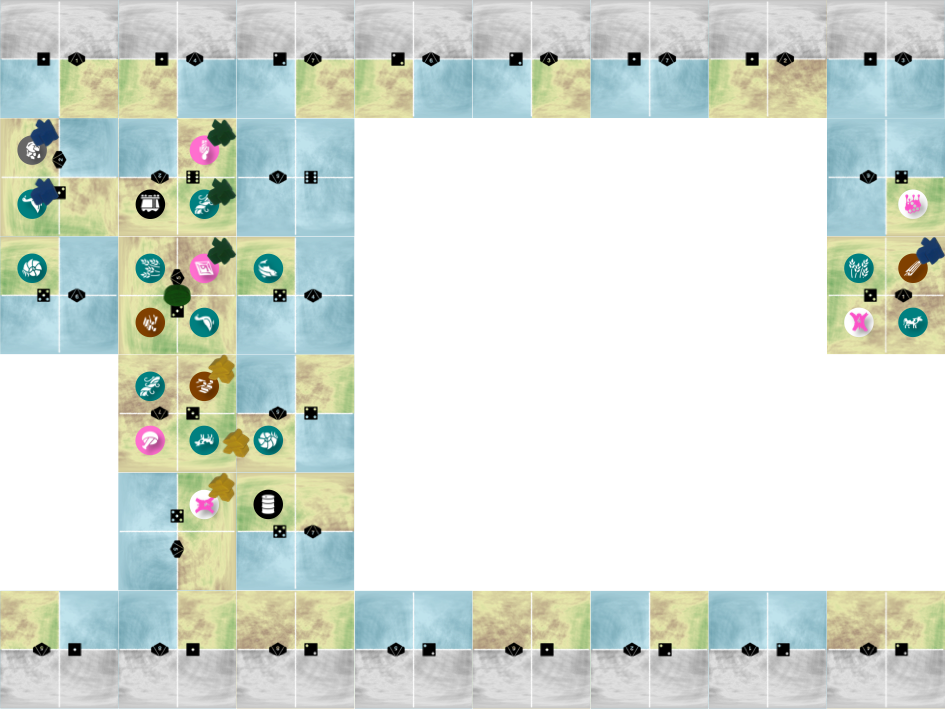
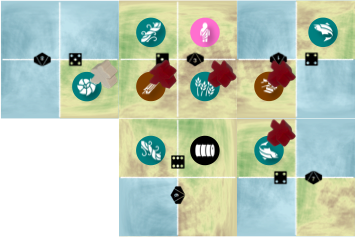
Round 7-9 (Revolution Egypt, Olmec, Rome)Babylonia again benefits from her town by using 1 Civics CP and 1 Culture CP to produce 2 cattle and place a Culture token. The other turns are used for production of 2 clay and 2 fur. Egypt uses the Revolution action to acquire Culture 2 for 3 luxuries, Science 1 for 1 luxury and 1 Culture CP and 1 Religion specialist for 1 luxury. The food is enough to grow into the Poultry area. She then benefits from the religious event (Oracle) by taking a Science/Religion action without being engaged and then take a production action with the same tribe. The former action gives her a movement and a Religion token and the latter action gives her 2 clay. Olmec uses the Revolution action to acquire Farming, 1 Military specialist and 1 Science specialist. The food is enough to grow into the grain area and save 1 poultry. The die roll 5-1 adds a region with a neutral tribe. She then takes advantage of it through an Economy action to produce 2 grain (+1 for Farming), exchange 1 grain for 1 sugar and then place 2 grain and 2 sugar in her supply. She also produces 2 timber. Rome produces 2 timber and, in the same action, uses Slavery to let the neutral tribe produce 2 shellfish in exchange for 1 grain. The Revolution action leaves her with enough food to grow into 2 areas (2 food to feed 4 tribes, 1+2 food to grow 2 tribes) and she uses her 4 resources to acquire Roads and specialists in Military and Science to get room for expansion. Her first action after the Revolution is to produce 2 fish.
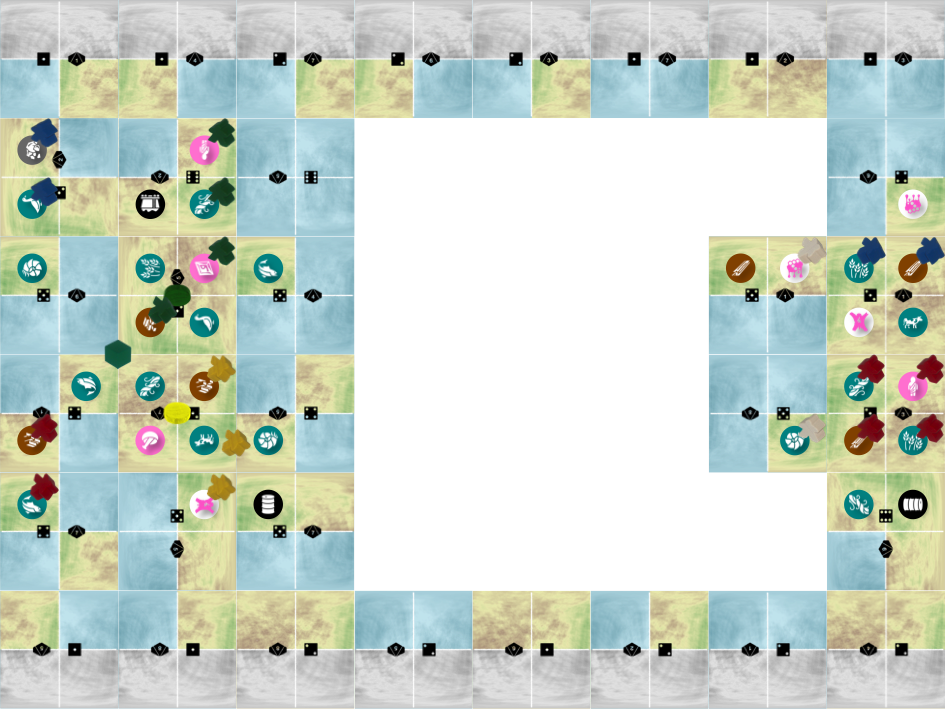
Round 10-12 (Revolution Babylonia, Olmec)Babylonia uses the Revolution action to feed her 4 tribes with 2 shellfish and add a 5th tribe with 1 cattle. She acquires Science 1 for her luxuries and 1 Civics specialist and 1 Culture specialist for her commodities. Since Babylonia is 2nd to acquire Science, the events Heresy and Long Walls are triggered. In her following actions, she produces 2 cattle and 2 shellfish in her city for the cost of 2 Civics CP and produces another 2 clay with a tribe. Egypt produces 2 pulses and 3 gems (+1 for Arts) and uses 1 Culture CP to place a 2nd Culture token. Olmec produces 2 poultry and 2 metals and then uses the Revolution action to add 1 more tribe with and feed her specialists with her 5 food, acquire Sailing for her 2 timber and Economy and Science specialists for her metals. She also acquires Civics 1, which triggers the new events Peasant Revolts and Piracy. Rome takes advantage of the Event Long Walls before it disappears to attack the neutral tribe. She uses Roads and Military to produce in and attack from the dyes area and plunders 1 shellfish. Since no other disengaged targets are within reach, the tribe produces another 1 dyes. Her following actions are used to produce 2 pulses and 2 timber.
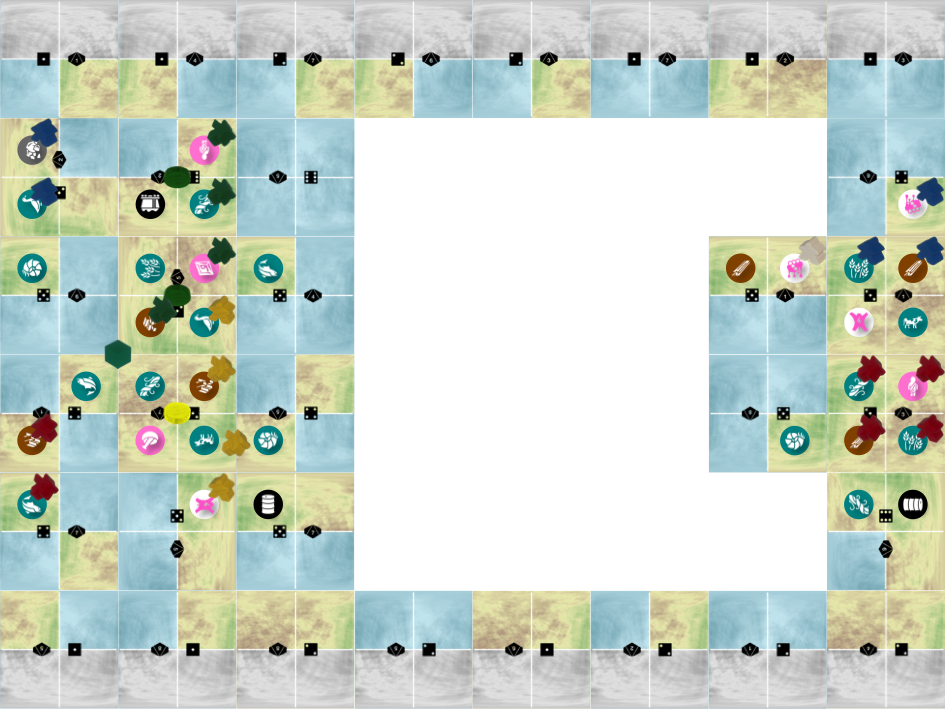
Round 13-15 (Revolution Babylon, Egypt, Rome)Babylonia expands her town to a city with 2 Civics CP and, using Culture as Civics CP thanks to Law, founds a town for 1 Civics CP. In the Revolution, she uses 3 food to feed her 5 tribes and the 4th food to feed her Civics specialist. For the 2 clay, she acquires Herding, which triggers the new events Silk Road and Tyranny. Egypt uses the Revolution action to feed her 4 tribes with her 2 food. She then uses her 3 gems to acquire Religion 1 (paying 1 CP with 1 Culture CP thanks to her Culture token bonus) and Civics 1. She also uses her 2 clay to acquire Cults. She then goes on to produce 3 clay (+1 for Cults) and 3 gems (+1 for Arts). In addition, she also takes advantage of the Colonies event before it's too late to spend 1 Scince CP and let one of the tribes produce 2 poultry in the nearby poultry area as well. Olmec produces 2 clay in the clay area and then founds a town, adding the tribe in the sugar area. Finally she produces 2 metal. Rome produces 2 grain and 2 clay before taking her Revolution action. Of her 8 food, she spends 3 to feed her 6 tribes, 3 to grow 2 more tribes and 2 to feed her 2 specialists. She spends her 3 dyes on Military 2 and her 2 timber on Sailing and her 2 clay on Fishing.
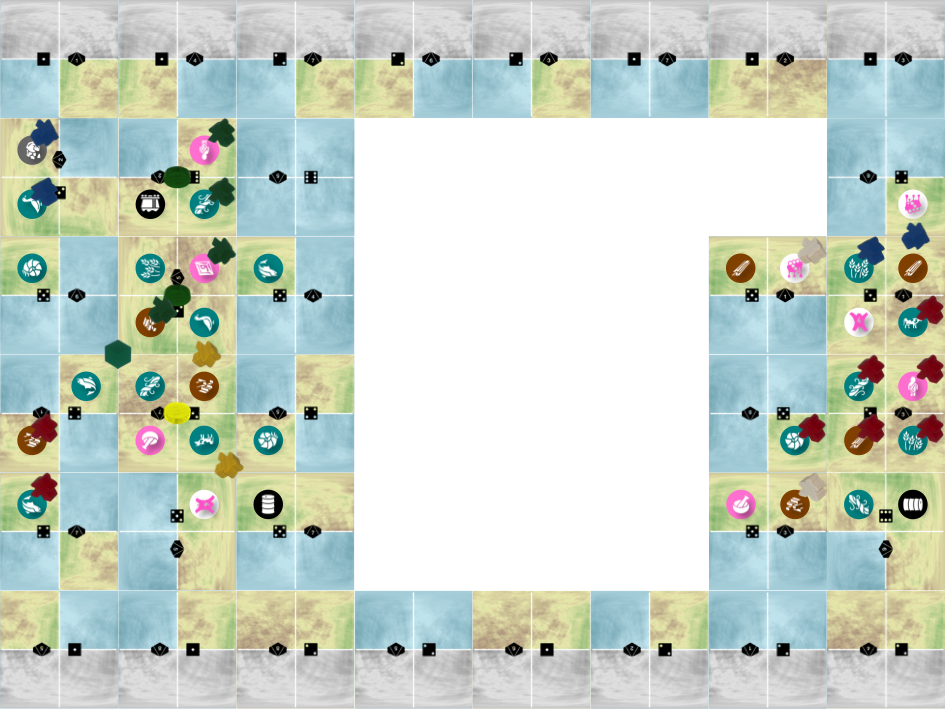
Round 16-18 (Revolution Babylon, Egypt, Olmec)Babylonia produces in both her settlements (8 food, 2 clay, 2 fur). In the Revolution, she feeds her 5 tribes and 1 specialist with 4 food, adds 2 tribes for 3 food and saves 1 food. She also takes advantage of her Culture token to acquire Civics 2 for 2 fur + 1 Culture CP and acquires Sailing for 2 clay. Egypt produces 2 pulses and 3 dyes (+1 for Arts). In the Revolution action, she feeds 4 tribes with 1 food, grows 1 tribe with 1 food and saves 1 food. She also takes full advantage of her tokens by paying 1 dyes+2 Culture CP for Religion 2, 1 dyes+2 Culture CP for Science 2, 1 dyes+3 gems for Culture 3 and 1 clay+1 Religion CP for Monuments and 1 clay for Sailing (-1 clay for being the last people to acquire Sailing). Olmec produces 3 poultry (+1 for Herding) and then uses Science and Sailing for several reasons; to move away from Rome, to explore new land and (with a new neutral tribe) and to trade with the neutral tribe, giving up none of her 3 grain (+1 for Farming and higher Economy CP) for 2 sugar. She then uses the Revolution action to feed her 5 tribes (3 food), grow 1 tribe (1 food) and feed her specialists (2 food). She also acquires Military 1 for her luxuries and Pottery for the 2 commodities, which triggers the new events Tyranny and Barbarians. Rome makes full use of her Military those turns. First she attacks the Olmec town, producing 2 cattle and plundering 2 timber and 2 sugar. Then she attacks the neutral tribe, producing 2 shellfish and plundering 2 clay. Finally she uses Science and Sailing to attack the overseas Babylonian tribe, producing 3 fish and plundering 2 fur, 2 cattle and 2 shellfish, leaving only 2 cattle to Babylon (+1 for Herding).
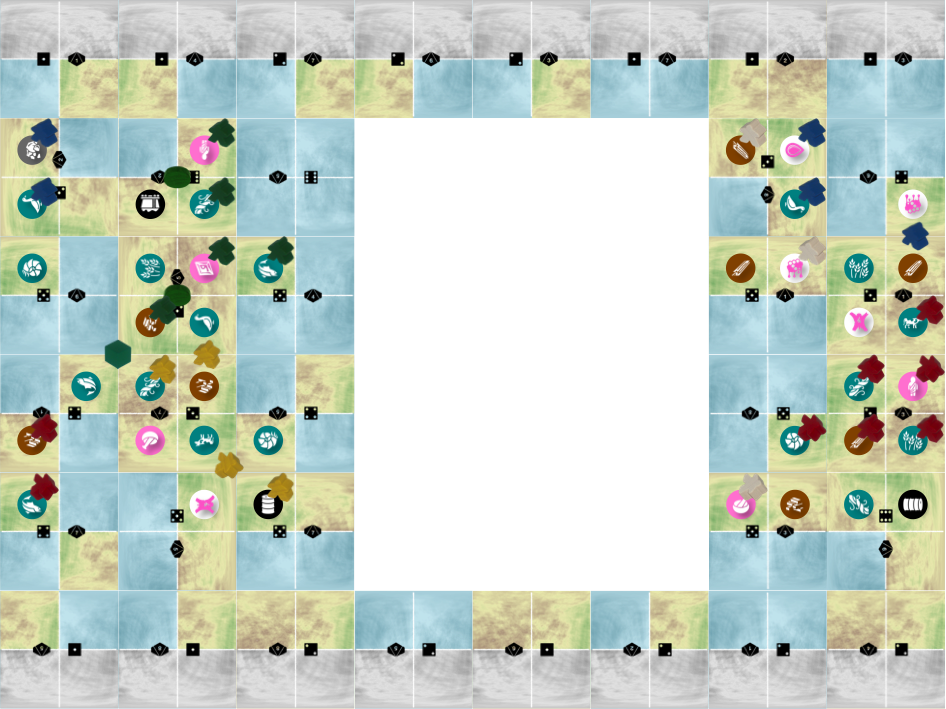
Round 19-21 (Revolution none)Babylonia uses 1 Civics CP to produce 3 poultry (+1 for Herding) and 2 clay in her town. Next, she uses 2 Civics CP to add a 3rd tribe to the town, expanding it to a city. Thanks to Democracy, the tribe remains disengaged and can later be used to produce 2 pulses. Egypt produces 3 dyes (+1 for Arts) with a tribe. Next, she uses 1 Civics CP to add a 2nd tribe to it, founding a town. This is also disengaged thanks to Democracy and can later be used to produce 2 pulses. Olmec produces 2 sugar and 2 timber in her town. Then she produces 3 shellfish (+1 for Fishing) and 3 poultry (+1 for Herding) since the current Barbarians event make trade less profitable. Rome has only productions action available after her major attacks previous turns and produces 1 clay,
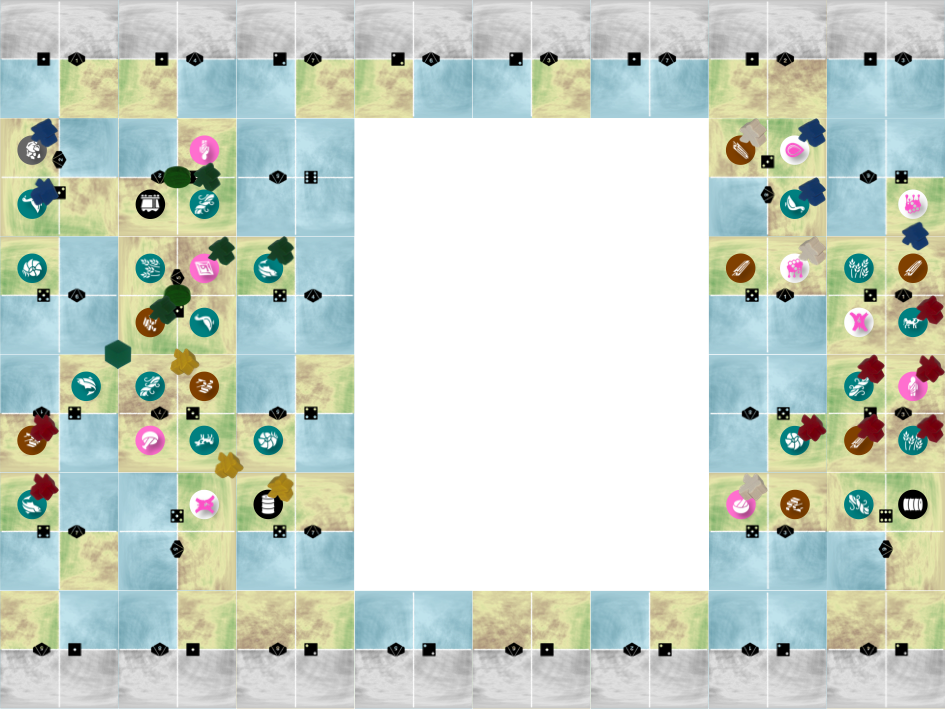
The game was halted here to test new ideas in version version 0.3, including time wheel actions instead of tribe actions and civilization structures instead of civilization cards. |
Annotated gamesIf you like those game mechanisms, I can also recommend:
|
|||||||||||||||||||||||||||||||||||||||||||||||||||||||||||||||||||||||||||||||||||||||||||||||||||||||||||||||||||||||||||||||||||||||||||||||||||||||||||||||||||||||||||||||||||||||||||||||||||||||||||||||||||||||||||||||||||||||||||||||||||||||||||||||||||||||||||||||||||||||||||||||||||||||||||||||||||||||||||||||||||||||||||||||||||||||||||||||||||||||||||||||||||||||||||||||||||||||||||||||||||||||||||||||||||||||||||||||||||||||||||||||||||||||||||||||||||||||||||||||||||||||||||||||||||||||||||||||||||||||||||||||||||||||||||||||||||||||||||||||||||||||||||||||||||||||||||||||||||||||||||||||||||||||||||||||||||||||||||||||||||||||||||||||||||||||||||||||||||||||||||||||||||||||||||||||||||||||||||||||||||||||||||||||||||||||||||||||||||||||||||||||||||||||||||||||||||||||||||||||||||||||||||||||||||||||||||||||||||||||||||||||||||||||||||||||||||||||||||||||||||||||||||||||||||||||||||||||||||||||||||||||||||||||||||||||||||||||||||||||||||||||||||||||||||||||||||||||||||||