
 |
Home | Game | Rules | Theme | Strategy | FAQ |  |













































|
The characteristics of a civilizationThere are many different characteristics attributed to the complex societies we call civilizations. Among them are the characteristics of civics, culture, economy, military, religion and science - all of which form the core of the gameplay of Peoples - Civilizations. CivicsThe agricultural revolution resulted in surplus food and enabled a division of labor and the gathering of non-farmers in cities, hence the definition of civilization as "living in cities". This is also how Civics is used in the game, as the surplus food produced by some tribes' actions allow other tribes to spend their actions on building cities. The future "double", "triple" and even "quadruple" actions of city tribes represent the dynamics of labor specialization, exchange of ideas and central government. CultureCulture is an umbrella term for social behavior in specific regions and is often attributed to the society's ability to change. This is reflected in the game by the concept of virtual cultural areas on top of the inhabited areas, which provide a bonus when it comes to acquiring advances. EconomyIn his book Wealth of Nations, Adam Smith describes what builds a nation's wealth. Among other things he describes the theory of comparative advantages, arguing that nations should specialize on producing goods where they have a comparative advantage and import other goods to optimize the consumption in all trading countries. This is also how Economy works in the game, where a number of different resources have a higher value than the same number of similar resources, thus encouraging players to trade with each other for the benefit of both. MilitaryWars are older than recorded history itself and thus impossible to exclude from a civilization game. However, to prevent less appealing game mechanics like player elimination and bash the leader, the Military in the is more about the short-term benefits of war economies. In Peoples - Civilizations, the attacker foregoes production to double production in the attacked area (provided that there is anyone to attack left) while the defender gets an extra production in the area they take refuge in (provided that there is any such area). In the long run such actions will not benefit any part and encourage the transition to more peaceful interactions. ReligionReligion is closely linked to both Culture (by defining sacred behavior) and Science (by explaining supernatural phenomena). In the game, they have a similar function as Culture with virtual religious areas and bonus when it comes to acquiring developments. Also, while cultural development abilities generally benefit from other cultures, religious development abilities tend to oppose and convert other religions. ScienceScience is a wide area about building and organizing knowledge and could be said to encompass all of the above civilization characteristics. To make it a distinct characteristics, Peoples - Civilizations focuses on Science's ambition to understand the world around us, as represented by the ability to cross wider distances, a bit like the European discoverers during the Age of Discovery. |
Civics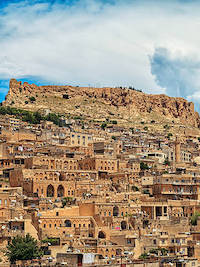
Culture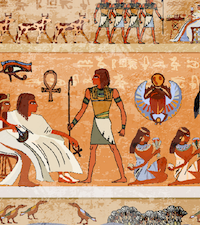
Economy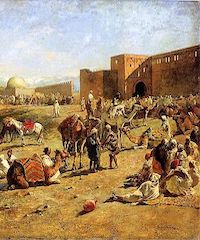
Military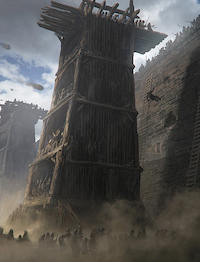
Religion
Science
|