 |
Home | Game | Rules | Theme | Strategy | FAQ |  |











































|
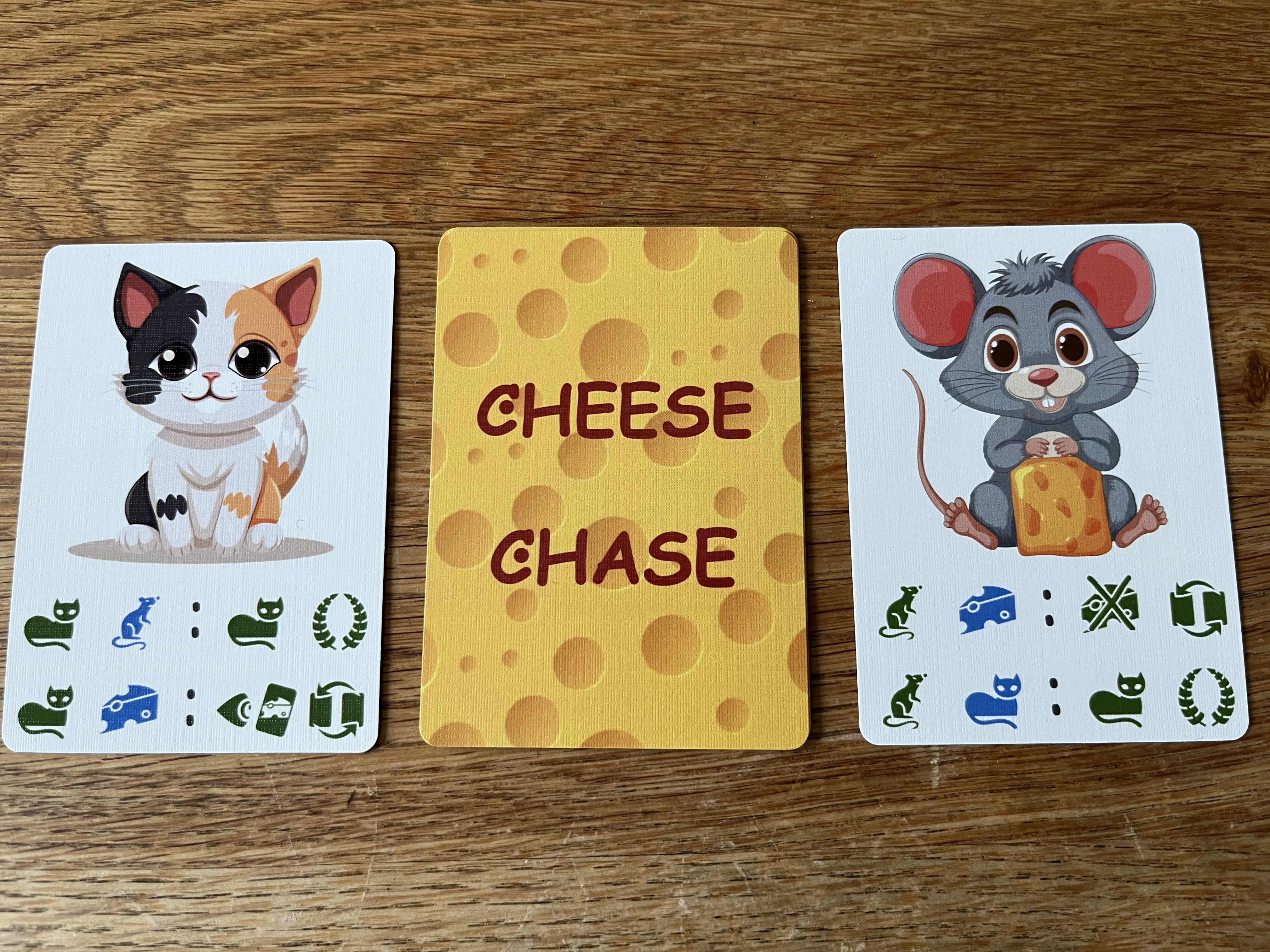
Game designI have frequently submitted games to World Original Design Contest of Board Game and at the 6th year there was a nine-card games category. This was a category I hadn't attempted to design before but I did have several eighteen card games, among them the Comrade games. Perhaps I could further develop any of them? I started with the simplest of them: Comrade. The first thing I looked at was the theme, since this year's WODC focused on family games. The idea of replacing the sinister Soviet theme with a lighter cat and mouse theme came to me quickly and never left me. Cat & Mouse Game was the obvious working name for the game. The next part was trickier. Identifying and eliminating the fiddliest mechanics to make the game as smooth and family-friendly as possible. Several candidates were identified. There is a double vote in the game, first for freedom and then for the secreet word. Not to mention the fact that the secret word must be remembered. Was there a way to incorporate any of this into the player turn? As a matter of fact, there was a way to incorporate ALL of this into the player turn. I found this out by experimenting with immediate revelation, e.g. when a player draws a card and gets a "match" (a mouse and a cheese), he or she reveals the cards instead of having to remember a secret word. The score could simply be tracked by counting the number of cheeses revealed, thus removing the necessity of the votes as well. It sounded too simple to be true so I did some basic tests to try to break the game. The first conclusion was an obvious one. While the card exchange is mandatory in Comrade, this couldn't be the case here, since the mouse would be traceable. Thus, it should be optional to exchange cards. This is also made it necessary to remove the "passive" victory, where the mouse accidentally tries to exchange cards with the cat. However, as I dig deeper I discovered some corner cases. If a player has the mouse card and knows that the next player has the cat card, it is dangerous to find a cheese and reveal himself or herself, since this would give the cat a 50% chance to find the mouse. A safer action for the game would be to find the cat to keep the cat out of the game for a while but that would be risky for the player if he or she gets stuck with the cat. I tried adding a second mouse but this only delayed the above problem. Instead, I came up with a solution of adding a bluff element: not only the card exchange but also the card revelation could be optional, i.e. the mouse may forego a cheese in order to keep the cards hidden and confuse the cat. This didn't only solve a problem but also gave the players more agency. Some more testing confirmed that the game was now solid and only some cosmetics remained. Initially, I had an idea of having tokens with cheese platters as well, where a found cheese would be marked by flipping the token (to an empty platter), but I was afraid this wouldn't be allowed in the nine card contest and simply used a system of crossing out cheese numbers instead. The card specific scenarios (the cat needs to know what happens when a mouse is found or a cheese is found etc.) could easily be summarized with icons on the card, making the cards simple yet informative. The final change was to change the name from Cat & Mouse Game (which, not surprisingly, has been used many times before) to the more unique Cheese Chase. Game components
|
Annotated gamesIf you like those game mechanisms, I can also recommend: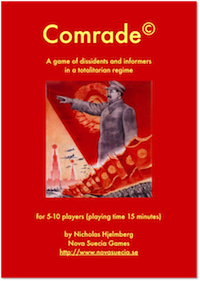
|