
 |
Home | Game | Rules | Theme | Strategy | FAQ |  |












































|
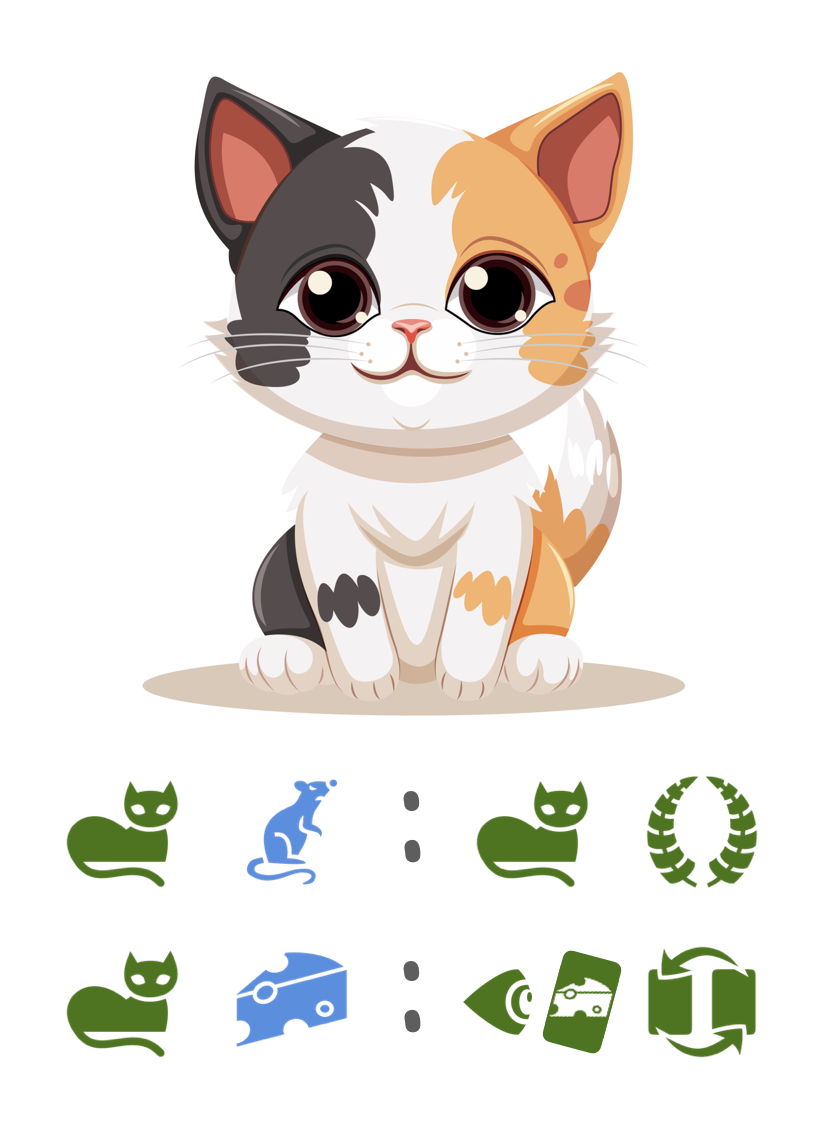
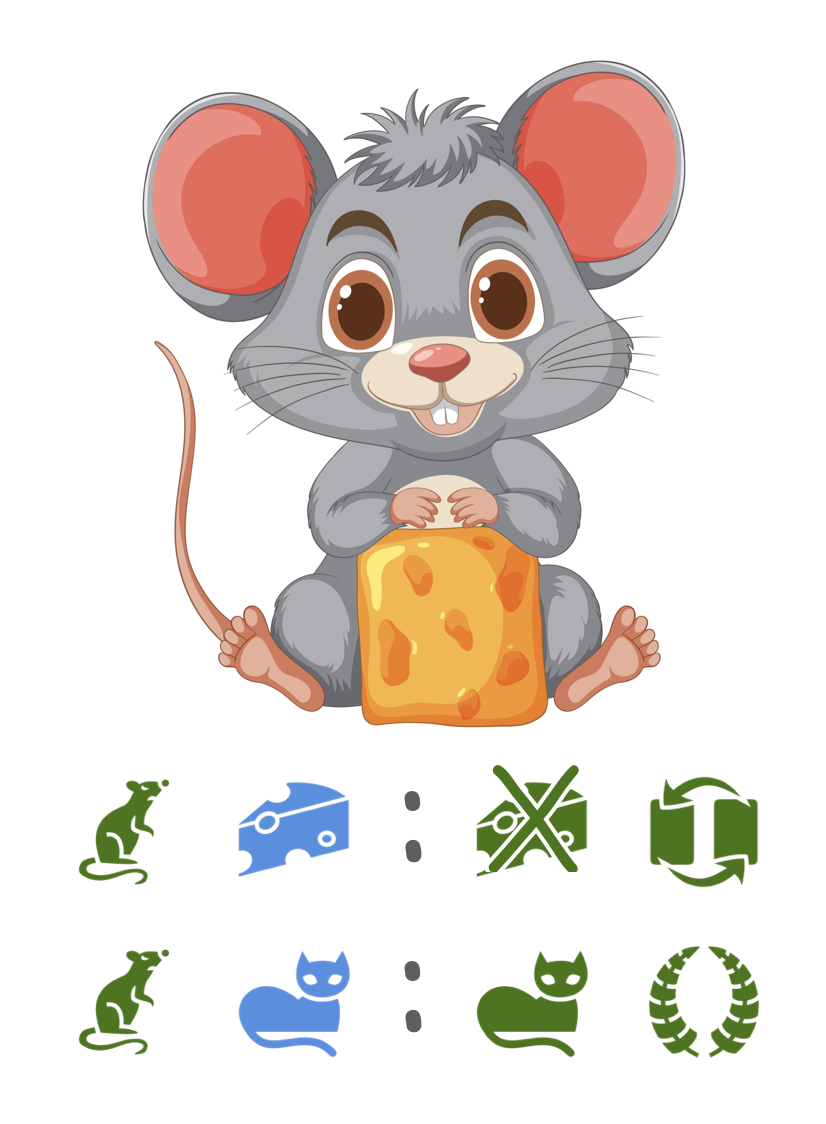
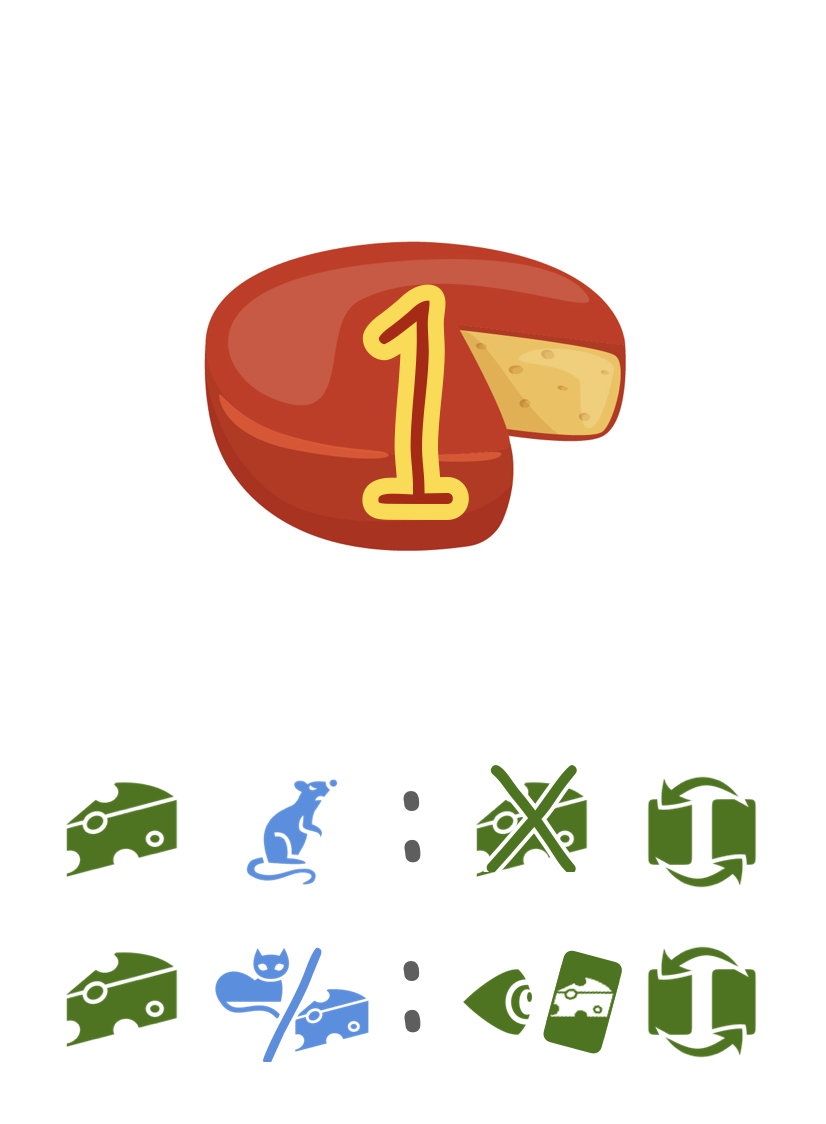
StrategyChase the Cheese is a light party game but it still has some room for strategy. The CatIn the early game, the cat should keep track of which players that reveal cheeses, since this indicates that none of those have the mouse. Then the cat should have a decent chance to guess who is the mouse. In the late game, it's risky to keep the cat too long and it's also risky to exchange with a player next in turn, since this player will have additional information about the mouse's whereabouts. In this case, it's safer to exchange the cat with a player whose turn is several turns ahead. Beware though, if you play the cat to a player who has the last cheese, the mouse may play the mouse to this player and lose the game to the cat. The MouseThe mouse needs to pay close attention to which cheese numbers that are revealed. If the same number appears with the same player, that may be a safe cheese. If the players ahead of you reveal different cheese numbers, there may be a cat hiding among them, in which case it's better to draw a card from a player after you in turn. Don't forget that you have the option to ignore a cheese and not reveal yourself if you think the cat's turn is due soon. The CheeseThe cheeses are far from passive players in the game. Not only can the cheeses find the mouse but they can also signal to the mouse where she should look (if the cheese hasn't been found yet) or not look (if the cheese has been found) if by revealing their cards. The found cheeses could also look for the cat without risk and if they find the cat, reveal their found cheese to signal that there are no cards of interest for the ouse here. Finally, they can help erasing the traces from the mouse by drawing cards from the players engaged in the draw that found a cheese. |
|