 |
Home | Game | Rules | Theme | Strategy | FAQ |  |











































|
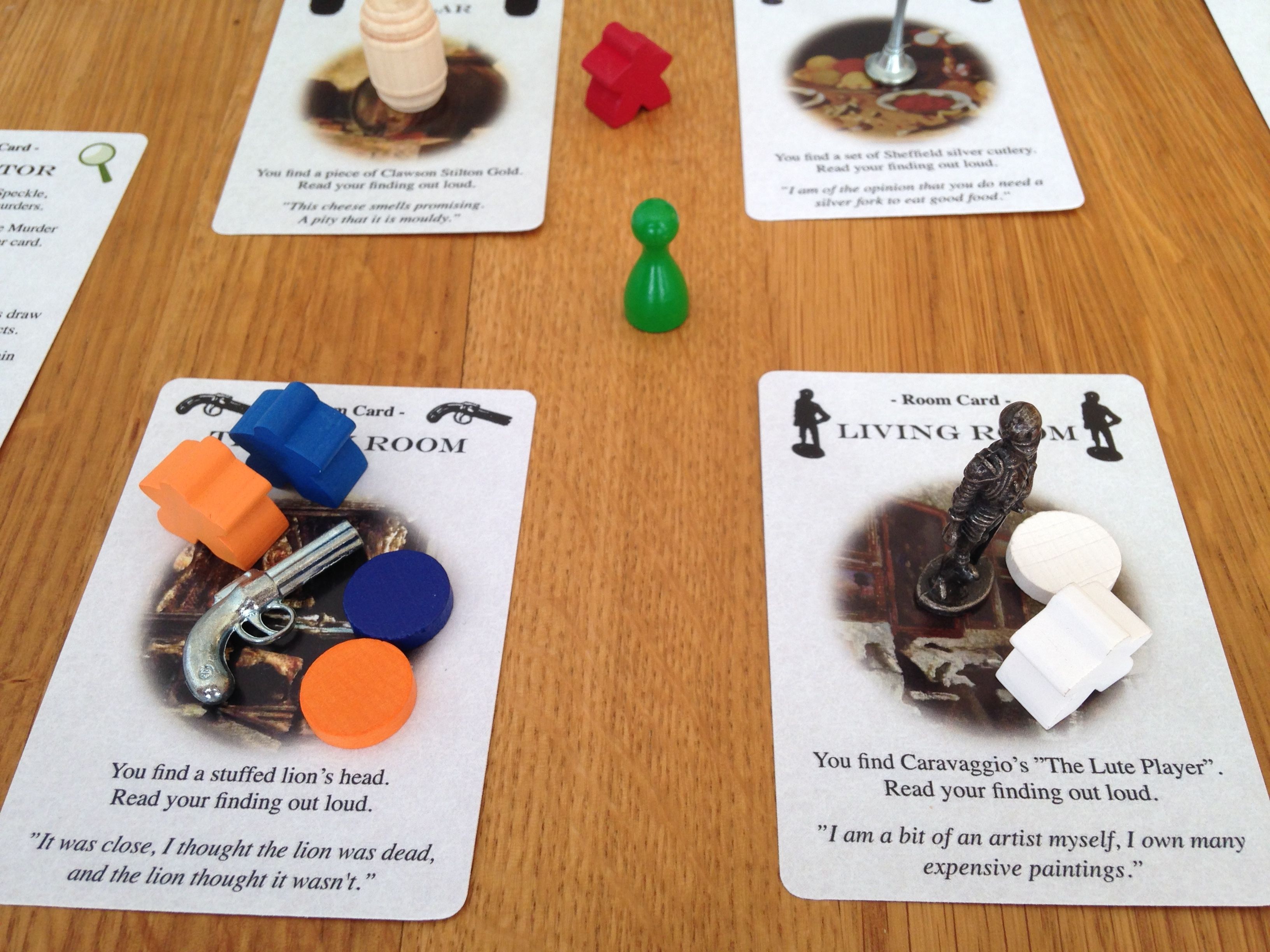
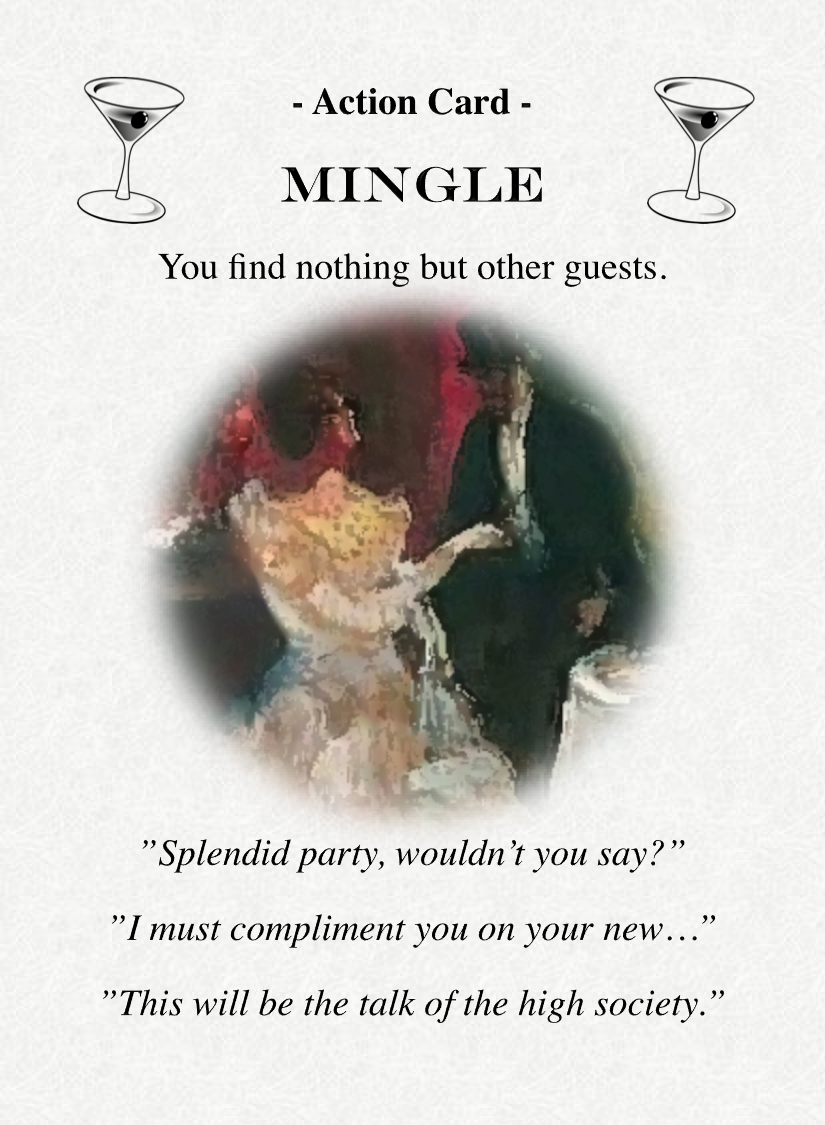
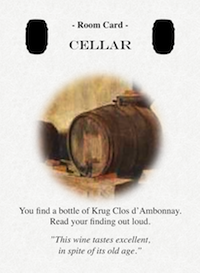
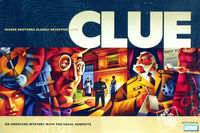
Game designThe "inspiration" to Mingle & Murder came from the Killer Gamers' Remorse Challenge. Why the quotes around the inspiration? Because similarly to the The Game Crafter Sprue Challenge, which inspired me to Explorers & Exploiters, I didn't find the contest inspiring at first due to its requirement of an elimination mechanism. The elimination mechanism is perhaps the oldest game mechanism there is but today it is the absence of an elimination mechanism that is considered crucial for a fun game (as outlined in What makes a game fun?. However, this was precisely what the Gamers' Remorse wanted the community to challenge and since I can't resist challenges... So, how do you make it fun for an eliminated player? By giving him or her an interest in the game even without participating. When is a game interesting? When you can still win, or at least have a revenge on the player who eliminated you. So far, so good but what would this revenge look like? The kingmaker mechanism is perhaps even worse than the elimination mechanism so what else? Naturally, the best revenge would be to eliminate the eliminator, eye for eye, tooth for tooth... But how would the elimination work? A random mechanism would not feel satisfactory but how about a deduction mechanism? How about letting the eliminated player deduce who eliminated him or her and by doing so, denying the eliminator the victory and claim it him- or herself? The idea of a murder mystery game with a victim's haunting ghost was born. However, if the idea was fairly easy to form, the mechanisms to implement the idea turned out much more difficult. Obviously, the identity of the murderer must be kept secret so the murder must be done in secret as well. Perhaps a drafting mechanism, where the players trade cards to each other? No, but the player being traded a murder card would still know who the murderer is. How about trading to a pool then, where cards from several players are mixed? Maybe, but then the murderer would strike too randomly and trying to follow which cards leave which players' hands can be too much of a mental exercise. So some kind of board is necessary then, where the murderer can target certain rooms and where the players can follow movements rather cards? Yes, now we're getting somewhere. Finally it all came together. The players could move from room to room and leave their cards there, of which most would be blank but one a murder card. To make the tracing more challenging, they would not take up new cards immediately but rather leave a marker there. When all markers have been left, they would be taken back together with a card. In this way, the murder card may have been taken from any of a number of rooms and the murderer may be any of the players visiting any of the rooms. This is a mystery similar to Clue - not only is the murderer unknown but also the room of the murder. (I considered for a while finding a way to make the murder weapon unknown as well but decided to keep it simple.) Given this, it would likely be impossible to deduce who the murderer is after the first murder but perhaps after the second...? The rest of the game design was more about adding necessary features and tweaking and testing the balance. I needed objects for the non-murderer players as well and the most natural objects would be to collect cards from the rooms. Similar to the trade cards of Advanced Civilization, you always want to take one more card but always that you will draw a calamity. I needed to scale the game, as more players would make it too difficult to trace the murderer and a higher murder object would give the other players too much time to collect their cards. After some calculation (see Rules, I added the immune roles of an inspector (trying to catch the murderer) and a doctor (trying to save the guests), something that would add both more variation to the game and fit well with the murder mystery theme. Finally I had to put together all the components. With room cards, a board was not necessary but I did add Clue components to give a 3D feeling. Using some old oil paintings, I could give the mansion a classy look, while the use of simple symbols from Openclipart.org made the references easier. I also studied suitable literature (Agatha Christie, P.G. Wodehouse etc.) to get further inspiration for the Theme. The party could begin! Game components
|
Annotated gamesIf you like those game mechanisms, I can also recommend:
|