
 |
Home | Game | Rules | Theme | Strategy | FAQ |  |







































|
ThemeSome games are thematic in the sense that the game components and mechanisms are as realistic as possible. The classical war games, with their detailed terrain charts and army units, are typical for this group of games. Other games manages to use more symbolic mechanisms and components to convey a theme. A typical example is Diplomacy, a game that uses extremely simple war mechanisms (the strongest wins) as a setting for a very realistic diplomatic game. I tend to prefer the latter category, as the theme comes through much stronger in those games. My favorite game Tigris & Euphrates is, in my opinion, unsurpassed when it comes to illustrating the rise and fall of empires. Peoples has the ambition of being a thematic game where symbols are used to convey the theme. The game covers the entire human history, from the migrations to the urbanization. It starts in a distant past where hunters and gatherers are dispersed across the world. The Migration Phase reflects the peoples' roamings from barren to fertile regions. In the ancient ages, peoples gather in small settlements, while in the modern ages, peoples move from the countryside to the metropolises. This is simulated by moving tokens and group them in settlements. The later the age, the bigger the movements and the settlements. The Revolution Phase reflects the power struggle in the settlements between the leading peoples and their allies. As peoples migrated across the Earth, ideas followed in their tracks and revolutions could bring new factions to the power. This is simulated by counting subjects of each people, adding the support of allies if necessary to break ties. The advanced civilization phase reflects the increasingly complex societies developed in the growing settlements. In the ancient ages, the civilizations advanced slowly thanks to advances like writing and the agricultural revolution, while in the modern ages, civilizations advanced more rapidly thanks to advances like the printing press and the industrial revolution. The societies also started to define themselves and their interaction with other societies, sometimes with peaceful intentions and sometimes with less peaceful. |
Agricultural Revolution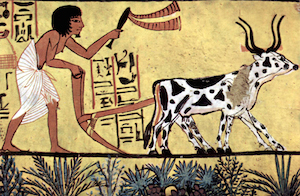
Industrial Revolution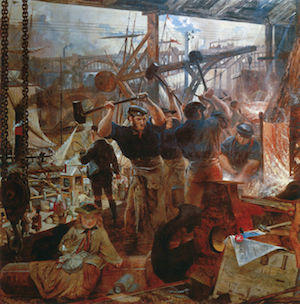
|