 |
Home | Game | Rules | Theme | Strategy | FAQ |  |












































|
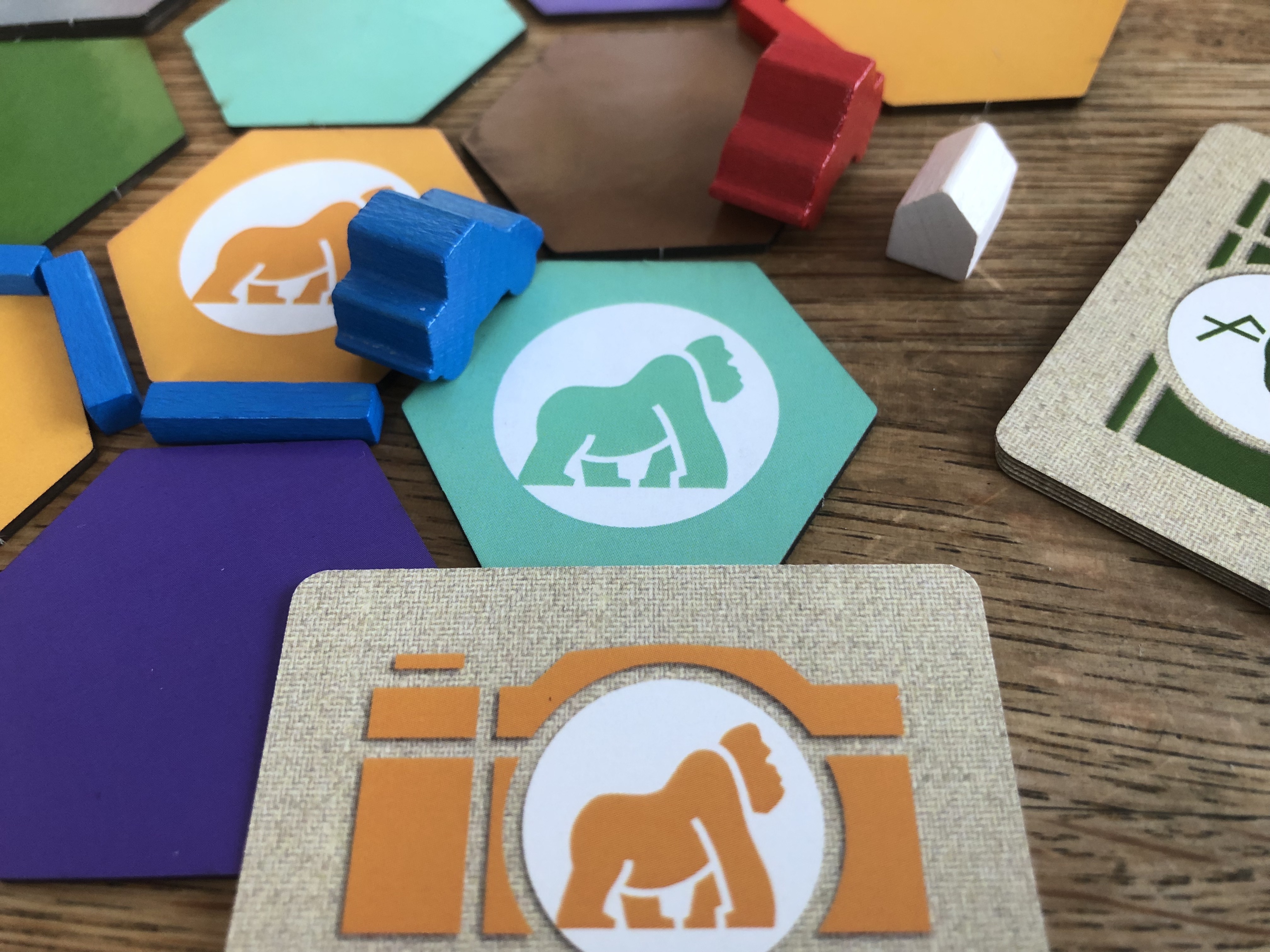
Game designSome of my early designs were inspired by simply hearing about a certain theme or mechanic and imagining what my take on it would be. The inspirational spark of The Mara was a WIP safari game that reminded me of my own safari vacation years ago and made me thinking of other "tile-flipping" games of mine, like Apokalypsis and Explorers & Exploiters. I realized that my own safari memories from Maasai Mara would make an excellent games about guides driving tourists across the savannah in pursuit of animals for them to take photos of while also sharing information with other drivers. The mechanics may not be the most popular among hardcore gamers (memory, deduction, optimal routes etc.) but perhaps for families so this game could also be an interesting move out of my comfort zone of gamers' games. In addition, such a game could be more suitable for pitching to publishers, particularly since a professional version could contain a lot of animal images. Incidentally, the AEG Pitch Project provided both a motive and a deadline. Thus, my mind started working on the design immediately and I came up with a basic game concept within a few days. The core idea was to let the players pick up tourist cards, drive their jeeps between habitat tiles, peek at them, and score victory points for matching cards and tiles. This simple idea worked well both in theory and in practice so the testing could focus on streamlining the gameplay, reinforcing fun parts and mitigating less fun parts - basic game development that is. The streamlining was accomplished by merging the actions that could be merged, that is making picking up tourists one action and making driving, peeking and photographing part of the same action. This would maintain the challenge of playing with few cards but faster driving (smaller probability to find the right animal but several actions) or many cards but slower driving (greater probability to find the right animal but few actions). The reinforcing of fun parts was accomplished by making each decision interesting, whether it be choosing promising tourist cards, learning about new animal tiles or finding a match. Also important was to ensure that the game had an "arc" and some testing and tuning accomplished this as well with an exploration opening, a network building mid-game and a route optimization in the end-game. The mitigating of less fun parts was accomplished by the addition of tracks to let the players quickly drive past already known tiles. With this in place, the Mara felt like a game that could appeal to adults and children alike. Game components
|
Annotated gamesIf you like those game mechanisms, I can also recommend:

|