 |
Home | Game | Rules | Theme | Strategy | FAQ |  |































|
ThemeLucca is a purely abstract game but even abstract games can benefit from a theme that helps conveying a meaning of the gameplay. In the case of Lucca, the theme is towers - the higher, the stronger. Towers have been built by men since prehistoric ages. The oldest known towers may originate from Neolithic Jericho around 8000 BC. Later well-known towers include the Mesopotamian Ziggurats, the Roman fortification towers and the watch towers integrated in the Chinese Wall. One of the many purposes of towers have been strategic to provide the advantage of surveying defensive positions and obtaining a better view of the surrounding areas. They also serve as a symbol of power and prestige, as illustrated by the myth of The Tower of Babel. War innovations like gunpowder and flight lessened the strategic purpose of towers but their symbolic meaning has survived until our days and transferred to the modern skyscrapers. The towers of Lucca, although impressive, had little strategic value but rather served as status symbols, built around the 14th century by various wealthy families. One of the few remaining towers is the Guinigi Tower, today a well-known landmark of modern Lucca. Did the families compete with each other by building ever higher towers and did they turn into street fighting and tower destruction, as in the game of Lucca? Probably not. But perhaps they did what many players of chess and go have done throughout the history and settled their disputes in a seemingly more peaceful fashion on a game board instead? If so, wouldn't the Medieaval Game of Lucca have been an excellent choice? |
Guinigi Tower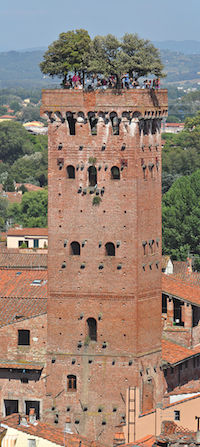
|