
 |
Home | Game | Rules | Theme | Strategy | FAQ |  |



























|
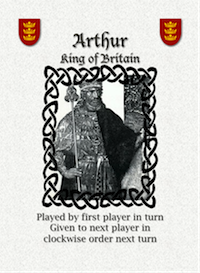
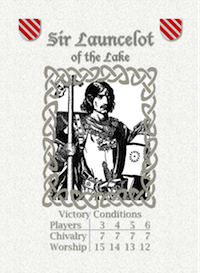
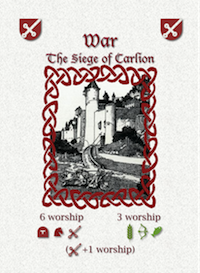
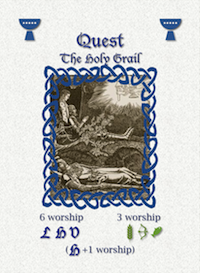
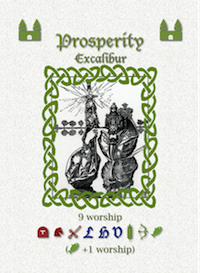
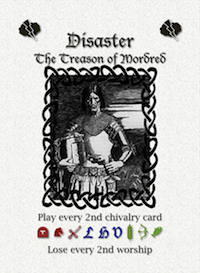
ThemeKnights & Damosels is set in the rich Arthurian legends and both history and literature has lent inspiration to the game. The story of how a chosen boy draws the sword from the stone and becomes King, how he unites the land and forges a brotherhood of knights, and how he finally is betrayed and vanishes with the promise to return when the land is in need is immortal and its full complexity cannot be captured by a simple game. Nevertheless, each single element is firmly based in Arthur's world and here I will describe the background to them. For further reading, I warmly recommend Le Morte d'Arthur by Thomas Malory or, for easier reading, Howard Pyle's beautifully illustrated books about King Arthur and his knights. For movies, John Boorman's Excallibur is a must (but avoid Antoine Fuqua's terrible King Arthur!) and even the humorous Monty Python and the Holy Grail captures a lot of the legends. King Arthur and Merlin the EnchanterKing Arthur himself was the leader of the land and the knights. He is too important to be played by a single player but by letting the player share his role, he fit in well anyway. As a just upholder of the law, it is Arthur who has the heavy responsibility (or benefit if you prefer) to choose which knights are affected by failures and disaster. A similar part is played by Merlin. His ability to see more than others is reflected by his duty to handle the otherwise secret damosels behind the chivalry cards given to the knights. The Knights and the DamoselsWhen choosing among the many knights and damosels from the Arthurian legends, I picked well-known and/or important characters in the book and gave precedence to knights and damosels that had a relation. Launcelot and Gawain, who in some versions fights a duel to (Gawain's) death in the end, require no further explanation. Neither do Arthur's constantly intriguing half-sister Morgana or his queen Guinevere, whose love to Launcelot contributes to the fall of the Round Table. The Lady of the Lake Nimue gives Arthur Excalibur and also falls in love with another knight, Pelleas. Bors and Percival were two of the Grail knights and Percival also followed the Questing Beast. The third grail knight, Galahad, was begotten by Launcelot and Elaine. Tristram and Isoud are known outside the Arthurian legends as well. Least but not last, Viviane (whose role in some versions overlaps Nimue's role), is the one who brought Merlin to his death. For the symbols of the knights, I created coats of arms based on how they are described in the various sources. For the symbols of the damosels, I created a Celtic-style labyrinth where the color is used to tell the damosels apart. The Chivalry CardsThe chivalry cards are based both on history and legend. The equipment most commonly associated with a knight is the sword, the armor and the horse so those were self-evident. For the virtues of chivalry, there are many lists but the ones adhered to by the Knights of the Round Table were Honor, Honesty (included in Honor in the game since I only needed 3), Valor and Loyalty. Finally, a knight had vassal duties as well and in the game I divided them into the geographical areas of plain (farmer), forest (hunter) and sea (fisher). The EventsThe wars are both historical and legendary. In Thomas Malory's work, Carlion was besieged by the nobles opposing the young Arthur as their new King. Malory also describes how Arthur marches against Emperor Lucius and conquer Rome. More historically accurate, although veiled in the fog of the Dark Ages, are King Arthur's 12 battles, first described by Nennius in the 9th century. Mount Badon was the site of the twelfth and greatest of them all. The quests are all from the legends, relating to adventures of the knights but also to virtues. The Holy Grail may have Celtic origin but in time got a Christian connection and could only be found by the devout Galahad. Tristram & Isoud started as a quest but love caused Tristram to abandon his duties. The Questing Beast appears after Arthur has begotten Mordred and is a symbol of incest and chaos and was never found. The prosperity events are picked from the legendary events that led to the unity of the land: the finding of Excalibur, the marriage to Queen Guinevere and the forming of the Round Table. The events that eventually broke this down represent the disasters: the death of Merlin, the adultery between Launcelot and Guinevere and the treason of Mordred. The JoustYou cannot have a knight game without jousts, can you? Both history and legends are full of jousts and there are many examples where the loser must obey the winner. In the game, this is represented by the winner being able to play a specific card instead of the loser. The Battle of CamlannArthur's last battle is mentioned in Annales Cambriae from the 10th century, stating "The Strife of Camlann in which Arthur and Medraut perished". |
|

