 |
Home | Game | Rules | Theme | Strategy | FAQ |  |












































|
Annotated Games: 4 PlayersThis game was played during the game testing of Demokratia. The players pursued different paths towards the victory.
Round 0
All players except red get both Athens tiles and vote tiles in their own colors. Red may have to consider grabbing a green or yellow seat in the Boule. 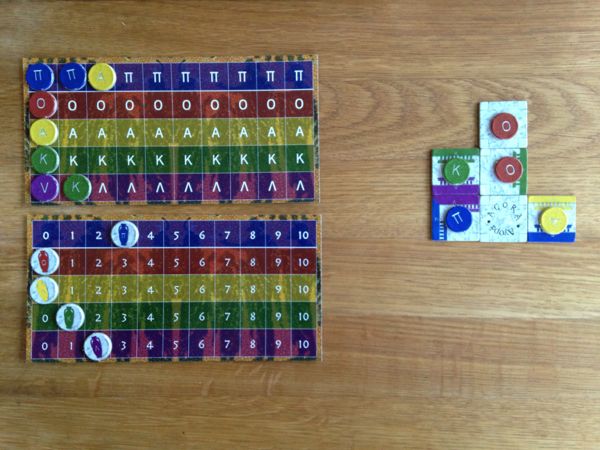
Round 1Athens
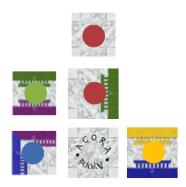
All player cast vote tiles in favor of their own tribes. Blue then starts by claiming a second blue seat in the Boule, knowing that both her vote tile and one of her Athens tiles support blue. Red ignores the Boule struggle and plays one of her crossroad tiles. With two crossroad tiles and one square tile, she'll be able to play her Athens tiles anywhere without benefitting too many other colors. Green claims the first purple seat, knowing that her vote tile supports both green and purple. Yellow, seeing that only blue seems to trust her own color and knowing that her vote tile also supports blue, decides to claim a blue seat in the Boule. Since she's the last player with 2 citizens, she becomes the first player to play the 2nd citizen and plays a yellow/blue/green alley tile. Blue follows with a blue/purple turn tile, red with another square and Green with a green/purple street. The result of the vote and the city building is blue 3 (+2), red 0 (-1), purple 2 (+2), green 1 (+0) and yellow 0 (-1). This winners of the round are blue, whose blue majority in the Boule paid off, and green, with a stake in both green and purple in the Boule. The losers are red and yellow, who saw their Boule influence fall to 0. 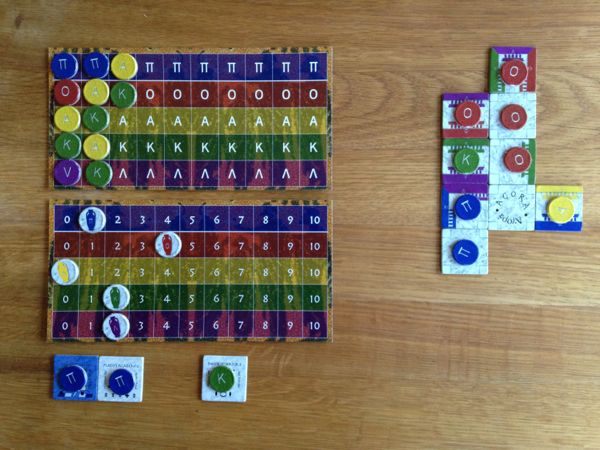
Round 2Athens
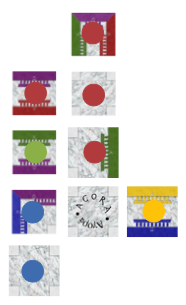
Blue has 3 vote tiles with blue votes and chooses the one with 2 blue votes. Red has only 1 red vote tile and chooses that while green votes for red and green, planning to let Yellow get her yellow vote in the next round and claim red and yellow seats from the weakest players. Yellow has no yellow votes at all and chooses to vote blue and red, hoping to claim seats there instead (and knowing that Blue has at least 2 blue votes given to her previous round). Since Green ended the previous round with the archon tile and has 3 citizens on the hand, she starts and follows her plan by claiming the red seat in the Boule. Next, Blue plays 2 citizens; 1 to Demosthenes (to be able to remove competitors for the blue seats) and 1 to Plato's Academy (to get a 4th city tile) but unfortunately draws another square. Red follows with a red/purple street, Green with Theatre of Dionysus and Yellow with another blue seat. With all players now having 1 citizen left, Yellow plays again and chooses a red seat. Blue plays a square and uses Demosthenes to move a yellow citizen from a blue seat to a green seat. Red plays a red/green/purple alley and green concludes the round with a yellow seat. She also uses her Theatre to replace the Blue player's vote tile with her purple and green vote. The result of the vote and the city building is blue 1 (-2), red 4 (+4), purple 2 (+0), green 2 (+1) and yellow 0 (-2). Green's Theatre action hurt both Blue and Yellow and put her in the sole lead. Will the next round see an ostracism? 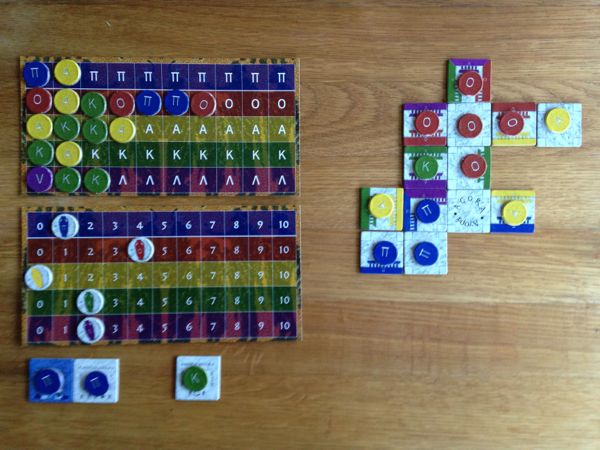
Round 3Athens
Blue's position looks hopeless with no blue votes and only one blue Athens tile so she decides to vote red and go all in on that tribe instead. Red votes blue/yellow, hoping that will help the leading Green the least. Green shares her votes between two colors where she has interest, purple/yellow, while Yellow, who is the only one with a vote of her own color, chooses that (yellow/green). Green starts the round again and plays a citizen to a purple seat. Red follows with a red seat, since she wants to capitalize on the high red influence and her red Athens tiles. She also plays a red and yellow street. Green claims a yellow seat, planning to use her Theatre to play more yellow votes, and Yellow does the same, expecting Green to have something up her sleeve. Blue claims a red seat and plays her blue crossroad tile. She also takes the opportunity to let Demosthenes move 1 blue citizen from a blue seat to a red seat. but this doesn't discourage Red from claiming another red seat. Green plays her green and yellow street and also user her Theatre again, this time to replace Red's vote with her double yellow vote. Yellow concludes the round with a square to ensure one more citizen. The result of the vote and the city building is blue 0 (-3), red 4 (+0), purple 0 (-2), green 1 (-1) and yellow 5 (+5). The yellow tribe has a remarkably strong round with +5 influence, to the benefit of Green and Yellow. The other tribes are doing less well so the number of new citizens remain small and the game is still open with all players in the range of 10-12 citizens. Round 4Athens
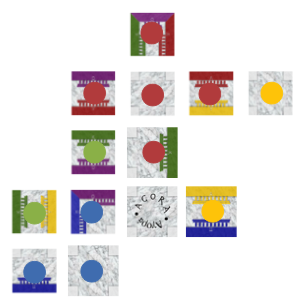
Blue and Red both vote where there are strongest. Blue also plans to play citizen in favor of the blue seats this round. Green has plenty of colors to choose from and but still decide to vote for a color where she's not represented (blue), partly because Blue is the weakest and partly to keep a door to the blue seats open. Yellow decides to go all in on purple this round. Green starts for the third consecutive round, not necessarily a good thing since the others might follow. She claims a green seat, intending to grab as many majorities as possible (although it's unlikely that the other players will allow this). Yellow claims a purple seat while Red plays a yellow crossroad to get more space for her citizens in Athens and also claims a yellow seat. Green claims a blue seat, hoping that it'll give her a necessary citizen next round, after which Yellow plays a square to link her Athens citizens. Finally it's Blue's turn and she's more confident about the blue seats this round. She plays a blue crossroad and a square (the latter blocks both red and green but may still be connected to her other blue citizens) and uses Demosthenes to return a blue citizen from a red seat to a blue seat. Red uses her last citizen to acquire the Long Walls to be able to remove blocking Athens tiles and Green plays equally aggressively by acquiring Socrates and using him to move a yellow citizen from a yellow seat to a red seat. Yellow responds by claiming a second purple seat and by that the phase ends. Note that we suddenly have a fight for Athens victory between to other players than Red. Blue and Yellow now both competes for the blue group in the bottom. Unfortunately for them both, none has the necessary blue buildings to claim the 5 tiles for victory. The result of the vote and the city building is blue 2 (+2), red 2 (-2), purple 0 (-1), green 0 (-2) and yellow 4 (-1). Green gets little payoff on all her seats but 3 new citizens are enough to get a 2 citizen lead. Blue also got a good round with 3 new citizens and decides that it's now or never: ostracism is called for and Green is exiled for 1 round. 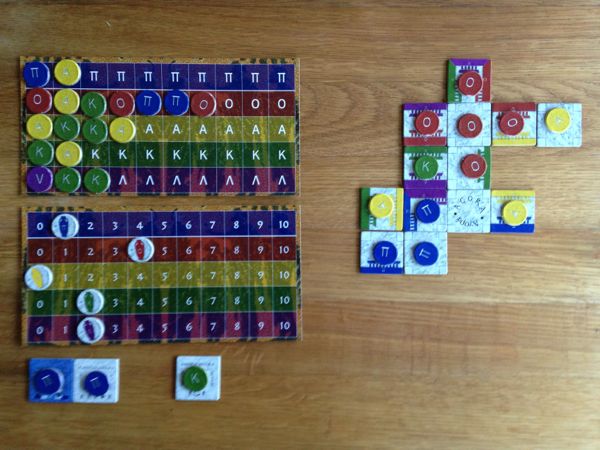
Round 5Athens
With Green out of the round, the players vote for blue and red to give the ostracized player as few new citizens as possible. Yellow is the Archon and claims a blue seat. Blue is second and claims a red seat. Red follows with two plays, 1 citizen to a green seat and 1 citizen to a red crossroad, using the Long Walls to replace a square with a yellow citizen. Yellow plays a blue/red/purple alley to promote tribes where she has a seat and Blue concludes the round with a black crossroad that is not only used to decrease green power but also to block red citizens from linking. Blue also moves a green citizen from a blue seat to a green seat.
The result of the vote and the city building is blue 2 (+0), red 8 (+6), purple 0 (-2), green 0 (-2) and yellow 1 (-3). The red tribe is the great cash cow of the round and helps the other players to catch up with Green. However, Green still gets 2 citizens and has 5 citizens on the hand for the next round. A tight endgame can be expected. 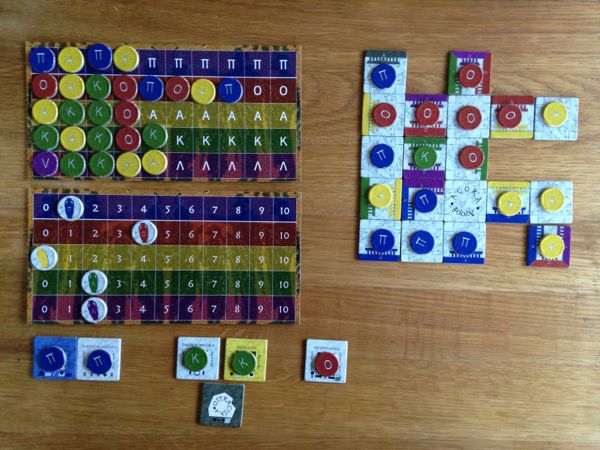
Round 6Athens
Blue has only one vote tile with a blue vote and none with a red vote so she chooses her blue/purple vote with the intention of claiming a purple seat. Red chooses her double red vote and also has two Athens tiles with red buildings. Green chooses her purple/yellow vote, partly because she has seats of those colors but also plans to use her Theatre to choose the blue/green as well, promoting all the tribes where she has seats. Yellow has no obvious choice but goes for yellow, where she has a chance to claim majority. With 5 citizens on the hand, Green starts as the Archon and claims a purple seat. She now has a majority in 3 tribes but for how long? Yellow is in turn and gets to play 2 citizens. She chooses a red and a yellow seat. Blue senses that the competition in the purple tribe is getting too fierce and claims a yellow seat instead, after which Red claims a blue seat. Green hasn't quite given up yet and claims a blue seat, knowing that she can use Socrates to move it to a yellow seat if necessary. She also replaced Red's vote with a blue/green vote of her own. She then proceeds with a yellow crossroad and Yellow follows with a black turn - both aiming at blocking Red from linking citizens and used to decrease the power of the competing red and green tribes with 1 each. Blue completes the "hole" with a black alley and uses it to decrease red, purple and green. Red is now running out of options but finds a spot for her red/green street and follows up with a blue/red/yellow alley. She's now one citizen away from a Tyrant victory, provided that she can get a square and use the Long Walls to replace Yellow's square. Note that this leaves a "hole" that cannot be built so a shared victory is currently not possible. Green can now play safe and take Red's Long Walls by placing 2 citizens on it but chooses to gamble and places a red/purple turn. Yellow safely places a square to ensure 1 citizen. Blue now gets to play her last 2 citizens. She chooses to claim another yellow seat and place a purple/yellow street. She also uses Demosthenes to remove a yellow citizen from a blue seat to a green seat. Red is unable to place her last Athens tile in a good spot and chooses to claim a purple seat instead, denying Green a majority there. Instead, Green claims a red seat and moves a yellow citizen away from there to a yellow seat. Yellow makes the best out of the situation by playing a red/yellow turn, after which the phase ends. Note that the blue group in the bottom now consists of more than 10 tiles but neither Blue, nor Yellow, has 5 tiles necessary to win. The result of the vote and the city building is blue 3 (+1), red 6 (-2), purple 1 (+1), green 0 (-3) and yellow 3 (+3). Again, the red tribe rewards its seats to the benefit of all players. The difference is made by the yellow tribe, where only Green and Yellow are present, and they are the winners of the round with 5 and 6 citizens respectively on their hands. With Green and Yellow 22 citizens in play, the next round is likely to be the final. 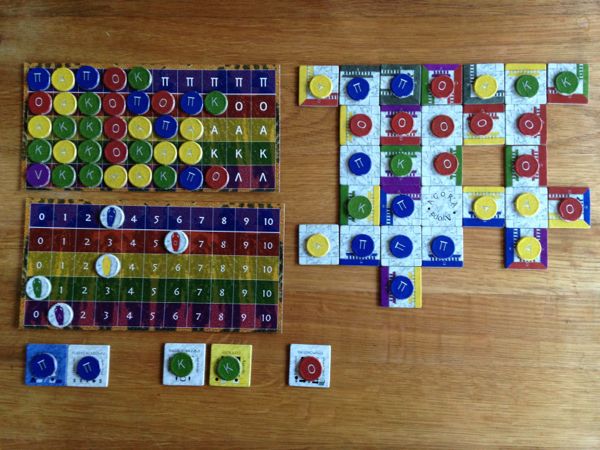
Round 7Athens
Most players are unhappy about their votes this round. Blue wanted blue and red votes but had to accept a red/purple. Red wanted to vote red without also voting green but hope to compensate that by playing black buildings against green. Green did have a green vote but no matching green Athens tiles. Yellow had only blue and red votes and chose blue to benefit the main competitors Green and Red as little as possible. A "take that" round can be expected where the players try to bring down each other rather than maximizing their own points. Yellow starts with 2 citizens and uses them for green/yellow turn and a blue seat. Green is next with 2 citizens and starts offensively with a black alley, bringing down her weakest color blue, red and yellow with 1 each. She also plays a red crossroad to get 1 more "safe" citizen. This also blocks several city spots, making it more difficult for the others to get their Athens tiles out. Blue takes the last opportunity to place an Athens tile, a blue/green curve, and red builds on it with a black curve, bringing down green and yellow 1 each. Yellow gets to play 2 citizens again and she uses both for Athens tiles, a black crossroad (decreasing purple influence) and a purple/green street. Blue is now unable to place her blue/green/yellow alley so she decides to place her purple crossroad instead to get something out. Red follows and claims a blue seat. Now it's Green's turn to play 2 citizens but unable to play an Athens tile, she decides to spread her seats and claim a blue and a red one. Yellow reasons similarly and claims a red seat while Blue claims a blue seat, hoping that a majority there will pay off. Red now gets to play her final 2 citizens. She decides to use her Long Walls to replace a green/purple street with a black street, bringing down not only the replaced green and purple colors but also, thanks to the 2 black buildings, green and yellow. Her last citizen is played to a blue seat, since she doesn't want to help Green and Yellow by playing a green crossroad. Green uses her last citizen to claim a green seat and use Socrates to move a yellow citizen from a red seat to a yellow seat. She now has more citizens than Yellow on all seats except yellow and purple. Yellow responds by using her last citizen to claim a red seat and Blue concludes the game by playing her blue/green/yellow alley and use Demosthenes to move a green citizen from a blue seat to a green seat. The result of the vote and the city building is blue 3 (+0), red 5 (-1), purple 0 (-1), green 3 (+3) and yellow 0 (-5). The final score is incredibly tight with 3 players reaching 26 citizens. Since Red received 5 new citizens this round and Green and Yellow only 4, Red is declared the winner. This was thanks to her aggressive use of black buildings, bringing down the green and yellow power and giving Green and Yellow little return on their citizens on those seats. Blue also had a good finish considering that she started with only 4 citizens but catching 2 citizens turned out to be too difficult. A final note about the strategies. Blue failed to bring the blue power to level 10 (but had bad luck with Athens tile drawing, in spite of a 4th tile) while Red was not far from getting a 10 linked citizens. This was good, since the main purpose of those victory conditions is to add more tension in the game and force players to check each other and not only focus on their own citizens. Green's focus on the Boule was quite rewarding but in the long run, the other players learnt to minimize the power of tribes where Green was comparatively strong, thus minimizing her return. Yellow's tactical approach turned out difficult to realize, as it was difficult to see where the citizens would return most, and might have been helped by a monument (the vote-switching Theatre or the vote-seeing Parthenon). The important conclusion is that no "game-breaking" strategy was found. 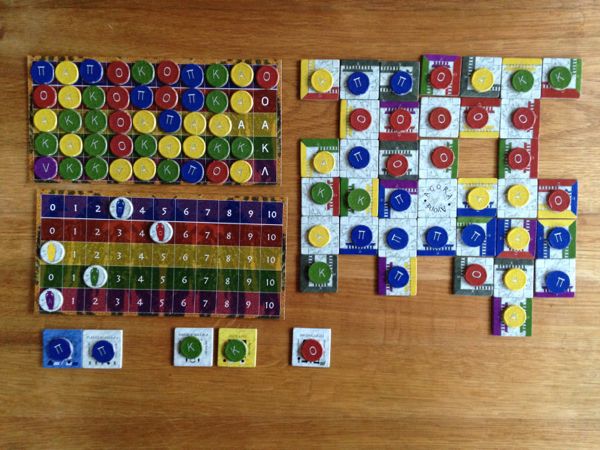
|
Annotated gamesIf you like those game mechanisms, I can also recommend:

|