 |
Home | Game | Rules | Theme | Strategy | FAQ |  |




































|
Version History
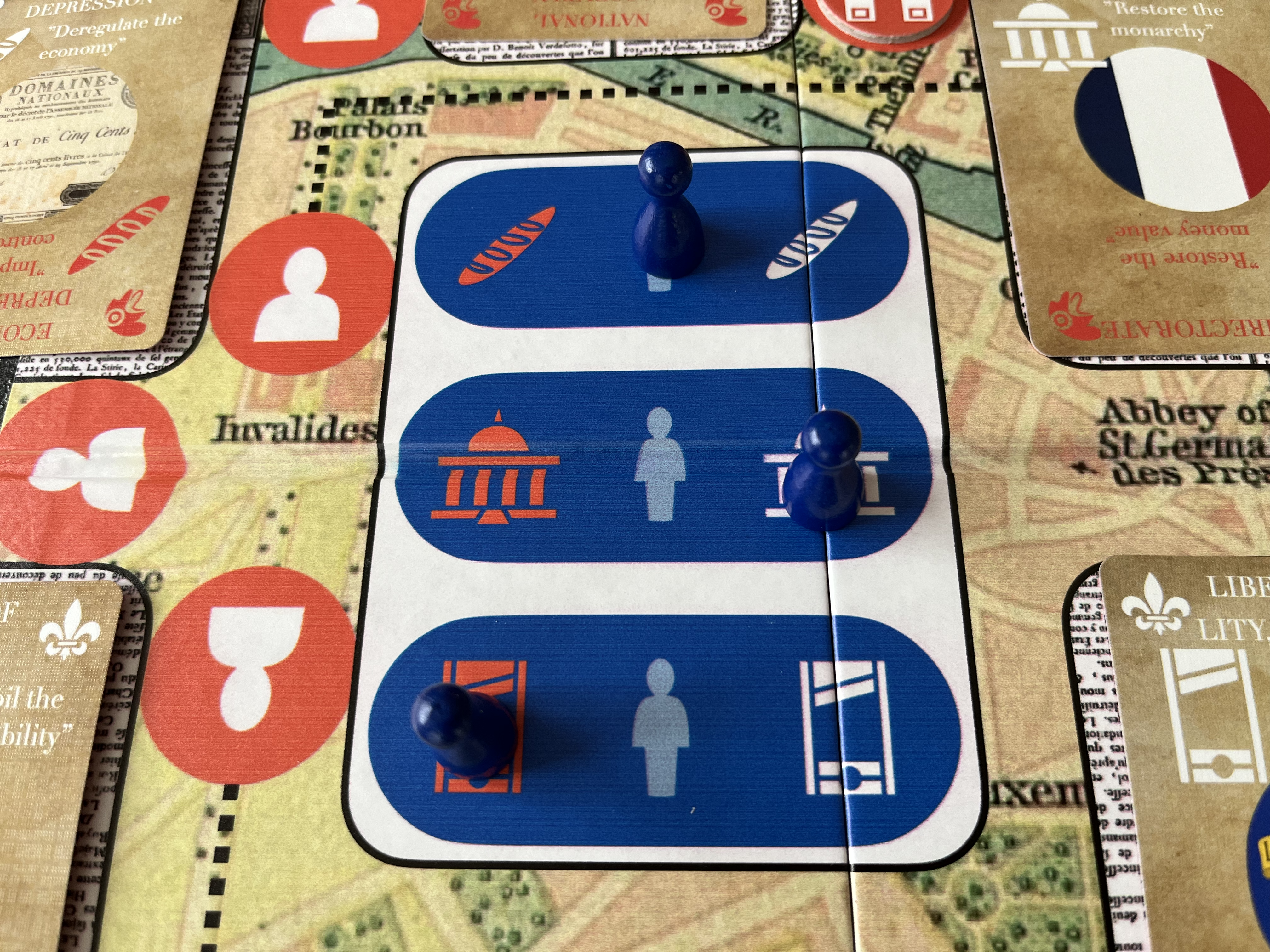
The complete rules are available in the PDF file to the right. In the following sections, I will describe how they came to be. Implemented RulesThere are many ideas that came to live in Glasnost. On this page, I would like to present some of them and explain the reasoning behind them. RevolutionsThe core game of 1789 encourage players to vote according to their goals to win when the game ends. However, is this would have been the only path to victory, some players would be out of contest after half the game. The revolution mechanic not only offers another victory path but also provides thematic tension. No matter how well your faction is doing, there is also a risk that the other faction reveals you and stages a successful coup. In addition, the coup act as a natural game balancer - the smaller your faction, the less your chances of winning votes but the greater your chances of identifying all your fellow faction members and staging a coup. In Glasnost, there may be several revolutions and counter-revolutions, but this 1789 aimed at simplifying this with only one round of revolutions and counter-revolutions. Mechanically, both factions identify their accomplices, after which the truth is revealed. If both are right, the first faction to initiate a revolution wins, and if none are right, the Bonaparte factions wins. But doesn't this make revolutions more difficult the higher the player count? This is why more attempts were allowed in Glasnost so how does 1789 solves this? Simply by allowing more mistakes at higher players counts: 1 mistake is allowed for 7-9 players and 2 mistakes for 10-12 players. CrisesThe events were only changed slightly in 1789 compared to Glasnost. In Glasnost, events always saw two different policies in the vote (e.g. reform Economy or repress Military) whereas in 1789, some of the events saw the same reform (Monarchist Economy or Republican Economy). This could potentially provide more clues to players' objectives and make some of the votes more tense. Ministers and ReformsAnother slight change was the introduction of Minister pawns to track the outcome of the votes. Mechanically they do not differ from the policy tokens of Glasnost but thematically it's more intuitive if the players can see how the assembly majorities change between votes. Other rulesThe other rules remained unchanged compared to Glasnost. |
Rules (Video)
Rules (PDF)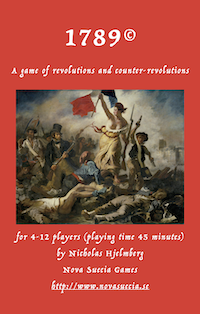
... and Rejected RulesNo rejected rules so far. |