 |
Home | Game | Rules | Theme | Strategy | FAQ |  |



































|
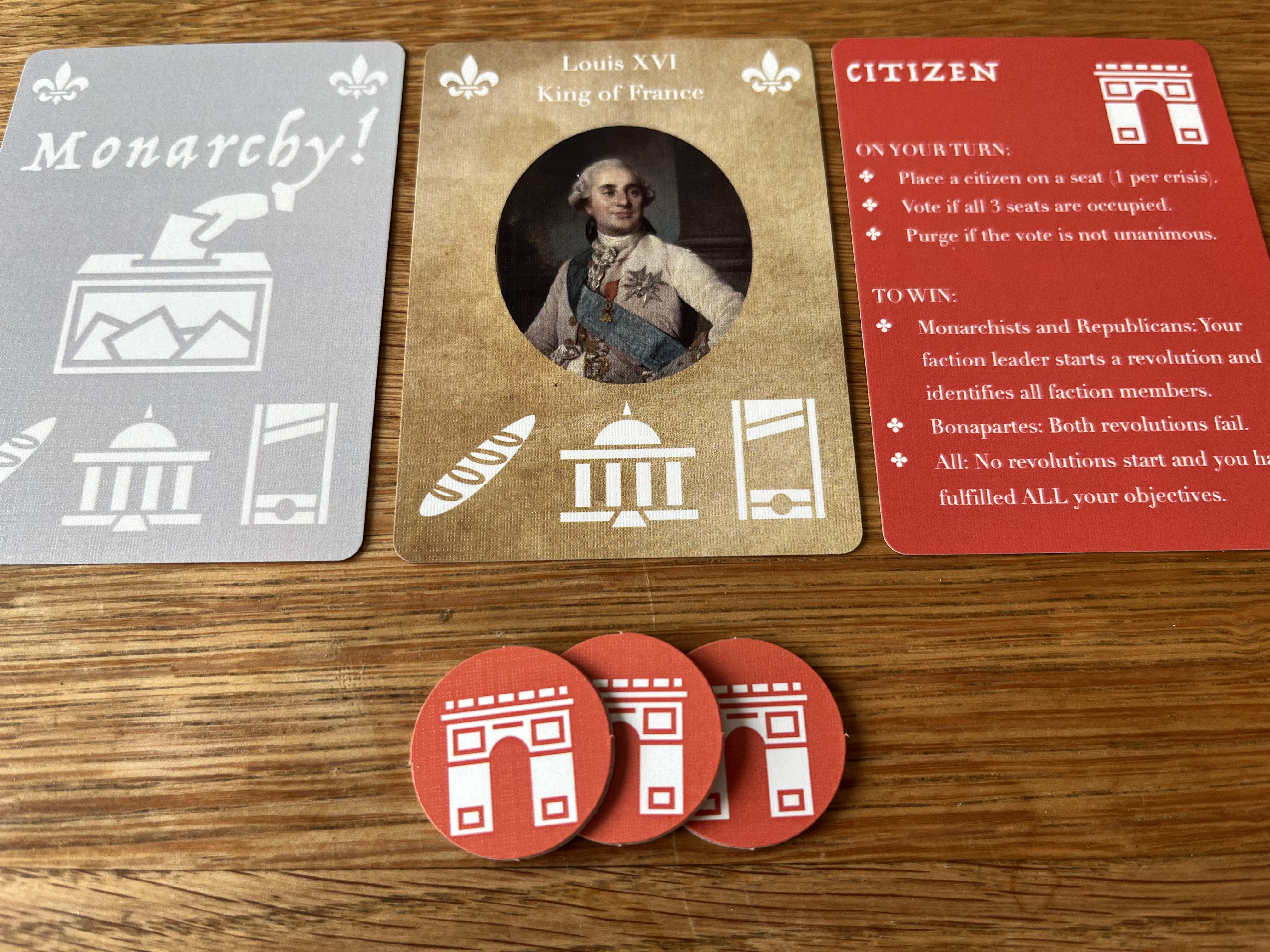
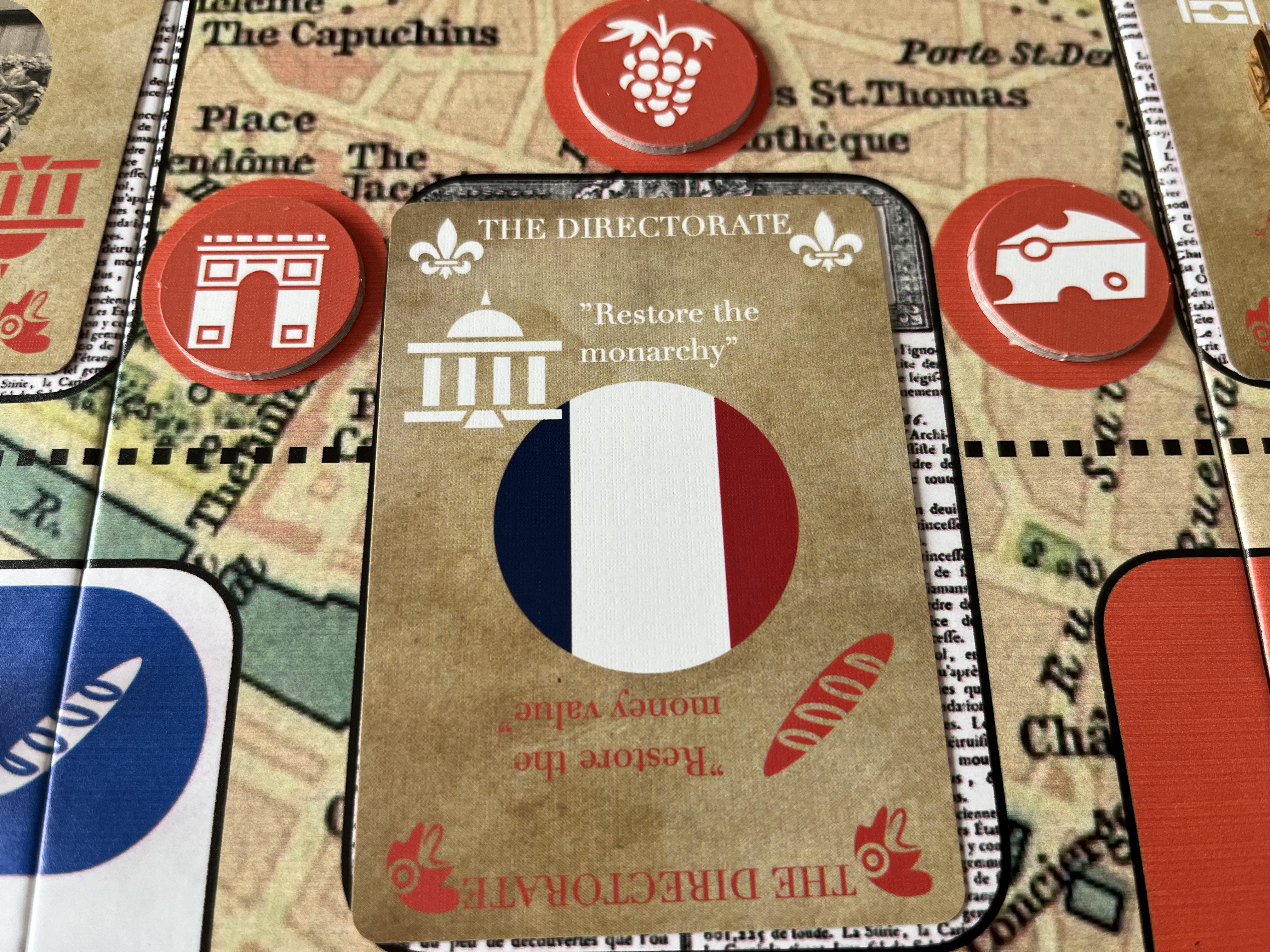
Game designRedeveloping an old game1789 was a natural development step from Glasnost. The idea of a social deduction game with three hidden teams, two of which oppose of each other while the third wants all to fail, remains but 1789 attempts to address some minor issues with Glasnost: the fiddly revolution rule and the controversial theme. The revolution ruleThe revolution rule in Glasnost required a player to identify his or her team mates and then have ALL other players vote whether they were correctly identified or not. Unfortunately, some players instead placed their votes based on whether they wanted the revolution to succeed or fail, which more or less broke the game. 1789 simplified this rule by ending the game as soon as a revolution was called and then immediately check whether it was successful or not (but allowing more mistakes the higher the player count). This also had the added benefits of making the revolution decision more important and give all the players winning chances until the very end. The controversial themeThe Soviet theme of Glasnost may appeal to some but also offend others, particularly in light of Russia's new imperial ambitions. Playing a game with the goal of restoring the Soviet Union is simply not funny today. Fortunately there are many other historical examples of revolutions and counter-revoulutions and one of the most famous examples is the French Revolution of 1789 (which "failed" and let Napoleon Bonaparte rise to power). Other improvementsThe new French Revolution theme actually inspired another improvement. Glasnost used flipping tokens to show the current policies but the presence of an assembly enabled a more tactile component, namely pawns representing majorities in the assembly. By referring to them as Monarchist or Republican Ministers and move them between reforms, the current political state became much more visible. The development resultSo is 1789 a better game than Glasost? I guess it depends on preferences. Do you prefer a modern theme with complex rules? Or a game with a historical theme with simpler rules? Well, now there is a choice. Game components
|
If you like those game mechanisms, I can also recommend:
|