 |
Home | Game | Rules | Theme | Strategy | FAQ |  |








































|
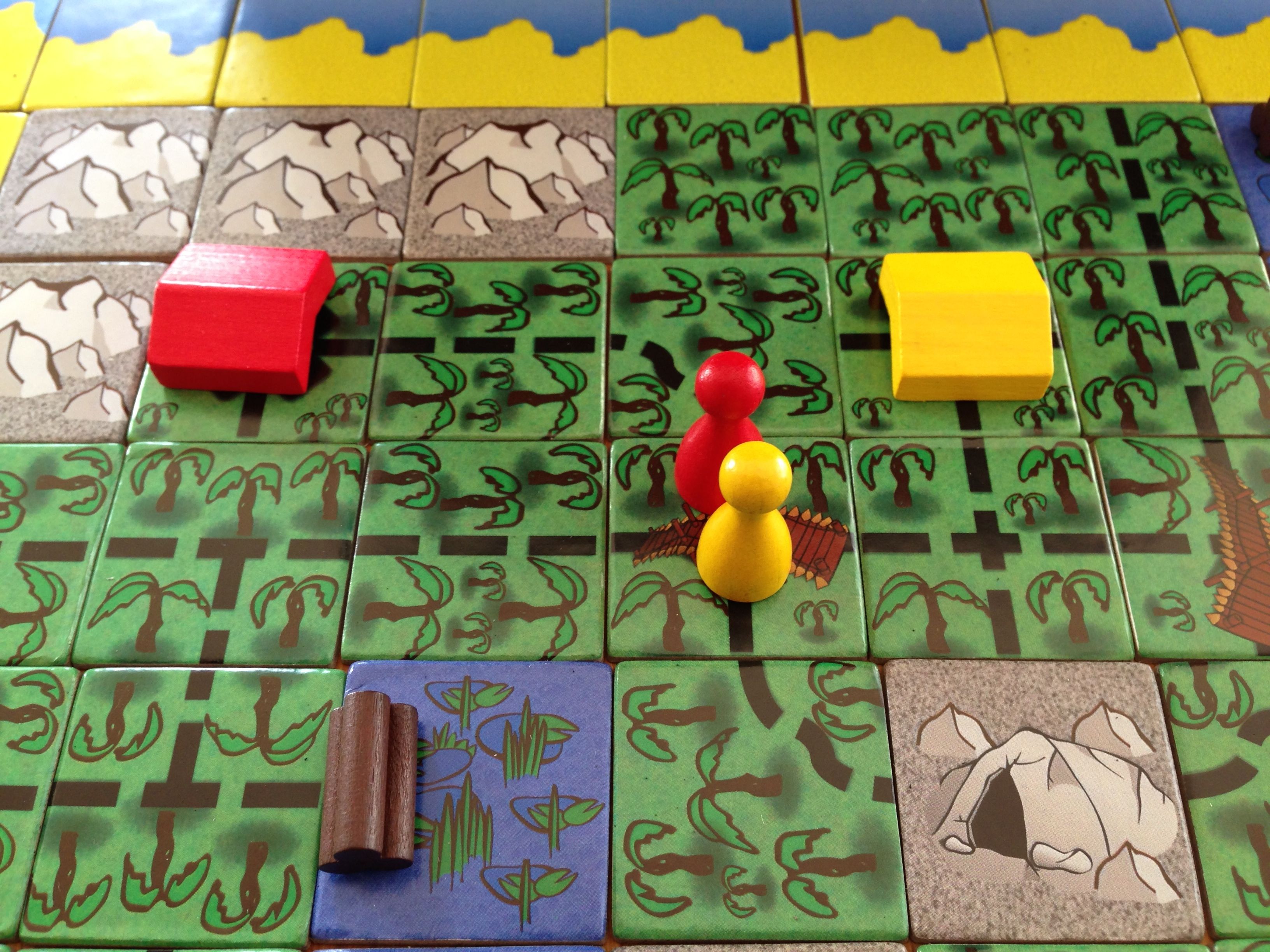
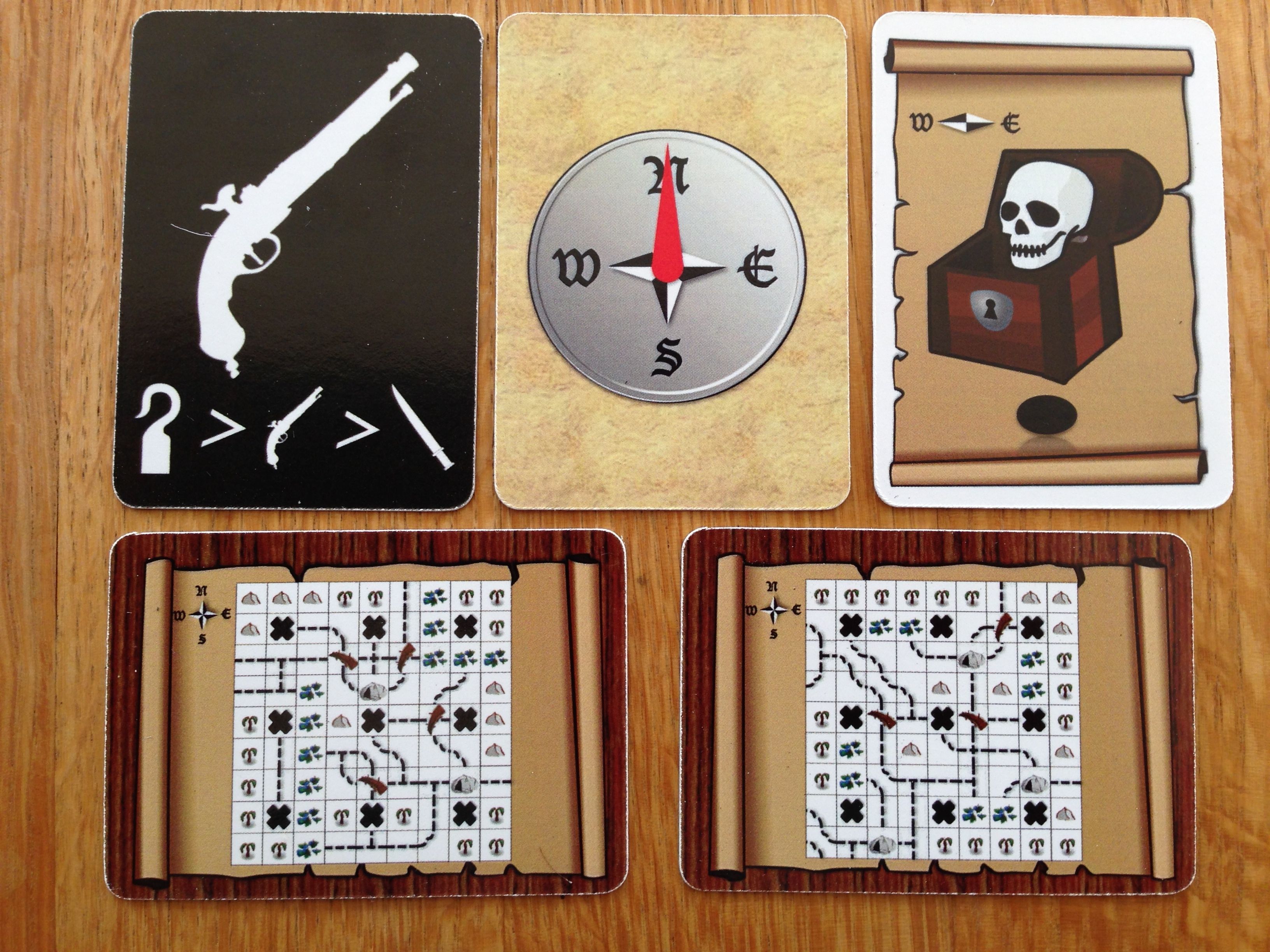
Game designGame ideas may pop up anywhere. When discussing Find the Bug! with a colleague, I casually commented that the game could have had a completely different theme, such as finding a pirate's treasure. A few days later, the idea of a new game had taken form. Find the Treasure! would use a similar analysis mechanism as Find the Bug! but instead of placing many testers, the players would move around one pirate that must stay away both from cursed treasures (false bugs!) and from the other pirates who want to steal his or her maps or treasures. Just like Find the Bug!, Find the Treasure! would be aimed at a younger audience and attempt to bring the players back to childhood adventures like Treasure Island. The rest was simply about creating the additional elements necessary to realize this simple mechanism. So which elements were needed then? Obviously a board to move around on. I abandoned the idea of fixed paths early in favor of a modular board where the players move 1 tile at the time, provided that they are connected by paths. I also needed maps, showing the way to the treasure. Find the Bug! made use of bags to store both bug information and actual bugs, since each of the 9 intersections may hold 4 testers. However, in Find the Treasure!, I simplified this to allow each intersection to be dug at only once. Thus, it was enough to use 3 longitude maps and 3 latitude maps with 1 white diamond (genuine), 1 empty chest and 1 black diamond (cursed) each. A pirate who would dig at a spot would not have to physically pick up a treasure but rather look at the coordinate maps to see how many diamonds he or she found and leave a dig marker as "proof". Since each pirate would start by looking at 1 map only, nobody would know at which spot the 2 white diamonds intersected until either digging randomly (and risk finding a black diamond) or fighting each other for the right to look at each others' maps. A clean and simple solution. Finally I needed a battle system, so that the pirates could fight each other for maps and treasures, and chose the simple rock-paper-scissors mechanism (but used the more pirate-like gun-sabre-hook instead - don't ask me how a hook beats a gun). As with my previous game Bake the Cake!, I used free clipart images from Openclipart to make the island tiles and other images as pirate-like as possible. During the design of the tiles, I also came up with other ideas that could make the movement across the island more interesting. Rafts were introduced as a limited resource that may help some pirates across a swamp and leave other stranded. Caves were introduced as a way to randomize movements (but not completely - I still refrain from using random mechanisms in my games and let the players choose which directions should have a higher probability). Bridges were introduced to allow two paths cross but not connect (but let one pirate fight with the advantage of a higher position - don't ask me how this is possible now that the paths do not connect). Finally I designed some predefined islands that the players may set up rather than creating an island from scratch. The end result was an action game that still has room for tactical tricks as maps need to be interpreted and digging and moving planned. I would have liked my childhood games to be more like this and I hope other kids think the same.
Game components
|
If you like those game mechanisms, I can also recommend:
|