
 |
Home | Game | Rules | Theme | Strategy | FAQ |  |












































|
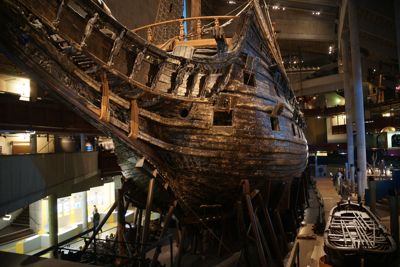
The HistoryThe Vasa ship was ordered in 1625 by King Gustavus II Adolphus, worried about the ability of the Swedish navy to defend the Swedish interests in the Baltic Sea. However, the ship was unbalanced and nobody dared telling that to the King so the proud ship sank on its maiden voyage 1628 after only 1300 meters. The failure was followed by an inquiry, which pointed out the lack of stability as the cause. However, no individual was held responsible. After all, the King himself had approved the construction. For an overview, I recommend Wikipedia or the Vasa Ship Museum homepage. Here I will focus on how the board game relates to the real ship. The Shipyard LeadersWhen Vasa was ordered 1625, the shipyard was led by Henrik Hybertson and his brother Arendt Hybertson. After Henrik’s death 1627, the supervision was given to his assistant Henrik Jacobsson. The GoodsWoodOak was used for shipbuilding and all oak trees in Sweden were royal property. The punishment for logging was a fine at the two first offenses and death at the third. A ship required 2 000 oak trees. ClothSweden did not have a large cloth industry so material was ordered from France, Germany and the Low Countries. IronWhat made the Vasa ship the most powerful of the time was the combined weight of shot that could be fired from one side: 267 kg. SculpturesThe Vasa ship was richly decorated to glorify the King and mock the enemy. Influenced by the Renaissance, Mediterranean mythology dominated the motives. The Admiral and the KingGustavus II Adolphus visited the shipyard in 1628. Later that year, Vice Admiral Klas Fleming stopped a test fearing that the ship would capsize. However, the King, at that time in Germany, insisted that the ship was put to sea as soon as possible. |
|