 |
Home | Game | Rules | Theme | Strategy | FAQ |  |











































|
Game designThe first ideaFind the Bug! - Kanban is a direct response to a question I got from a client at a project: "Is it possible to design a game that teaches the way of working [in the project]?" The challenge was to help the end users understand the Kanban workflow of activities (design-build-test) and the dependencies between them. That single question kicked off the creative process and within minutes I had a working draft ready in my head that I could work with when I got home. The game basically wrote itself. In Kanban, you have already abstracted the activities into cards. Since each cards require a certain amount of work, it was natural to abstract this into cubes of different colors for the different type of activities. A simple drafting system would challenge the players to choose matching cards and cubes to maximize progress and minimize waste. The addition of dependencies between the cards added another challenge of combining cards to unlock more valuable ones. Last but certainly not least, the bag draw for cubes and die rolls for cube costs added a healthy dose of randomness to prevent the game to turn into a pure calculation exercise. AI in game design?At the same time, I stumbled upon an interesting thread about the use of AI in game design, and decided to compare my idea with that of ChatGPT. There were indeed some similarities between our ideas. The AI also suggested moving cards along a Kanban board but instead of pushing resources to cards to move them, cards should be pulled to empty columns. The only exception was the Build column, where parameters such as die rolls and complexity determine the progress. I wasn't convinced that such a game would offer any strategic challenges but did borrow some ideas, such as WIP limits in the different columns for additional challenges. From multiplayer solitaire to interactionThe first proof of concept test, a simulation with one player and one Kanban board, was promising. Such a game would work and offer some puzzle challenges to optimize the cards and cubes. However, I worried that my my and ChatGPT's idea of individual boards would be too solitaire and combined them into one common board. This also paved the way for shared incentives in the game, such as the option to exchange cubes and earning victory points when players score cards dependent on your cards. The result was a game where the players would not only have to keep on eye on each other for their progress but even help each other to help their own progress. The first testsAs often, I resorted to an Excel sheet for my first tests. They resulted in some minor tweaks, such as balancing the number of iterations at different player counts and removing the punishing die roll 6 result (which used to increase the cube cost by 2 - not fun!). The core, however, remained unchanged. As I said in the beginning, the game wrote itself. A game or merely a mechanic?Having reached this far, I began to wonder if this idea was enough for a full game or if it was merely a mechanic in a bigger game. A couple of years ago, I had (also with inspiration from my work) considered a Find the Bug! SAFe game. Perhaps the Kanban game could be one of several mechanics in such a game? On the other hand, I also wanted the game to be accessible. Whereas the first Find the Bug! could be played by gamers and non-gamers alike, the followers Find the Bug! Agile and Find the Bug! Project were more complex. Besides, the game in its present state would only require some cards and cubes - enough to fit in a small box. Find the Bug! Kanban would not only be a simple game but also a lean game! Game components
|
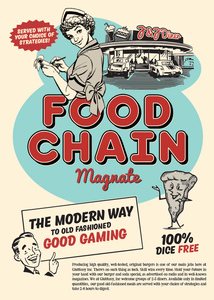
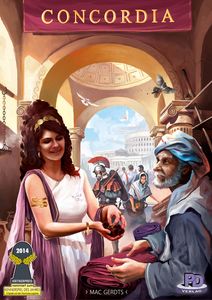
Annotated gamesComplete test games are presented under Annotated Games. If you like those game mechanisms, I can also recommend: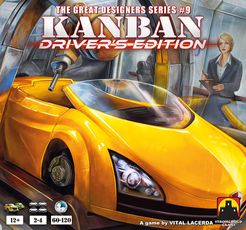
|
||||||