 |
Home | Game | Rules | Theme | Strategy | FAQ |  |




















|
Game designFair Trade was designed in response to a call for game designers by Value Add Games. The requirement was very open - a family game illustrating fair trade and the supply chain relation between farmers and traders - but that was enough to inspire me. I have a weakness for games where the conditions are set by the players themselves and my very first game Nova Suecia was based on this idea, where the players are both producers and consumers. But Nova Suecia is a fairly complex game where land is acquired to create production and consumption, resources are produced and consumed at market prices, and letters are sent home to influence supply and demand. How could this idea be used in an even simpler game? The answer came to me almost immediately. What if I focused on the two roles of farmer and trader and the traditional euro distinction between money and victory points? The farmers could use money to invest in fair production while and get a return from traders, who could use money to acquire fair trade Products (=victory points?). That would put the players in a situation where they need invest money to raise money to earn victory points. Very interesting! The next question was how to gamify this market relation. Again, the answer came almost immediately - bidding is a very powerful mechanism for a player-driven economy. By giving the players a limited set of money and letting them bid as farmers and traders, they would have to manage their economy to minimize investments and maximize returns. But should the bidding be open or closed? Open bidding works if the objects bid for have different values to different players but in our economy, Money and victory points have the same value so closed bidding was the best option here. Hence, each game round would pose the following decisions to the players:
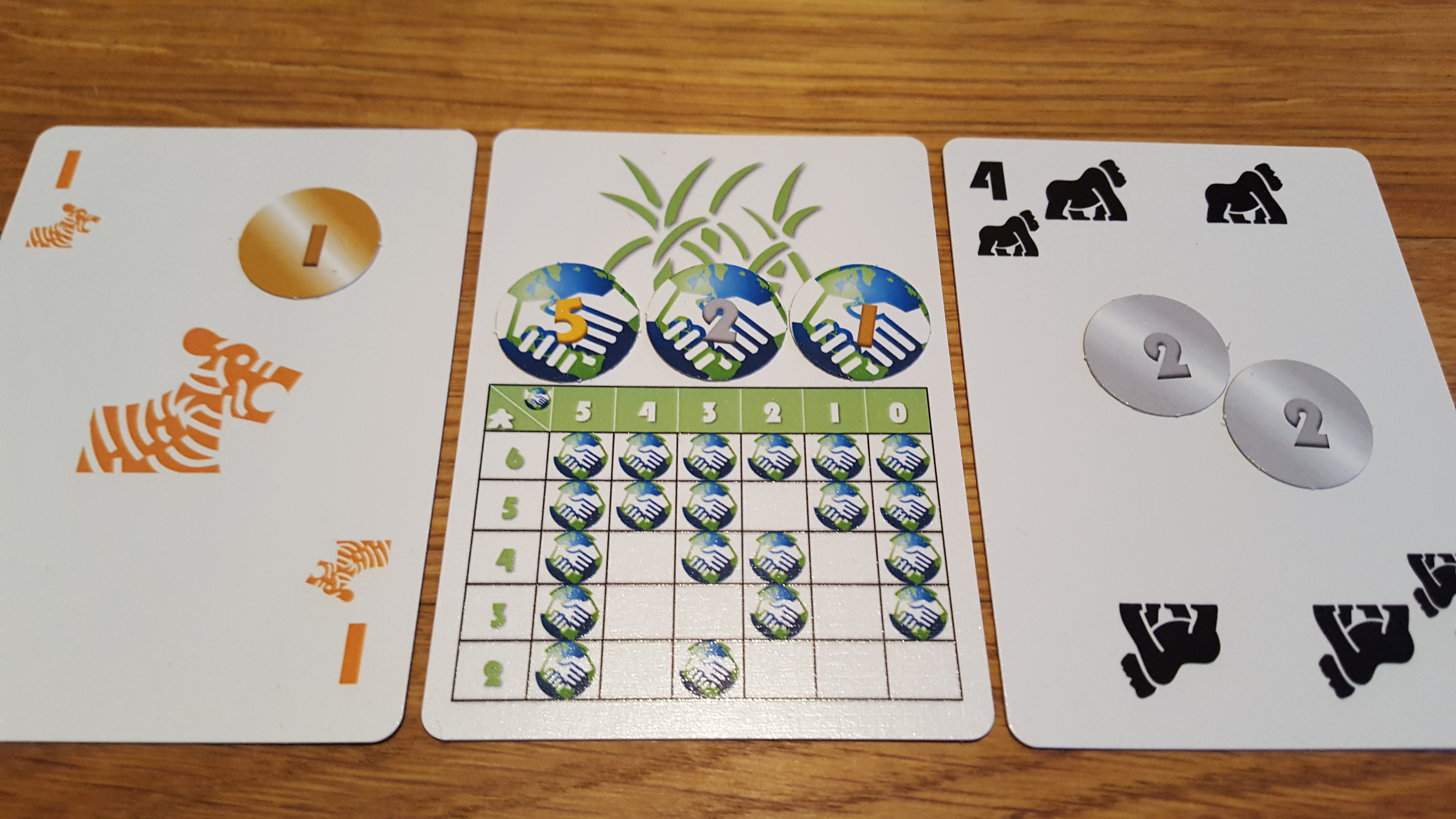
At this point, the design process had been so smooth that I had to step back to avoid falling in the trap of finding even better solutions. One idea that I elaborated was to give the players personal farms, where they could either place workers on them (as farmers to increase the production value) or between them (as traders to place bids on several farms). Then a purchase could be executed by simply withdrawing a trader and pay a price based on the number of other bidders, similar to how Spyrium handles bidding. Another idea was to let each round offer different combinations of goods and victory points and let the player collect sets of goods to give the offered godds different value to different players. However, although those ideas sounded interesting, they would move the game away from the simple family game so I shelfed them for the time being. Perhaps they can be revisited in an expansion? I did give the different round cards different victory point distributions to add some variety to each round but the fact remains that the actions are fairly similar from round to round and the the main variety comes from how much money you have left and how much you expect your opponents to alter their bid strategies from previous rounds. Moving on to the components, I decided early to use unique bidding cards, similar to High Society. Adding the rules to "lock" used bidding cards and prevent them from being used in the following round, I would not only give the players a restriction regarding which bid cards that are available to play but also an opportunity regarding which bid cards the other players cannot play. In addition, I could follow another design advice and number the cards from 1 to 13 to allow them to be used as ordinary playing cards. The decision to use extinguished animals as player symbols further strengthened the family look of the game. The rest of the game design was simply a matter of putting together all components. The card symbols were picked from target="_blank"> and the photos from Wikimedia. The coins were reused from Nova Suecia while the fair trade symbol, also used as the game symbol), was compiled by free resources from the above sources. Fair Trade was a return to my early simple and quick designs for simple and quick games. I may prefer heavier games but it's still refreshing to design a filler every once in a while.
Game components
|
Annotated gamesTo be published If you like those game mechanisms, I can also recommend: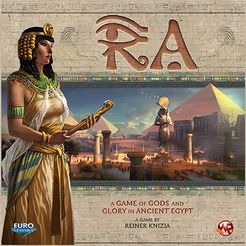
|